1. Introduction: The curatorial promise of lasting bathroom sophistication
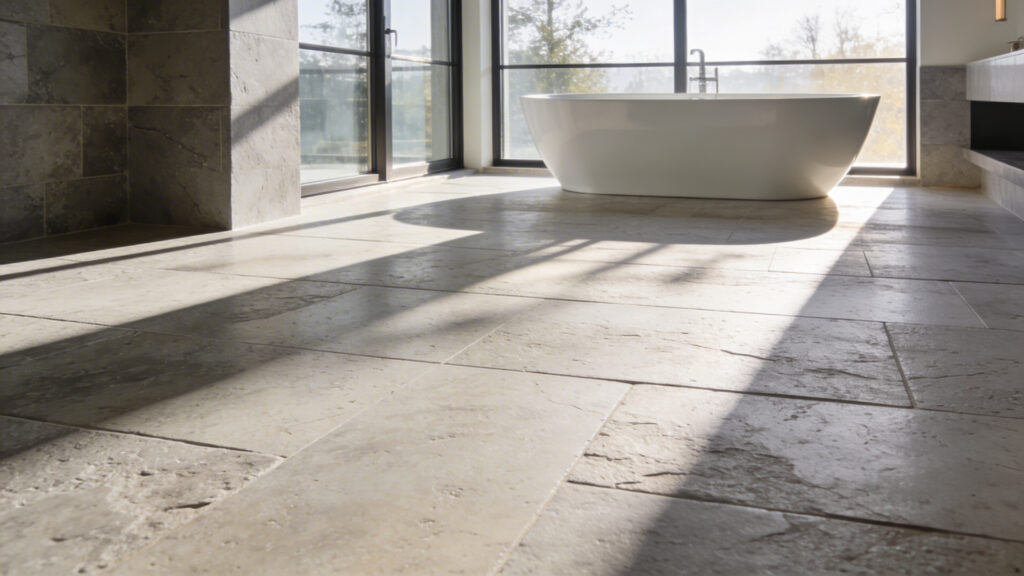
We often think of the bathroom as just a functional space. However, modern design turns it into a curated retreat. I love exploring the latest bathroom flooring trends because materials now offer a real sensory experience. Specifically, your floor is no longer just a surface to walk on. It is an active part of how a room feels. In fact, our feet contain roughly 200,000 nerve endings. Therefore, touching brushed limestone can actually calm the mind. Indeed, these natural textures break up the monotony of flat ceramics. Next, consider adding hidden radiant heating. This creates a perfect balance between cool stone aesthetics and physical warmth.
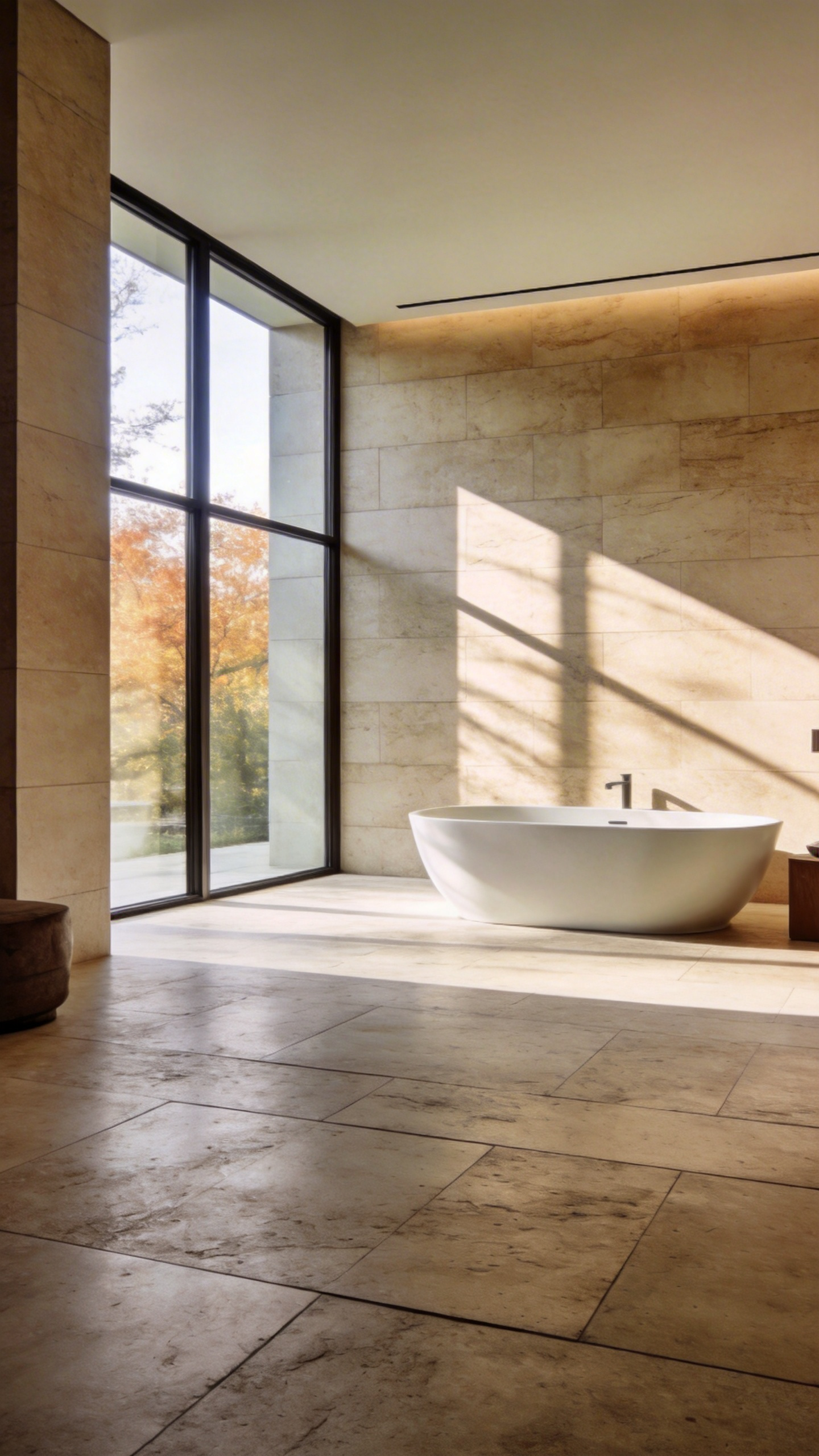
Architecturally, a good floor needs a disciplined palette. For example, large-format slabs remove distracting grout lines. This establishes a clean, unified look. Instantly, the room feels larger. I prefer quiet restraint over loud, trendy patterns. You can incorporate some of the best 22 bathroom tile ideas to keep things enduring. Today, visual touch technology matches textures with graphic depth. Specifically, realistic marble designs now survive heavy moisture. Choosing sustainably sourced materials is always a smart move. Therefore, your space ages well without needing a full replacement later.
2. The philosophical anchor: Transitioning the bathroom from utility to transcontinental sanctuary
Bathrooms used to be designed purely for quick hygiene. However, we now view them as places to decompress. In fact, the floor sets the tone for the whole room. Designers are moving away from clinical white tiles. Instead, I always recommend materials that physically warm the space. Warmth-layering takes the shock out of stepping onto bare floors. Consequently, your morning shower feels much more restorative.
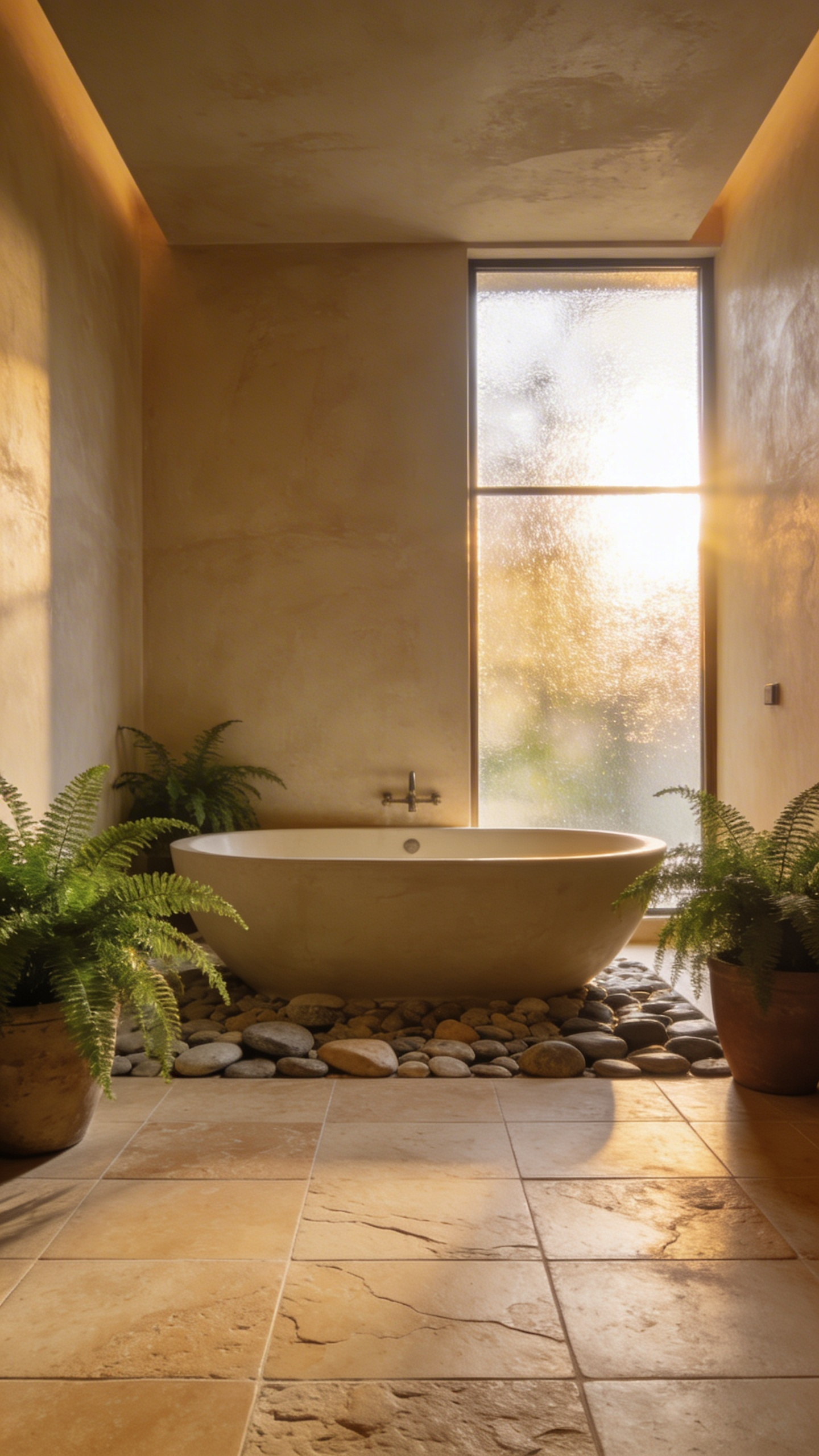
This approach borrows heavily from global styles. For example, blending Asian minimalism with European warmth creates great balance. Specifically, large matte porcelain tiles embrace the Japanese idea of empty space. Thus, fewer grout lines mean less visual clutter. Conversely, bringing in Mediterranean terracotta adds character. These earthy materials show off their handmade origins. Indeed, the floor becomes a quiet backdrop for relaxation.
A good retreat also relies on touch. Biophilic design requires flooring that feels good barefoot. For instance, wood-look porcelain often features embossed grains. Touching these textures can actually lower your stress. Finally, achieving this calm feeling means removing doorways and thresholds. Running the same material from the bedroom into the bath removes barriers. As a result, this seamless flow mimics a spa-like master bathroom retreat.
3. Trend 1: Seamless large-format Italian sintered stone (the monolithic approach)
Using large, unbroken stone slabs completely changes a bathroom. Indeed, this approach moves past standard tile. Modern European design favors sleek Italian sintered stone over heavy carved marble. This material is a staple in current luxury bathroom design trends. Specifically, sintered stone achieves a unified look through full-body manufacturing. Therefore, the mineral veining runs completely through the slab. You can even craft integrated sinks that match the floor. In the end, this single-canvas effect brings harmony to modern spaces.
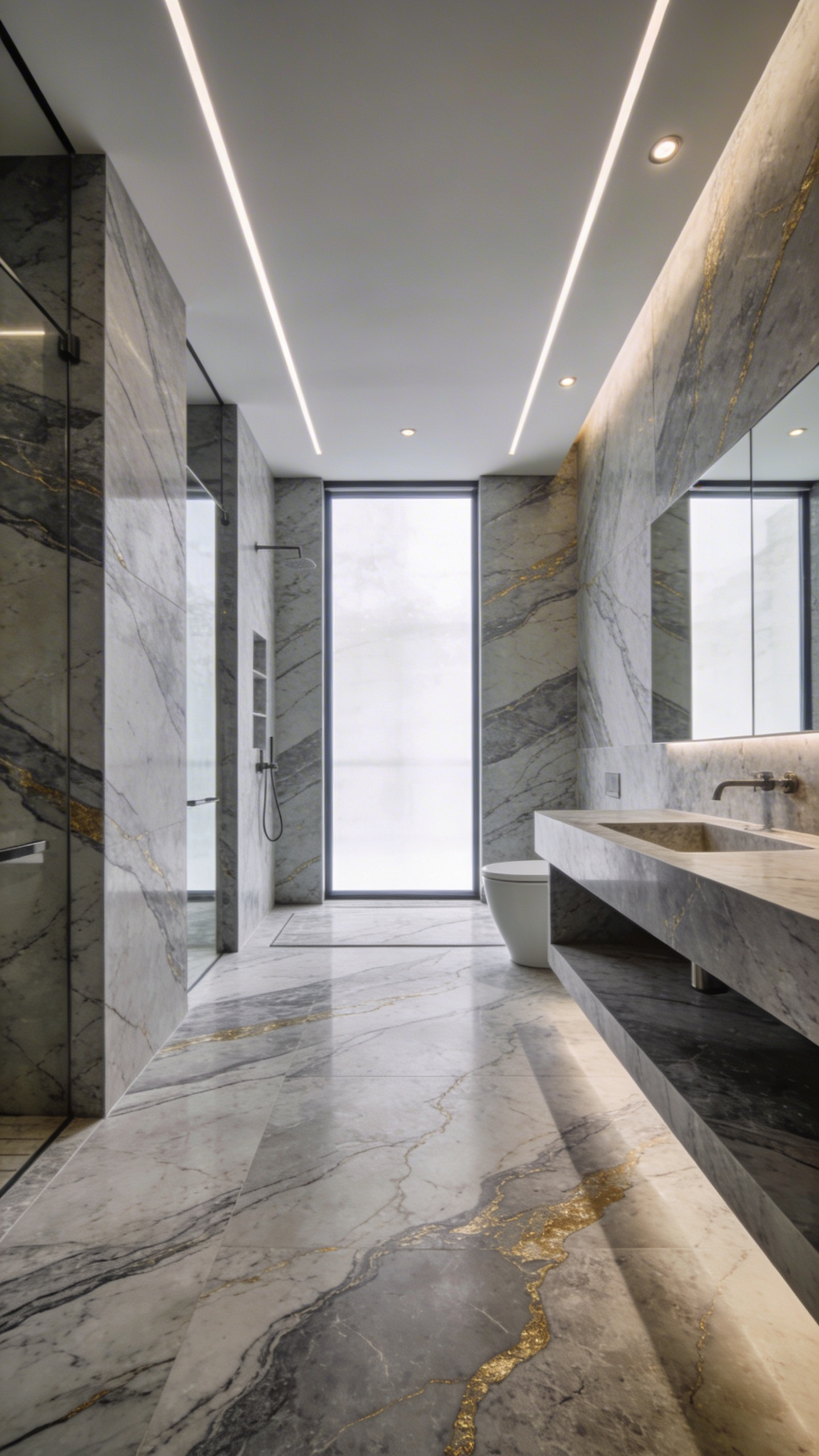
True relaxation requires acoustic quiet. Sintered stone is incredibly dense. Thus, it dampens the hollow echoes common in large bathrooms. Additionally, micro-textured finishes provide a soft, leather-like grip. Naturally, this keeps you grounded and prevents slips.
Installing these massive panels takes real skill. For instance, a single slab can reach over three meters long. As a result, most bathrooms only need one or two seams. Installers use color-matched epoxy to make joints nearly invisible. However, this exact standard requires a perfectly flat subfloor.
I appreciate that sintered stone avoids plastic resins. Unlike quartz, these slabs use intense heat to fuse natural minerals. Therefore, the surface never degrades in high humidity. In short, it is a healthy, long-lasting choice.
4. Trend 2: Raised slatted Teak and Hinoki platforms (the modern onsen influence)
Stepping onto a raised wooden platform changes the mood immediately. Specifically, it separates the bathing area from the rest of the room. Traditional Japanese design uses elevation to define clean zones. Now, modern bathrooms use Hinoki and Teak to recreate this feeling. Naturally, these woods do more than just look pretty.
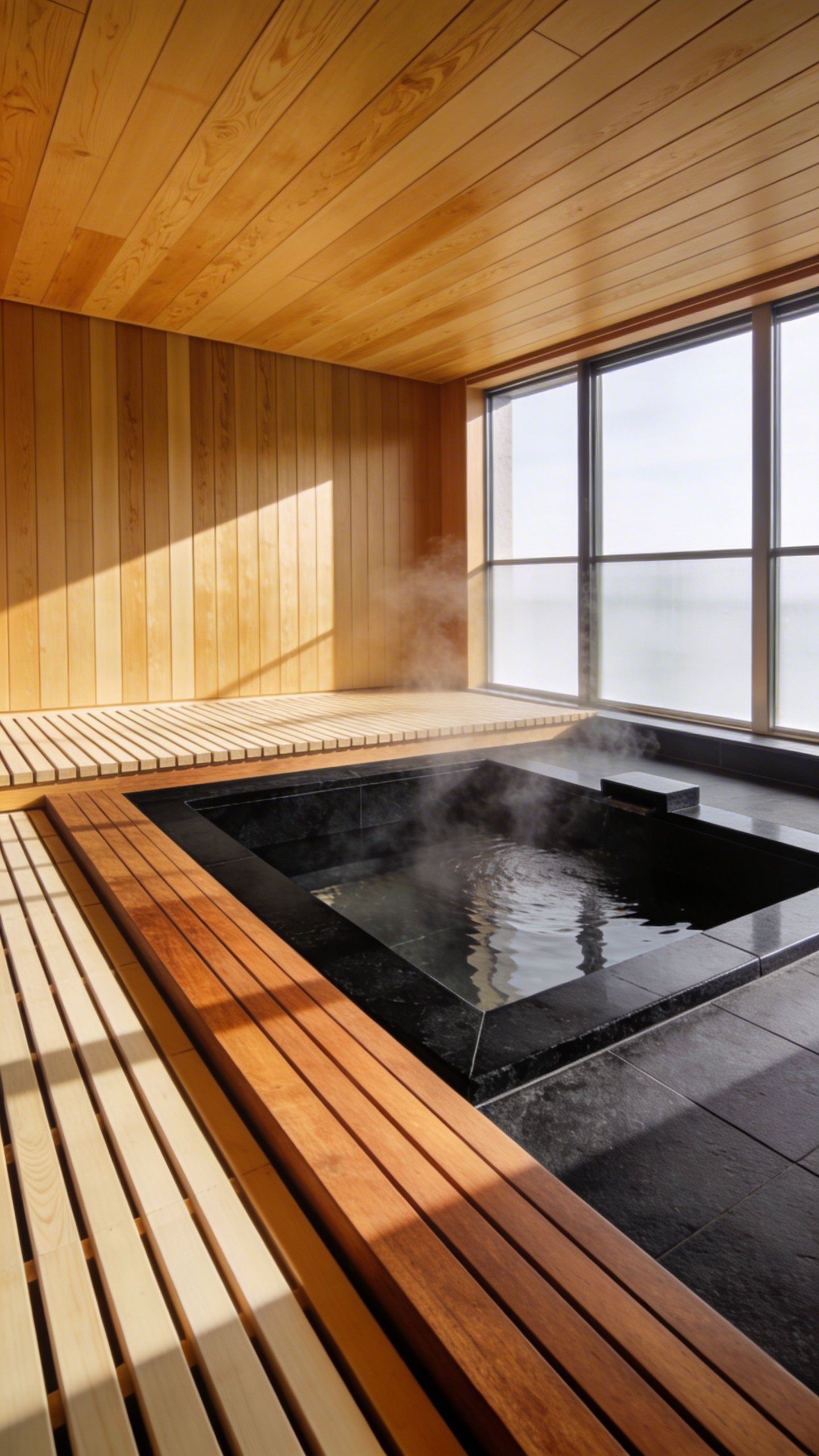
Warm steam activates Hinoki wood. Consequently, it releases natural oils that promote deep relaxation. Also, Hinoki naturally resists mold and mildew. Alternatively, Teak offers incredible density and durability. Indeed, its natural oils make it highly resistant to moisture. Thus, it provides a warm, slip-resistant surface.
I love how slatted floors feel under bare feet. Specifically, the rounded gaps act like a gentle massage during a shower. Additionally, the wood absorbs sound waves. It replaces the harsh clatter of water on tile with a soft drumming.
However, building these floating platforms takes careful planning. Typically, a raised floor needs clearance for specialized drainage underneath. Therefore, I recommend using modular slatted mats. You can easily lift these sections to clean the sub-floor. Unquestionably, this prevents soap buildup. Finally, you have to decide on maintenance. Teak keeps its golden color with regular oiling. Meanwhile, Hinoki is usually left bare to age into a soft silver.
5. Trend 3: Continuous microcement for authentic European wet room integration
Microcement is no longer just a cheap industrial coating. Today, it offers a fantastic way to blend modernism with a softer aesthetic. Specifically, continuous microcement removes grout lines entirely. Consequently, the material flows from the floor straight up the shower walls. This continuous look creates a calm, expansive environment. I love that the hand-troweled application makes every bathroom unique. Naturally, subtle trowel marks show off the handmade finish. Similarly, tiny micro-cracks develop over time. We can embrace these small changes as part of the material’s charm.
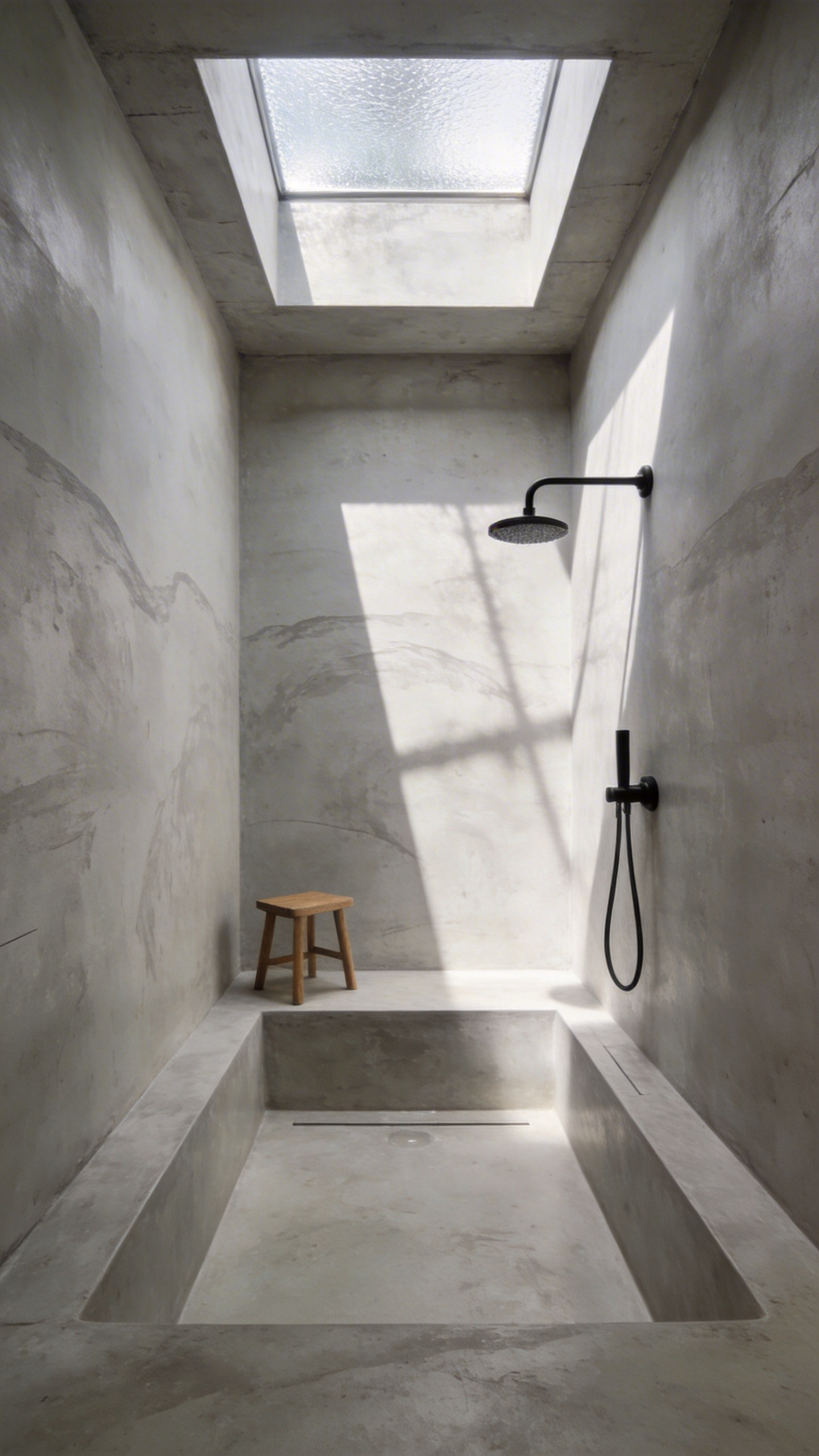
Microcement also feels surprisingly different from standard concrete. In fact, this polymer blend feels warm underfoot. Therefore, it pairs brilliantly with hydronic underfloor heating. Walking on it feels a bit like stepping on soft stone. Moreover, the matte finish diffuses harsh overhead light.
However, getting this look right requires a professional. Crucially, microcement is never a waterproof membrane on its own. Good installers always use anti-fracture mesh and waterproofing beneath it. Ultimately, you just need to reseal it periodically to keep water out.
6. Trend 4: Tumbled river rock mosaics in restorative Wabi-Sabi palettes
River rock mosaics are making a big comeback. Specifically, tumbled stones bring a natural texture to modern bathrooms. Industrial tumbling processes age the raw stone artificially. This creates a beautifully whitened, matte finish. Therefore, the floor feels like it was weathered by ocean tides.
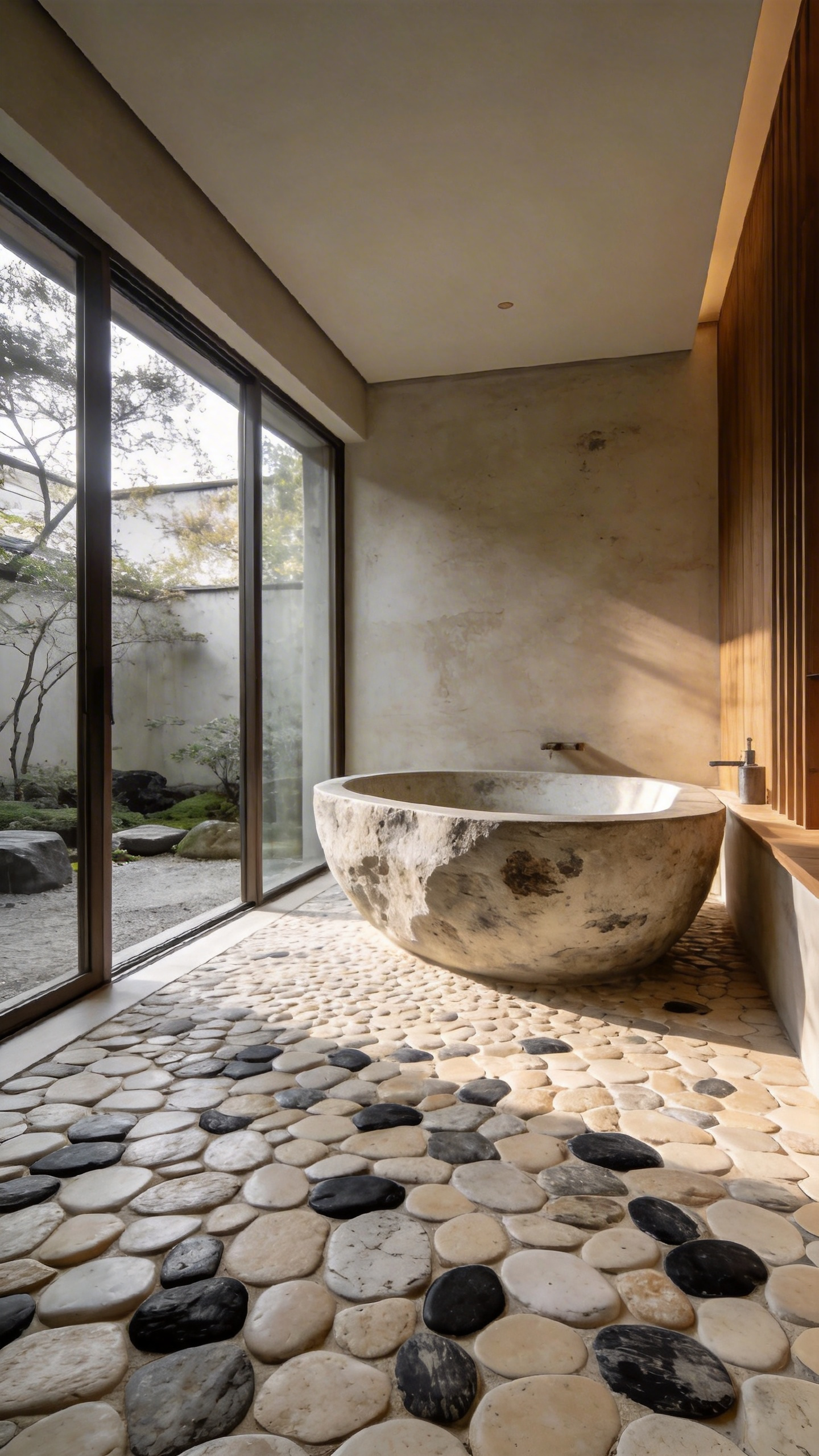
Visually, this rejects the stark white spa look. Instead, I prefer earthy neutrals like driftwood brown. These muted tones absorb light and reduce glare. In the end, a darker room can help lower your stress at the end of the day. Plus, using a matching matte grout creates a continuous landscape. This embraces natural irregularity perfectly.
Walking on these stones offers real physical benefits. The varying surface stimulates pressure points on your feet. Moreover, the high amount of grout makes it incredibly slip-resistant. Subconsciously, knowing you will not slip helps you relax. However, this effortless look takes serious labor. Installers must hand-place loose stones to hide the mesh seams. Finally, a breathable penetrating sealer is essential. This protects the stone without adding an artificial gloss.
7. Trend 5: Honed Mediterranean terrazzo with earth-toned binders
We are moving away from cold, high-gloss white floors. Instead, Mediterranean terrazzo is bringing warmth back to the bathroom. Specifically, this revives the old technique of mixing lime with crushed terracotta. Today, designers use earth-toned binders to get a similar feel. Pigments like raw sienna provide a deep, grounding color. This anchors the room beautifully.
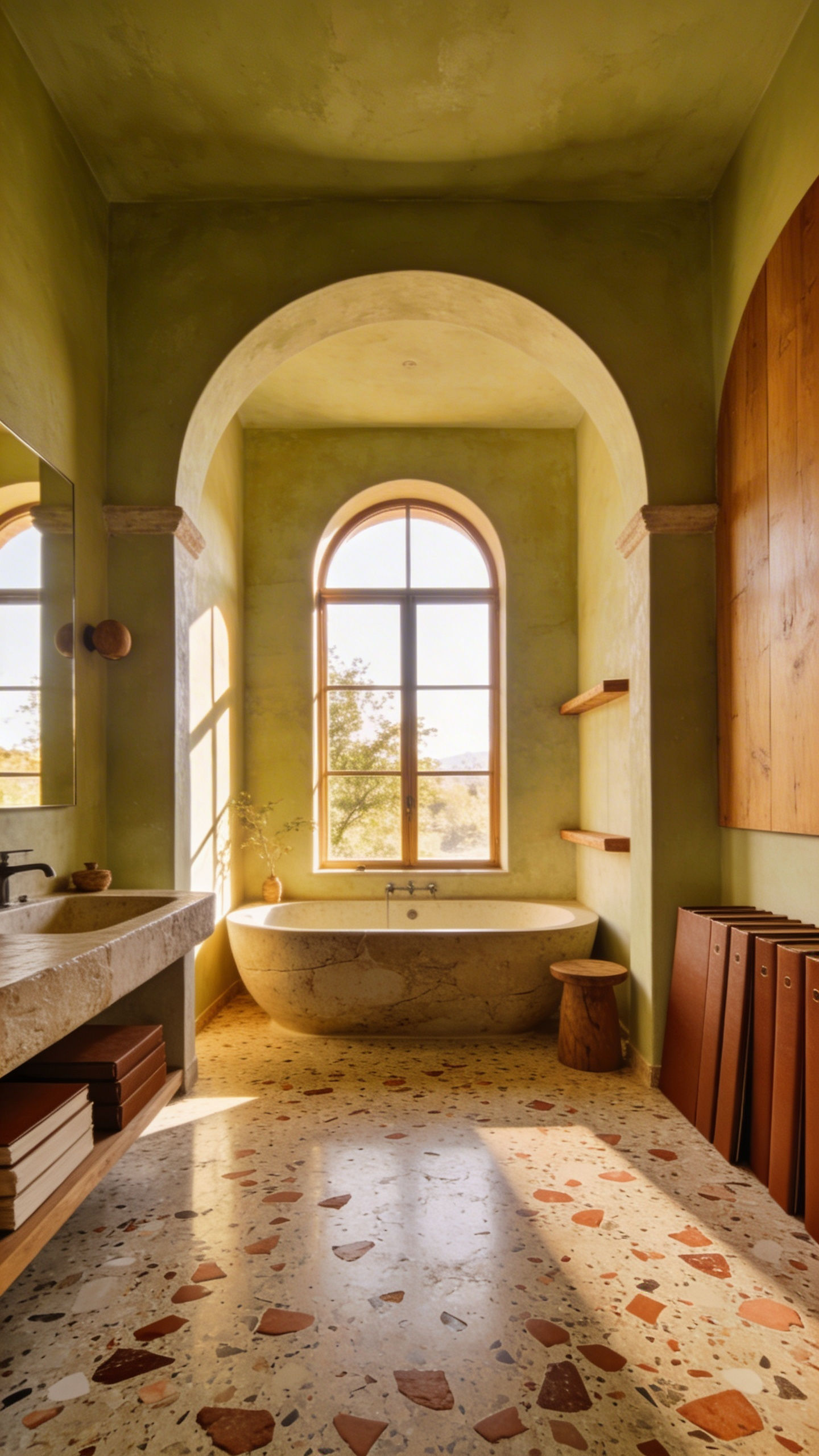
The tactile experience of honed terrazzo is fantastic. Installers grind the stone until it is perfectly smooth but not shiny. Consequently, the stone pieces sit flush with the cement. Unlike polished floors, this matte finish gives you a velvety grip. Moreover, it absorbs light to keep the room feeling quiet. Importantly, mechanical honing meets standard anti-slip ratings. Therefore, you can use it safely in curbless showers.
Modern terrazzo often features tiny stone aggregates. Ultimately, this zero-waste approach looks like a slab of natural limestone. Also, relying on natural mineral pigments is a smart move. Naturally, these colors stay stable even under bright skylights. Consequently, the floor keeps its rich tone for decades.
8. Trend 6: Curbless flooring transitions for uninterrupted master suite flow
Curbless showers used to be just for accessibility. However, they are now a hallmark of high-end design. Specifically, designers are erasing the physical barriers across the master suite. Consequently, the shower feels like an extension of the room.
Achieving this seamless look requires clever hidden engineering. For instance, contractors often drop the subfloor to avoid building a ramp. Skilled installers use self-leveling compounds to align everything perfectly. Instead of bulky metal transition strips, they use tight silicone joints.
Psychologically, removing these minor bumps makes mornings easier. Therefore, moving from the bedroom to the bathroom feels totally fluid. Additionally, extending underfloor heating across this boundary keeps your feet warm. Visually, unbroken sightlines make the whole suite feel much larger.
Your material choices dictate how well this works. Namely, wood-look porcelain tiles can match your bedroom floor closely. Aligning the grain makes the threshold almost invisible. Moreover, large-format tiles reduce visual noise. Finally, wall-mounted linear drains handle the water without disrupting the floor slope. Thus, this engineering creates a beautifully unified space.
9. Trend 7: Radiant underfloor heating (the invisible pillar of European comfort)
Radiant underfloor heating is now a non-negotiable standard. Historically, it traces its roots back to ancient heating systems. Today, it provides the ultimate spatial comfort. Specifically, the technology warms you directly instead of blowing hot air. Consequently, this creates a deeply relaxing thermal cocoon. Warming your feet directly signals your body to relax. Naturally, it supports walking barefoot year-round. Such upgrades are common in high-end bathroom renovation ideas.
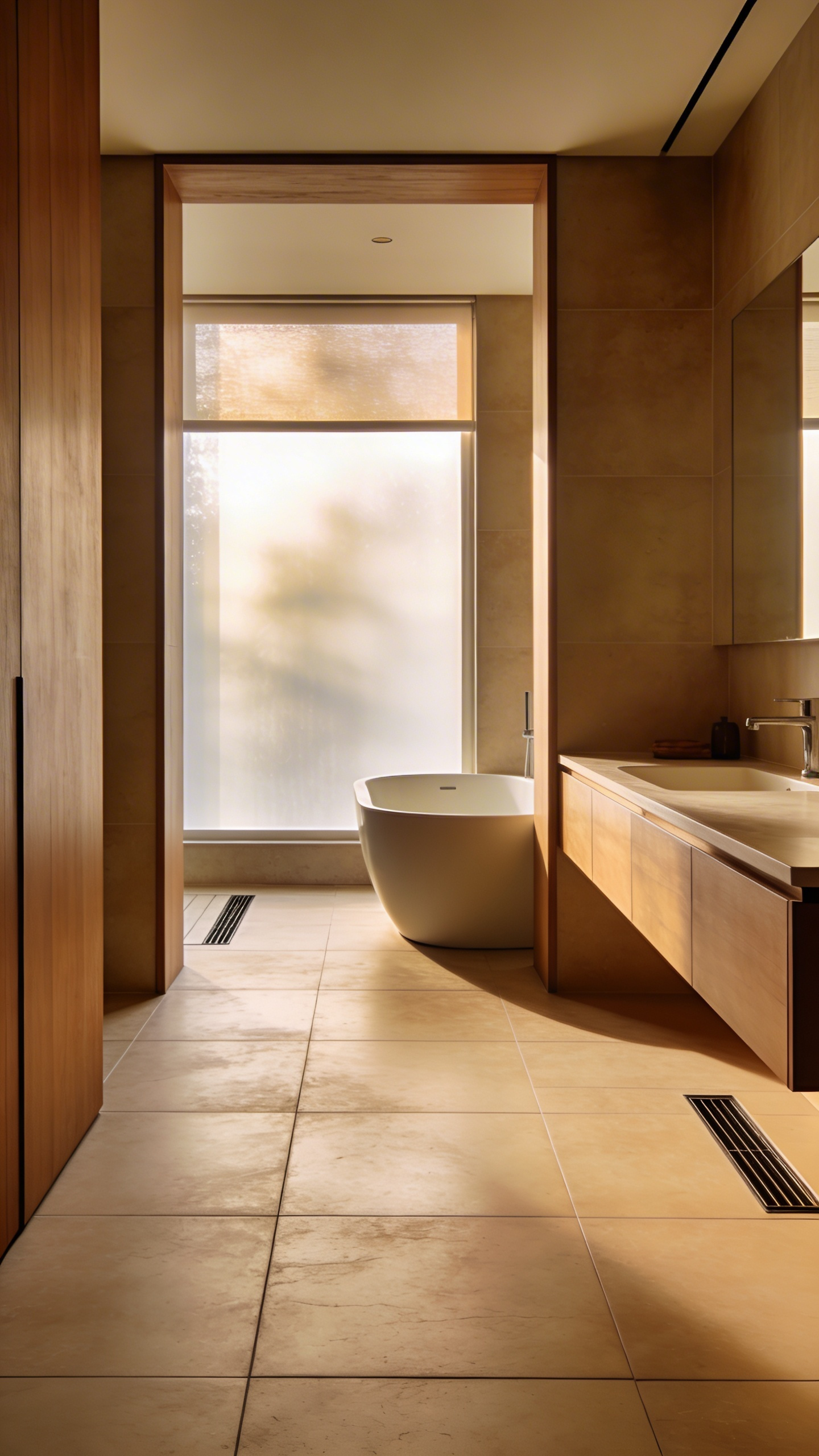
Visually, underfloor systems eliminate the need for bulky radiators. Therefore, you gain total freedom to design the walls. This allows for unbroken tile installations. For instance, natural stone can cover both floors and walls without interruption. Additionally, ambient heat dries the shower floor rapidly. As a result, it drastically reduces slip hazards and mold growth.
Environmentally, low-temperature systems pair well with heat pumps. Meanwhile, ultra-thin electric mats work great for simple renovations. Ultimately, using porcelain or stone maximizes this efficient, silent warmth.
10. Trend 8: Micro-textured matte porcelain for tactile sophistication and safety
Historically, slip-resistant floors were rough and hard to clean. Fortunately, micro-textured matte porcelain solves this old problem. Specifically, new manufacturing methods suspend tiny particles in the glaze. This creates entirely invisible friction. The porcelain feels completely smooth when it is dry. Conversely, it develops high friction the moment it gets wet. Safety ratings easily reach high standards without feeling like sandpaper. Furthermore, you can run this exact tile directly into the shower.
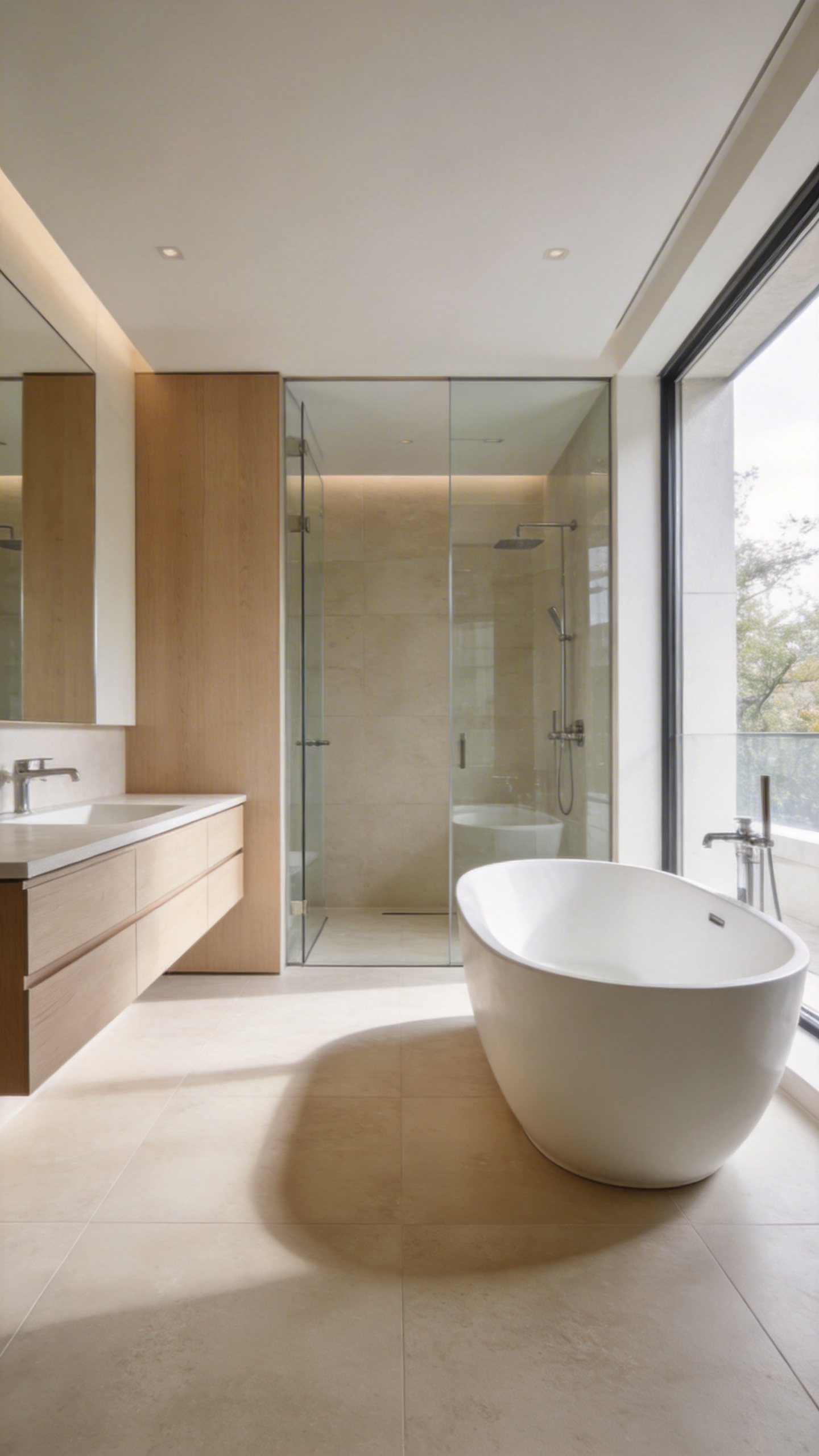
I always favor matte finishes over glossy surfaces. These matte tiles absorb light rather than bouncing it around. Consequently, the room feels remarkably serene and grounded. Advanced printing synchronizes realistic textures with the look of natural stone. Indeed, matching the physical feel to the visual look is satisfying. This aesthetic beautifully mimics raw, organic materials.
Moreover, ambient light highlights just the highest textured points. The floor almost seems to glow. Thus, the surface looks slightly different throughout the day. This material effortlessly provides safety for all ages. In the end, you get total peace of mind without sacrificing luxury.
11. Trend 9: Biophilic border integrations that blur indoor and outdoor boundaries
Bringing nature indoors is getting much more literal. Specifically, designers are dissolving the borders between the bathroom and the garden. Standard grout lines are being replaced with geological transitions. For example, recessed pebble moats look like a dry riverbed. Also, these borders easily hide linear drainage systems. Consequently, walking across these stones offers a quick foot massage.
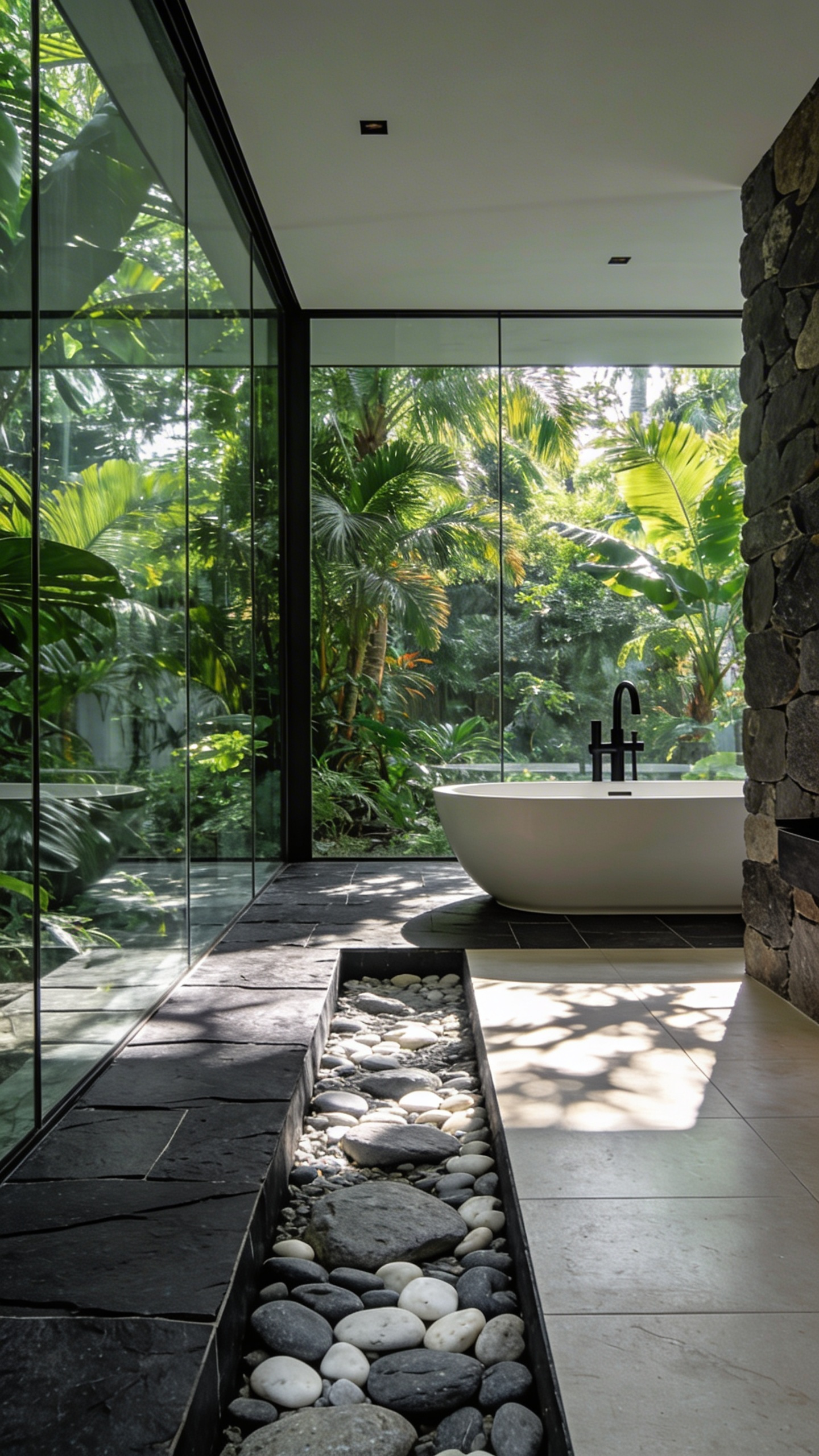
Similarly, you can integrate living elements into the floor. In fact, recessed moss borders act like an organic rug. Ultimately, adding greenery transforms the space into a true wellness retreat.
Technically, a seamless connection to the outdoors requires careful planning. Careful subfloor framing allows interior tiles to perfectly meet outdoor patio pavers. Visually, removing physical steps stops urban bathrooms from feeling boxed in.
Additionally, tactile material shifts soften a room’s edges. I love using bleeding techniques to blend textures gradually. Naturally, smooth center tiles can slowly transition into rough slate near the windows. Overall, using the same grout color keeps everything cohesive.
12. Trend 10: Thermally modified European Oak with water-resistant nano-coatings
Using real wood in a bathroom used to be a terrible idea. Today, controlled thermal modification changes the rules. Specifically, European Oak is baked in oxygen-free kilns. Consequently, the intense heat alters the wood’s cellular structure. The timber loses its natural sugars and its ability to absorb moisture. Plus, Oak already has a remarkably tight grain. This prevents standing water from causing damage. Naturally, the baking process turns the wood a deep, rich amber.
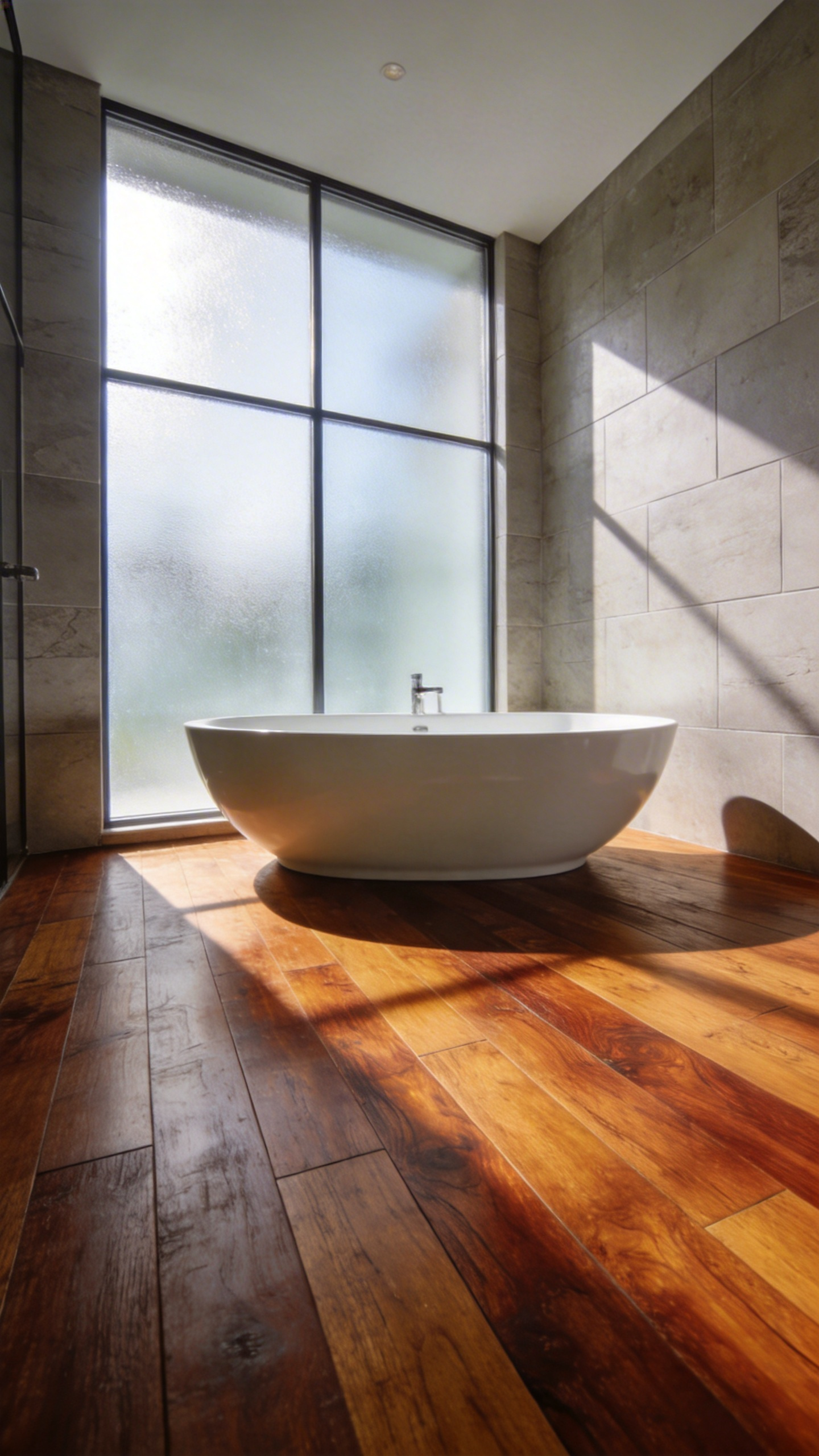
However, thermally modified wood still needs surface protection. Therefore, installers apply thin nano-coatings to the boards. These invisible particles bond deep within the wood fibers. Remarkably, this creates a breathable barrier that repels water completely. The resulting floor feels as warm as a luxury sauna. Additionally, it retains a faint, toasted smell from the kiln. Moreover, the raw grain provides a safe grip when wet. Indeed, this domestic wood is a great alternative to tropical hardwoods. Thus, it offers a sustainable option for high-end homes. Of course, the nano-layer requires occasional maintenance. Typically, you just wipe on a rejuvenator every few years.
13. Trend 11: Geometric floor zoning to anchor floating Asian-inspired vanities
Floating vanities look incredibly sleek. However, they sometimes seem a bit lost in a large room. Specifically, your eye needs a visual anchor to process the floating cabinet. Consequently, geometric floor zoning provides this structure. By placing contrasting tiles under the vanity, you create a permanent rug. In fact, this prevents the cabinet from appearing to drift.
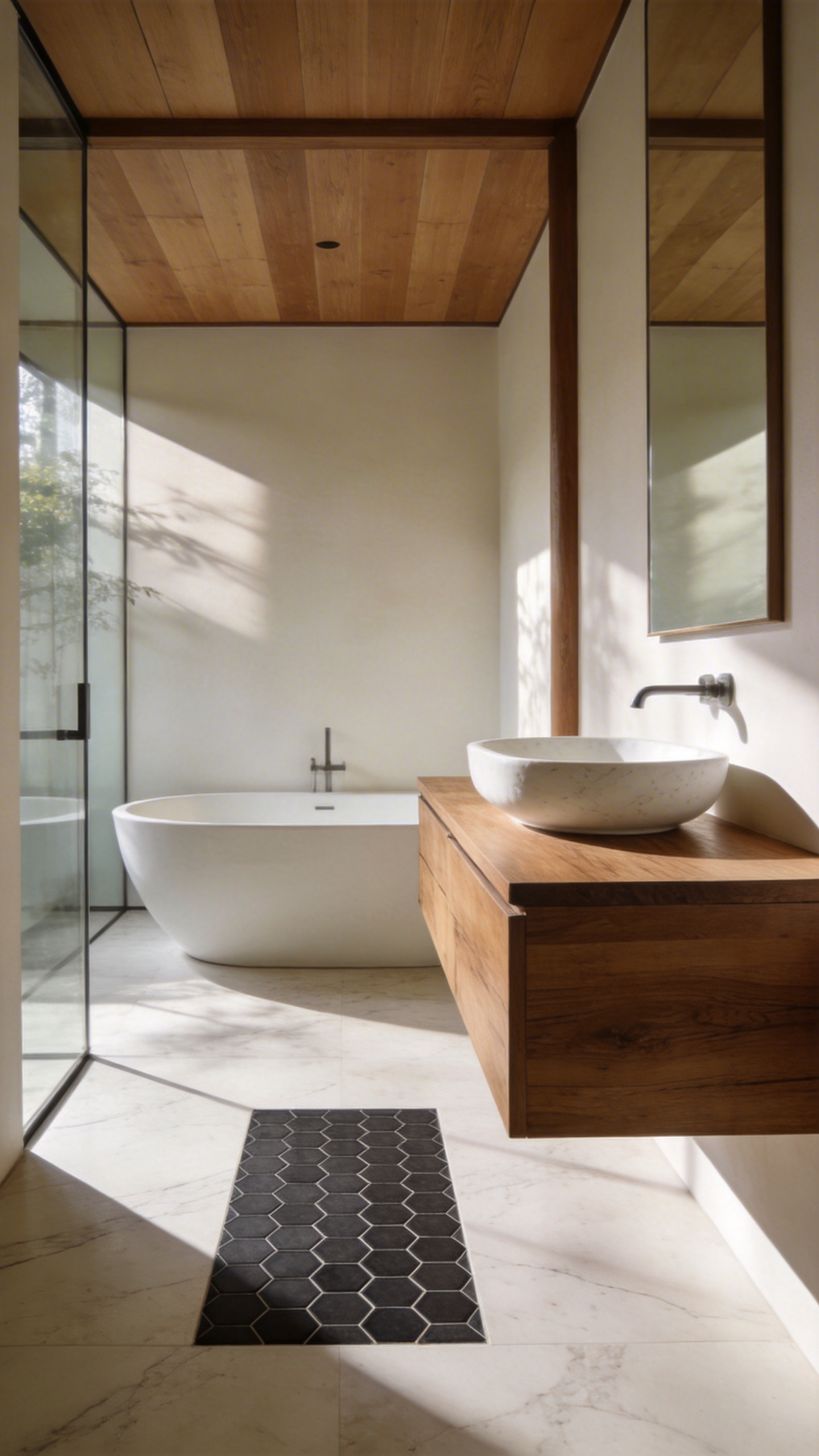
Traditional patterns work beautifully for this application. For instance, a classic star pattern introduces sharp geometry. Alternatively, a wave pattern adds fluid motion. These rigid shapes look great against natural wood grains. Additionally, zoned flooring creates a distinct functional boundary. It safely separates the dry sink area from the wet shower. Indeed, you can use highly slip-resistant tiles just for the wet zones. This protects wooden vanity legs from standing water.
Moreover, a geometric inlay highlights the empty space beneath the cabinet. The shadows under the vanity become an active design choice. Specifically, glossy tiles can reflect the glow of under-cabinet lighting. This gentle reflection looks fantastic. Finally, modern implementation relies on tight precision. Laser-cut tiles must sit flush with the main floor. Therefore, the transition remains completely flat. Ultimately, this technique adds incredible custom detail to the room.
14. Trend 12: Artisanal hand-poured encaustic tiles in subdued, meditative tones
Loud, colorful tiles are giving way to quieter options. Specifically, hand-poured encaustic tiles perfectly capture this calm shift. Indeed, these materials showcase incredible craftsmanship. Skilled artisans use delicate brass molds to separate the colors. Next, they pour a thick slurry of cement and pigment. Because the color is inlaid, the patterns never wear off. This manual process creates a floor with real character.
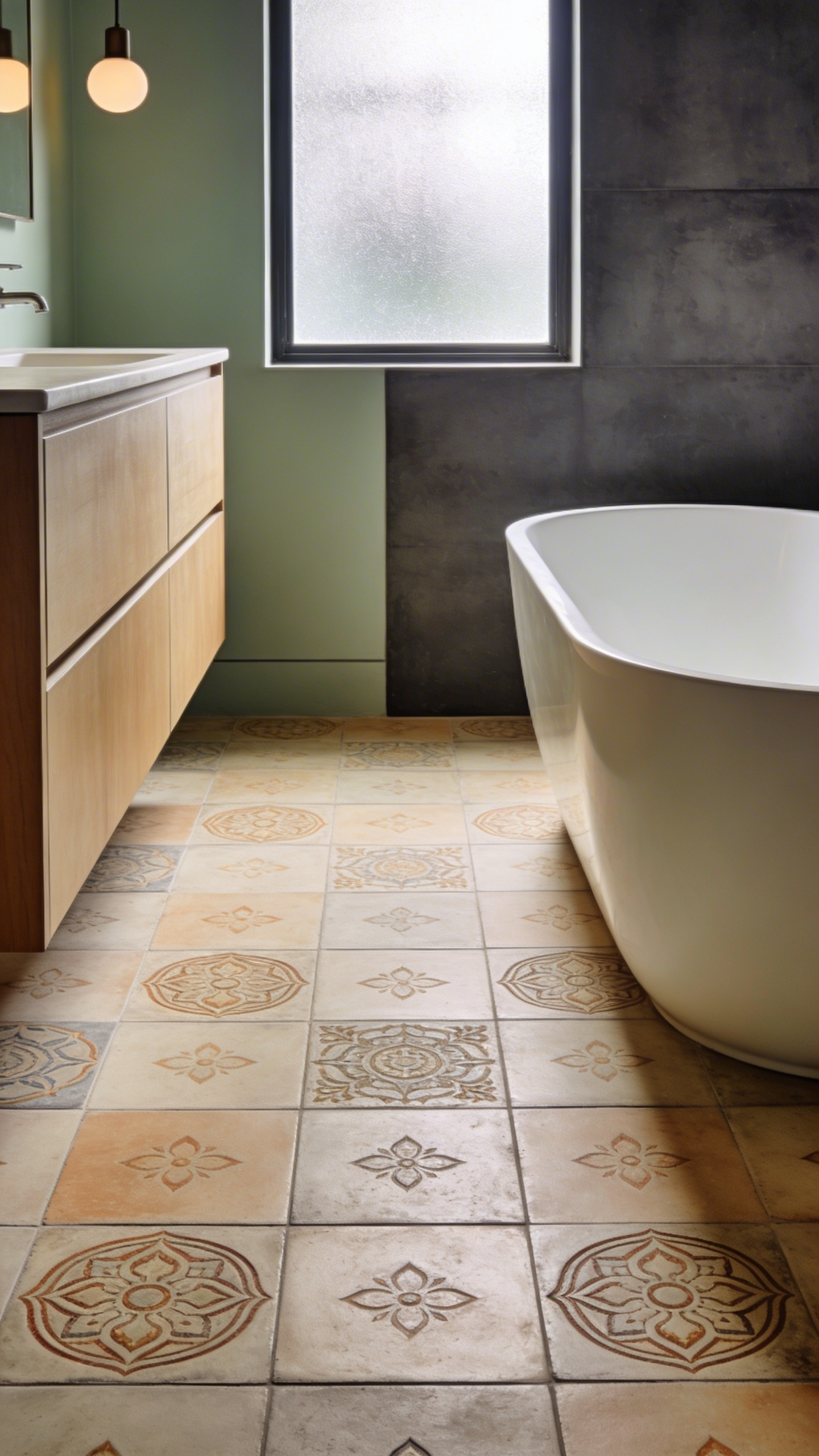
Modern palettes favor muted, earthy tones. Dusty sage and warm sand are replacing high-contrast colors. Consequently, these softer hues help soothe the nervous system. Visually, this aligns with a more relaxed, imperfect aesthetic. The tactile experience is equally distinct. Unlike glazed ceramics, unglazed cement feels silky. Additionally, its mass slowly absorbs ambient heat. Therefore, stepping onto the floor feels incredibly grounding. These dense tiles also help dampen room noise.
Naturally, porous cement will age over time. Subtle color variations and edge wear tell a story. Technically, the matte finish provides great slip resistance. Consequently, you just need to protect them with a penetrating sealer. Ultimately, gentle cleaners will preserve these tiles for decades.
15. Trend 13: Oxidized metal-look ceramics for urban European edge
If you want an industrial look, oxidized metal-look ceramics are ideal. Specifically, this aesthetic celebrates raw, weathered materials. Furthermore, it highlights the beauty of natural imperfections. However, putting real steel in a wet bathroom is asking for rust problems. Therefore, manufacturers use reactive glazes to mimic the look. During firing, mineral oxides create an iridescent film. Consequently, these tiles reflect light differently as you walk past. They mimic an aged steel patina perfectly.
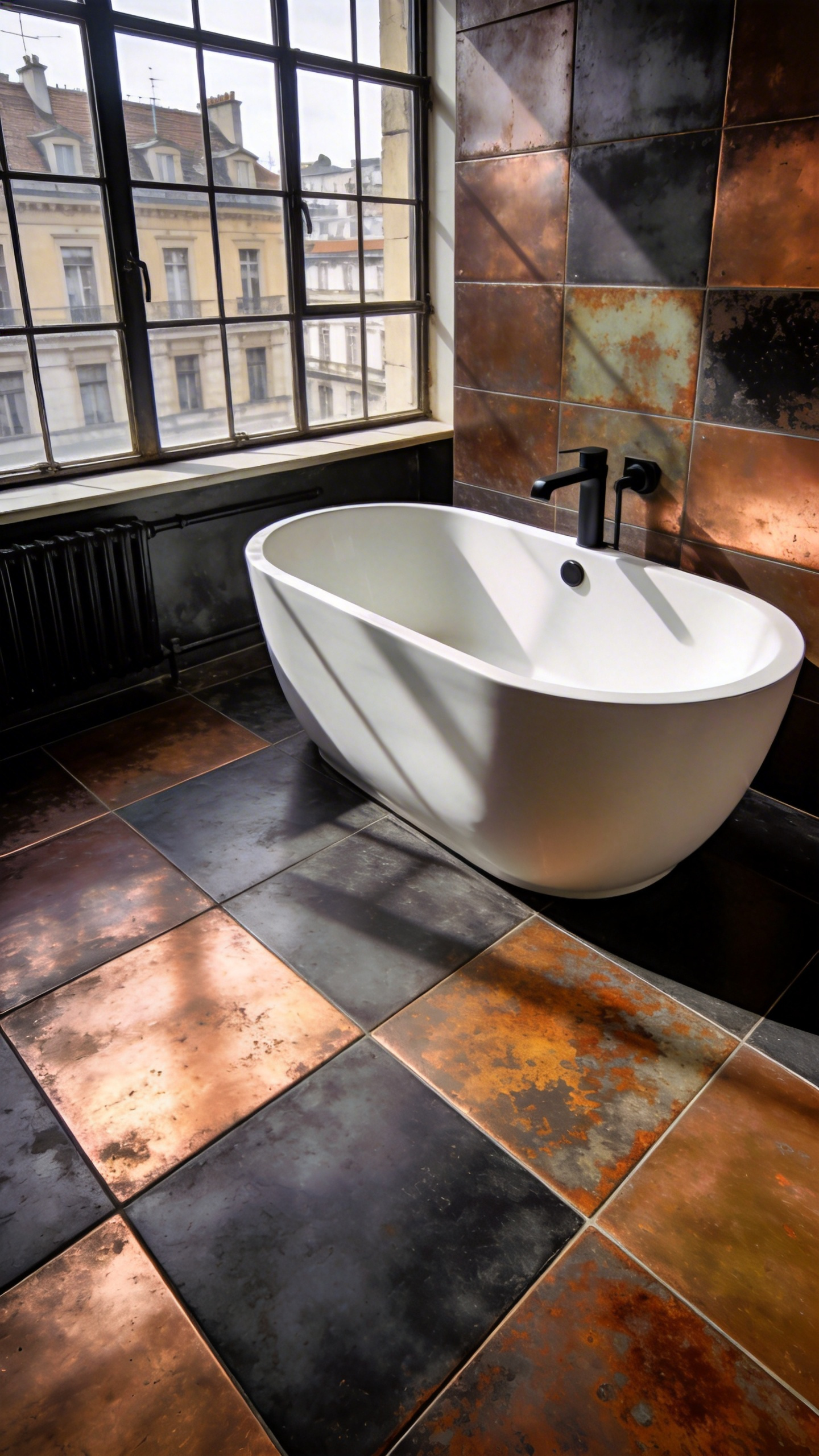
These ceramics also solve a major maintenance headache. Real metal rots, but porcelain is completely waterproof. Indeed, you get the romantic look of rust without any structural damage. Visually, these finishes catch the glow of ambient lighting. Meanwhile, the tiles work perfectly with underfloor heating. This creates a fun sensory trick. You see a cold industrial surface, but you feel soothing heat.
This material looks best when paired with elegant fixtures. For instance, I love contrasting dark steel-toned floors with clean marble vanities. Similarly, fluted glass screens elevate the raw flooring. This mix of raw and refined defines modern urban design. Thus, you create a striking space that requires zero maintenance.
16. Trend 14: The elevated plunge tub surround (defining the modern ritual space)
Placing a tub on a raised platform creates a distinct bathing zone. Specifically, this trend turns the floor into an architectural feature. By raising the tub, we give it spatial importance. Consequently, taking a bath feels more like an intentional ritual. This approach draws heavily from classic deep-soaking traditions.
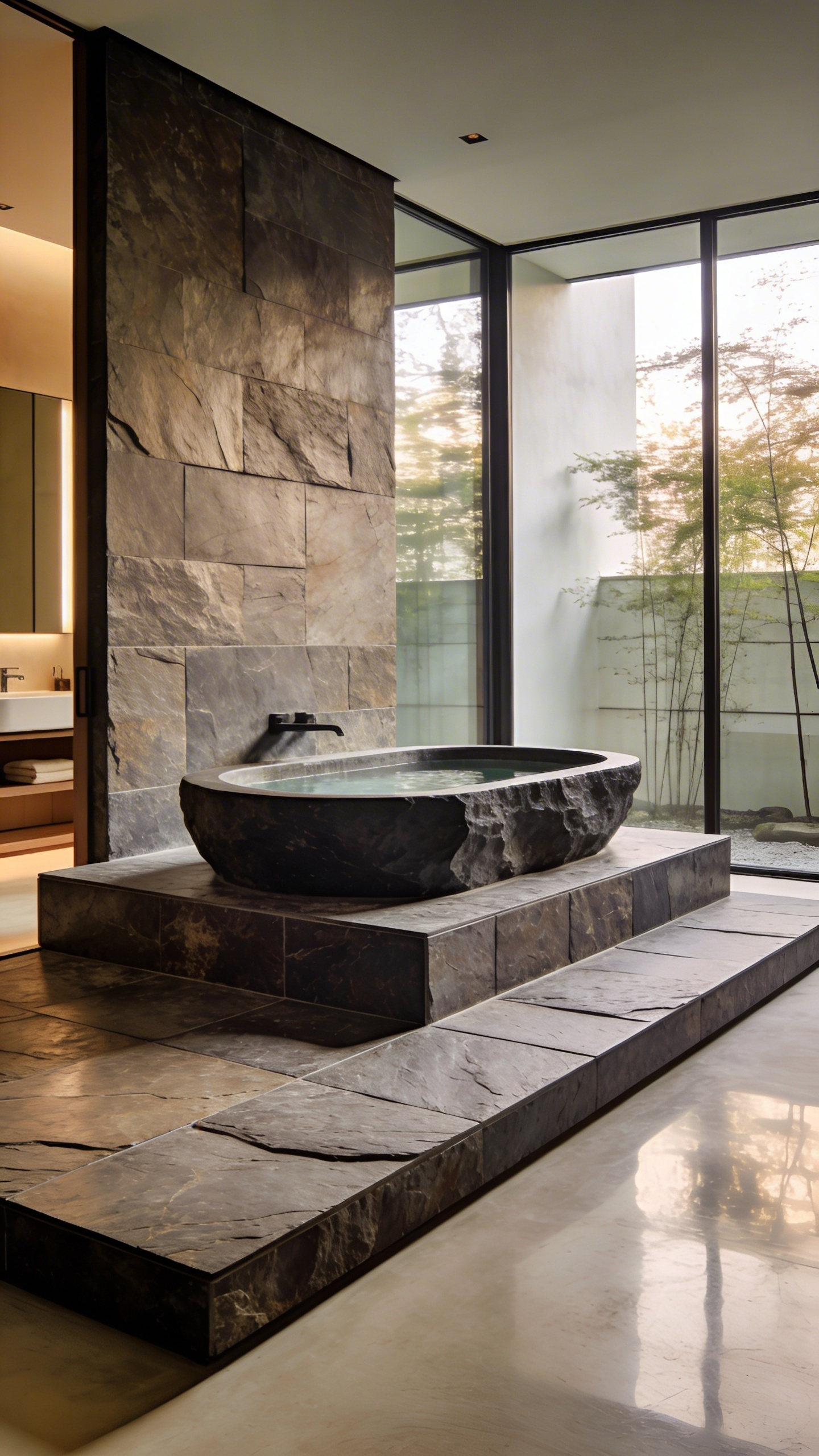
Traditional deep vessels hold a lot of water. Indeed, a full plunge tub can weigh over a thousand pounds. Therefore, reinforcing the subfloor under the platform is mandatory. Furthermore, smart installers hide trench drains around the raised edges. Ultimately, this lets you splash without flooding the main room.
The tactile experience of the platform is also important. For instance, putting radiant heat beneath the surround makes it very welcoming. Conversely, the surface must be safe for wet feet. Thus, I usually specify honed or leathered stone for the steps. These textures offer great grip while feeling organic.
Visually, you have two main options for the platform. First, wrapping the same floor tile up the riser creates a seamless block. Alternatively, using a dark slate creates a striking focal point. Ultimately, both methods anchor the room beautifully.
17. Trend 15: Acoustic dampening underlayments for Zen-like silence
Hard surfaces make bathrooms incredibly loud. Conversely, a true retreat should be quiet. Therefore, acoustic dampening underlayments are becoming essential. These hidden layers use recycled rubber or cork to absorb impact noise. Specifically, they muffle the sharp sound of footsteps. This subtle change actually helps lower your heart rate. Furthermore, new acoustic membranes work perfectly with floor heating. Consequently, the floor stays warm while remaining totally silent.
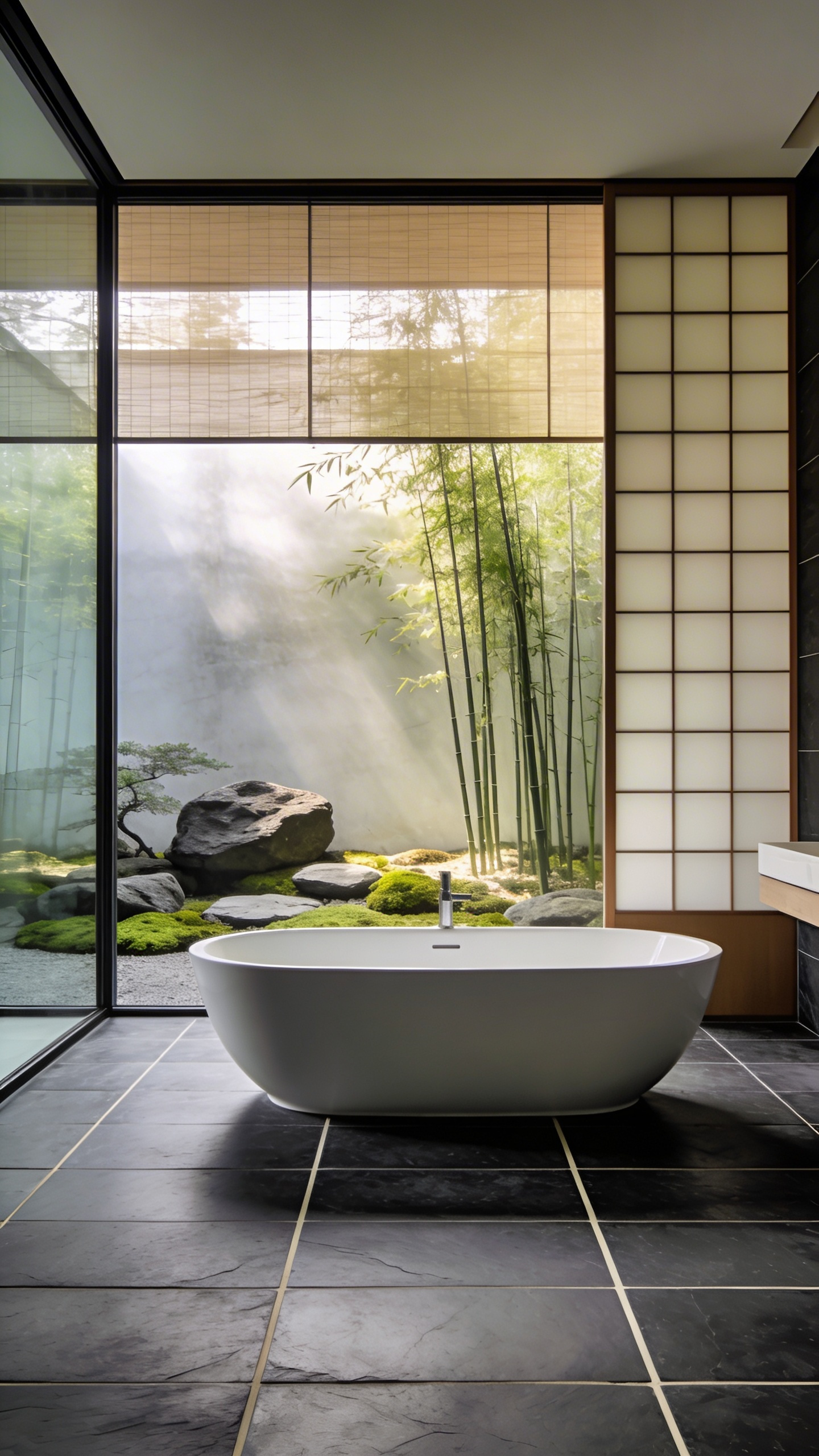
However, achieving this silence requires careful installation. Installers must use perimeter strips to keep the floor from touching the walls. Ultimately, this floating floor acts like an isolated island. It disconnects the room from the rest of the house’s framing. Thus, the bathroom becomes a genuinely hushed retreat.
18. Conclusion & lifestyle integration: Cultivating your daily ritual of grounded luxury
Your bathroom floor is a huge part of your daily routine. Keeping up with bathroom flooring trends helps you build a better space. Specifically, your feet have hundreds of thousands of nerve endings. Therefore, every step you take matters. For example, cold basalt wakes you up in the morning. This thermal contrast signals that it is time to start the day. Conversely, a heated floor relaxes your muscles at night. Indeed, this warmth makes a massive difference in the winter.
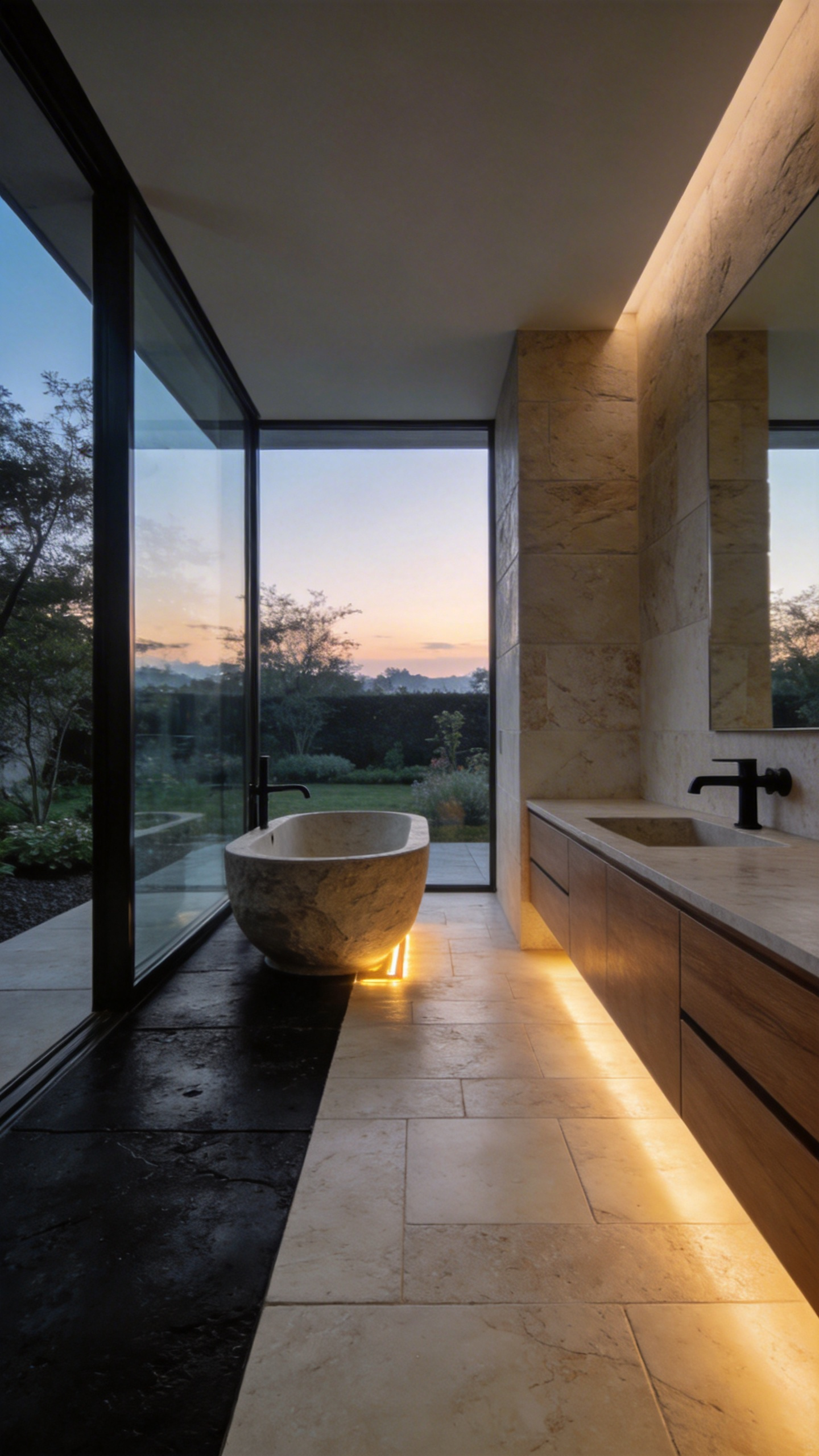
Architectural transitions also influence how you feel. For instance, moving from tile to warm wood is an intentional shift. This change signals your brain to switch gears. Similarly, using large tiles minimizes distracting grout lines. Consequently, fewer visual interruptions keep your stress levels low.
I also love drawing inspiration from natural environments. Specifically, raw wood and stone bring the outdoors inside. Moreover, textured pebble floors give you a free foot massage every day. Ultimately, a grounded room always favors authentic materials over shiny plastics. Every step on natural stone connects you to the earth. Thus, blending these elements creates a beautifully balanced room. Finally, your bathroom becomes a place you actually want to spend time in.
Frequently Asked Questions
What is the most popular bathroom flooring trend for 2026?
The leading trend is large-format sintered stone or microcement. These materials eliminate grout lines. Consequently, they create a seamless look that mimics high-end spas.
Is natural wood flooring suitable for a high-moisture bathroom?
Yes, if you use the right type. Thermally modified European Oak or marine-grade Teak are excellent choices. Installers treat these woods to resist rot. When paired with modern nano-coatings, they offer real timber warmth with serious durability.
How do I choose slip-resistant flooring without losing style?
Micro-textured matte porcelain is a fantastic option. These tiles feature advanced glazes that grip when wet. Therefore, they maintain a sophisticated finish while meeting strict safety standards.