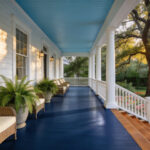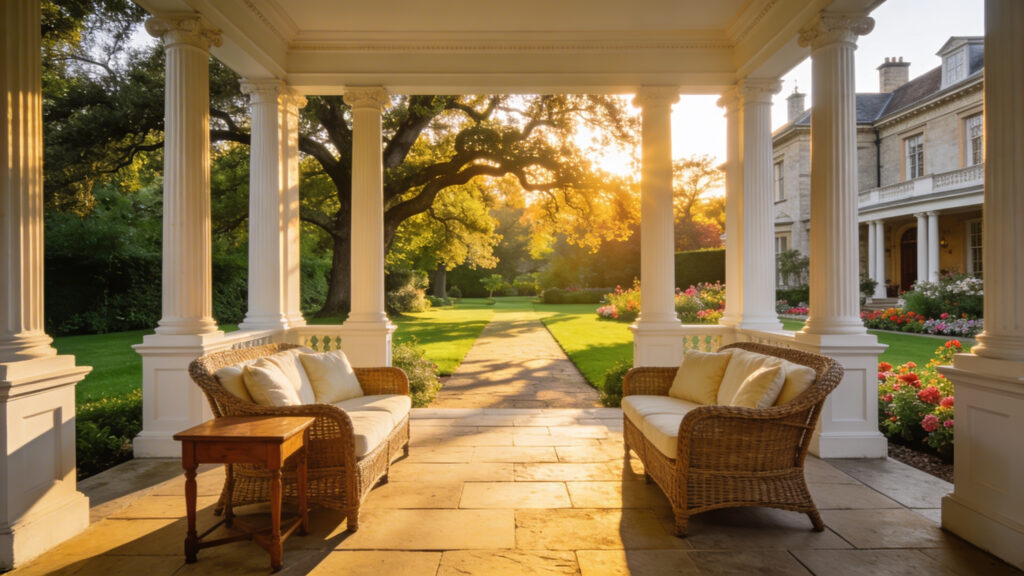
I often hear people say porches were always meant for private relaxation. However, that common belief ignores a much richer architectural history. In fact, these structural extensions began as vital survival mechanisms in colonial times. Today, picking the right porch furniture isn’t just about utility. Instead, it’s about pushing your home’s personality out into the fresh air. For instance, the British veranda originally shielded homes from intense tropical heat. Builders paired white-washed walls with dark indigenous hardwoods for contrast. Therefore, the furniture needed specific technical solutions for airflow. Caned seating quickly emerged to prevent heat rash in humid climates.
Next, styles evolved from these practical roots into real social statements. The American front porch introduced the democratic rocking chair. Meanwhile, British society viewed this self-propelled seat as deeply undignified. Later, Victorian designers transformed simple rope swings into ornate luxury benches. Consequently, these front-facing verandas acted as neighborhood theaters for public observation. Indeed, the classic Peacock Chair showcased the exotic reach of empire. Its tall woven back also acted as a natural cooling fin.
Eventually, modern technology pushed families away from the bustling street. Noisy automobiles and air conditioning ended the front porch era. Homeowners naturally traded public social bridges for secluded backyard decks. Therefore, outdoor furniture shifted from outward-facing seats to inward-facing conversational sections. Below, I’ll explore the fascinating cultural shift of these outdoor spaces and how classic British design still influences modern porches.
1. The Edwardian Threshold: Resurrecting the Heritage of the Original Outdoor Room
The Edwardian era marked a profound shift in domestic architecture. Specifically, homes moved away from fortress-like Victorian privacy. Instead, the porch became a sophisticated middle ground. Therefore, this threshold bridged the public street and the private parlor. Suburbanization provided larger lots and set-back houses. As a result, architects like Edwin Lutyens designed porches as open stages. Indeed, these inviting viewpoints encouraged serendipitous encounters with passing neighbors.
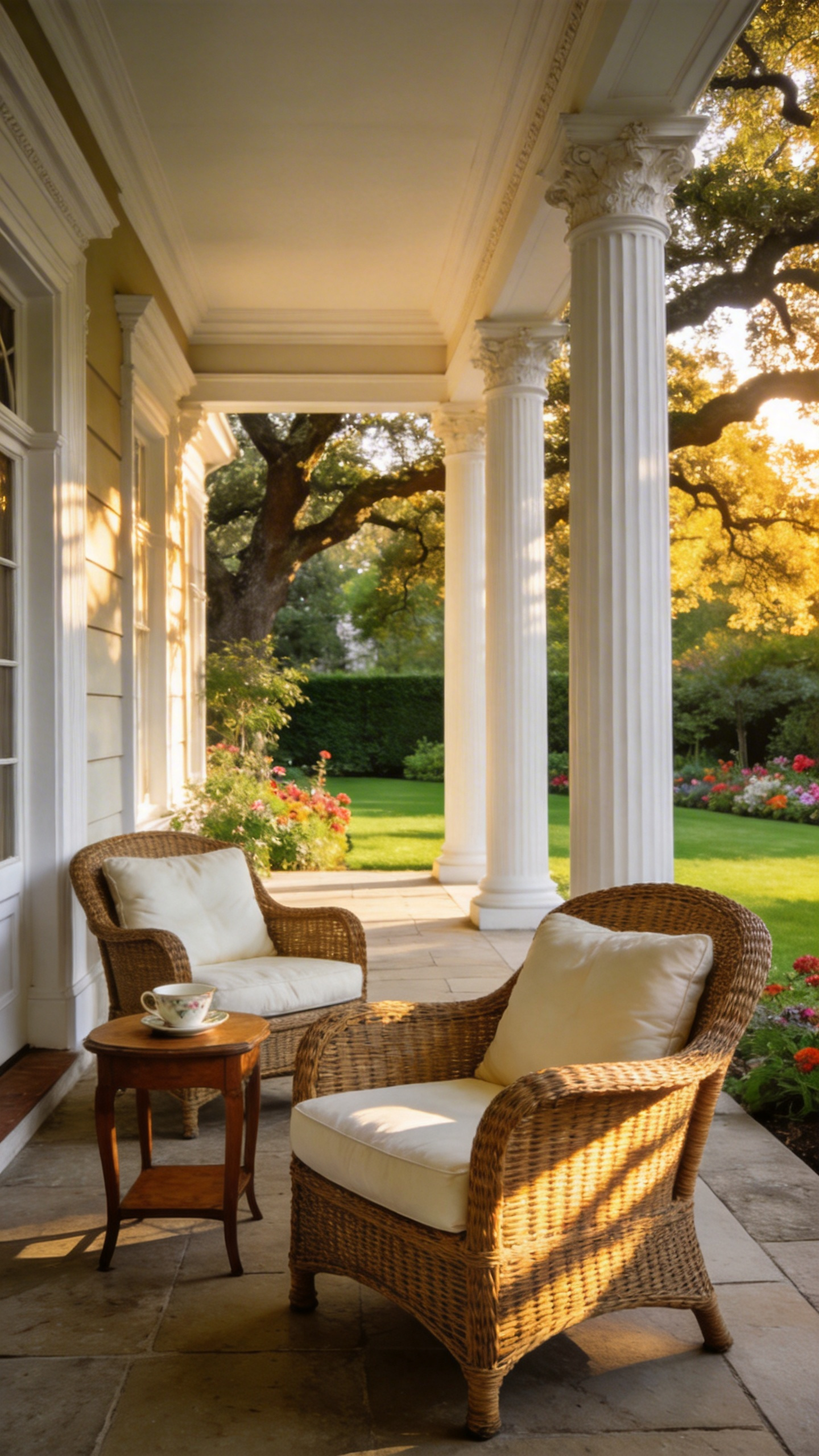
Naturally, this architectural evolution required a material shift. Edwardian homeowners favored lightness and air over dark clutter. Therefore, wicker and bamboo replaced heavy cast iron. For example, the Heywood-Wakefield company popularized linear stick wicker designs. These pieces featured soft garden palettes like sage and cream. You can often pair them with 15 sophisticated porch paint ideas to enhance luxury curb appeal. Next, tactile flowery chintz and linen cushions softened the space. In fact, you could almost hear the rhythmic creak of a woven rocker.
Meanwhile, a growing obsession with health influenced outdoor furnishings. Specifically, the fresh air cure popularized the functional sleeping porch. Doctors recommended constant contact with moving air to prevent illness. Consequently, lightweight daybeds and slatted wood Adirondack chairs became essential. They functioned more like health equipment than mere luxury items.
Finally, this threshold became the ultimate site for ritualized leisure. Afternoon tea transformed the porch into a functional outdoor nook. Therefore, families arranged low glass-topped tables in conversational clusters. This relaxed sensibility quickly replaced rigid Victorian perimeter seating. Later, Gustav Stickley’s Mission-style wicker brought honest craftsmanship outdoors. Today, prioritizing hand-woven textures recaptures this welcoming Edwardian heritage perfectly.
2. Beyond the Patio: The Psychology of the Transitional Porch Space
The porch is far more than a simple architectural extension. Specifically, it acts as a psychological decompression chamber. Environmental psychologists often call this a threshold space. Thus, the strict boundaries between public life and private sanctuary dissolve. Naturally, your furniture choices must negotiate this delicate balance. For instance, low-slung lounge chairs signal to your body that the workday is officially over.
Next, adding a side table provides a psychological anchor. This simple piece grants you quiet permission to linger. Historically, the porch satisfies our evolutionary need for prospect and refuge. Humans feel safest when they can observe without being seen. Therefore, high-backed wicker chairs provide an essential sense of security. In fact, placing these pieces against the house wall actively lowers cortisol levels.
Similarly, rhythmic motion plays a big role in outdoor design. The gentle sway of a classic porch swing activates the vestibular system. Indeed, this pendular movement mimics the human heartbeat. Consequently, sharing this rhythmic cadence reduces social tension during honest conversations. Your furniture arrangement also acts as subtle social stagecraft. For instance, outward-facing seats invite neighbors into a shared communal hub. Conversely, an inward-facing arrangement creates a private domestic retreat. Ultimately, the tactile grain of traditional wood and a filtered breeze complete this transitional haven.
3. Rejecting the ‘Disposable’: The Case for Generational Outdoor Investment Pieces
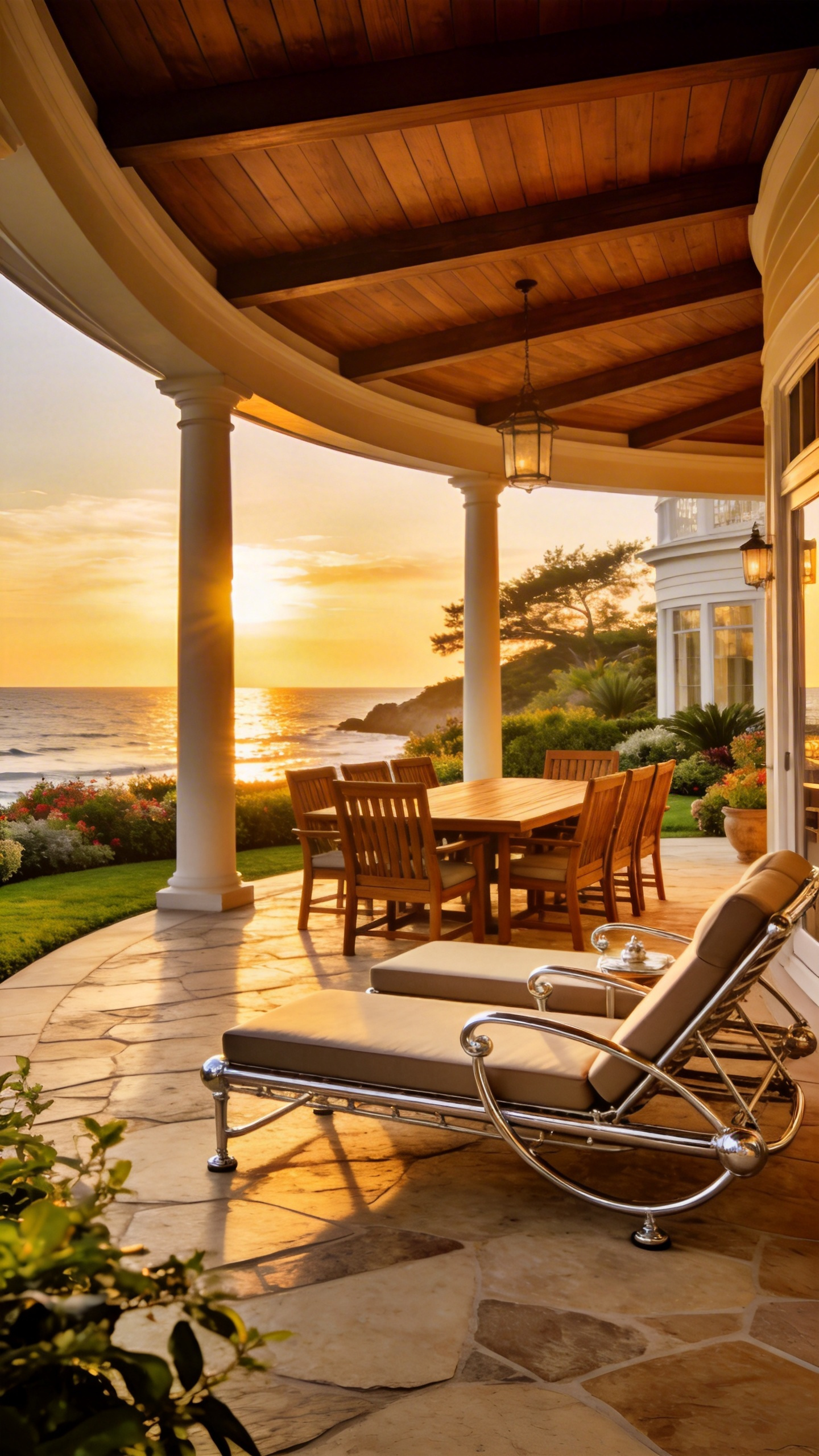
Rejecting disposable porch furniture is a quiet rebellion against mass waste. Specifically, over 12 million tons of furniture enter landfills annually. Therefore, choosing generational pieces is a true investment in quality living. In classic British design, I always value what you cannot see or hear. For instance, premium pieces utilize marine-grade 316 stainless steel. Consequently, the added molybdenum creates a strong barrier against coastal rust.
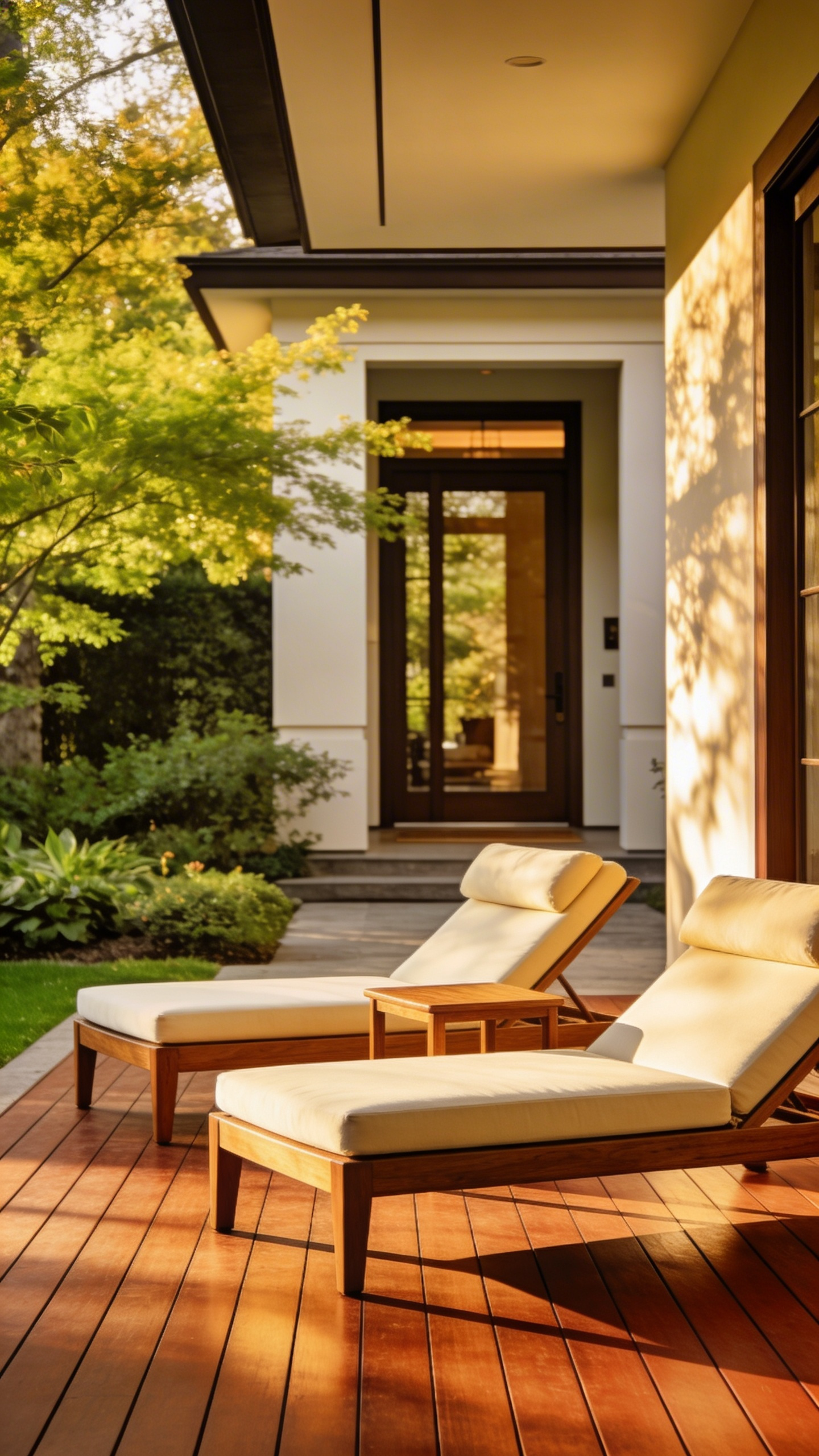
Next, investment wood pieces employ traditional mortise-and-tenon joinery. Because wood shifts with humidity, these ancient joints actually tighten over time. Thus, you easily avoid the annoying wobble of cheap flat-pack alternatives.
Naturally, premium teak remains the gold standard for timeless outdoor spaces. Unlike softwoods, mature teak possesses an immune system of natural oils. In fact, it undergoes minimal dimensional change even in heavy dampness. However, the wood provides tactile warmth without retaining harsh summer heat. Over time, this golden wood ages into a silvery-gray patina. I love how this aesthetic evolution signals a thoughtfully matured home rather than decay.
Similarly, high-performance soft goods must match the sturdy frame’s long lifespan. For example, solution-dyed acrylics infuse color directly into the liquid fiber. Conversely, cheap fabrics only hold dye on their surface and fade quickly. Historically, the porch functioned as an outdoor parlor. Indeed, the substantial weight of quality furniture triggers a comforting sense of permanence. As a result, guests feel secure and naturally linger longer.
4. The Contemporary Classic Approach: Balancing Manor House Grandeur with Modern Comfort
The contemporary classic approach offers a welcome design correction. Specifically, it bridges historical manor grandeur with our modern demand for physical ease. Historically, porch furniture signaled wealth. Today, we retain that architectural weight through oversized silhouettes. For instance, a high-back club chair elegantly echoes the height of classic stone columns. However, this sculptural simplicity removes the stiff formality of traditional antiques. Next, when considering materials, consult our ultimate guide to style, material, and comfort to ensure your selections meet these high standards.
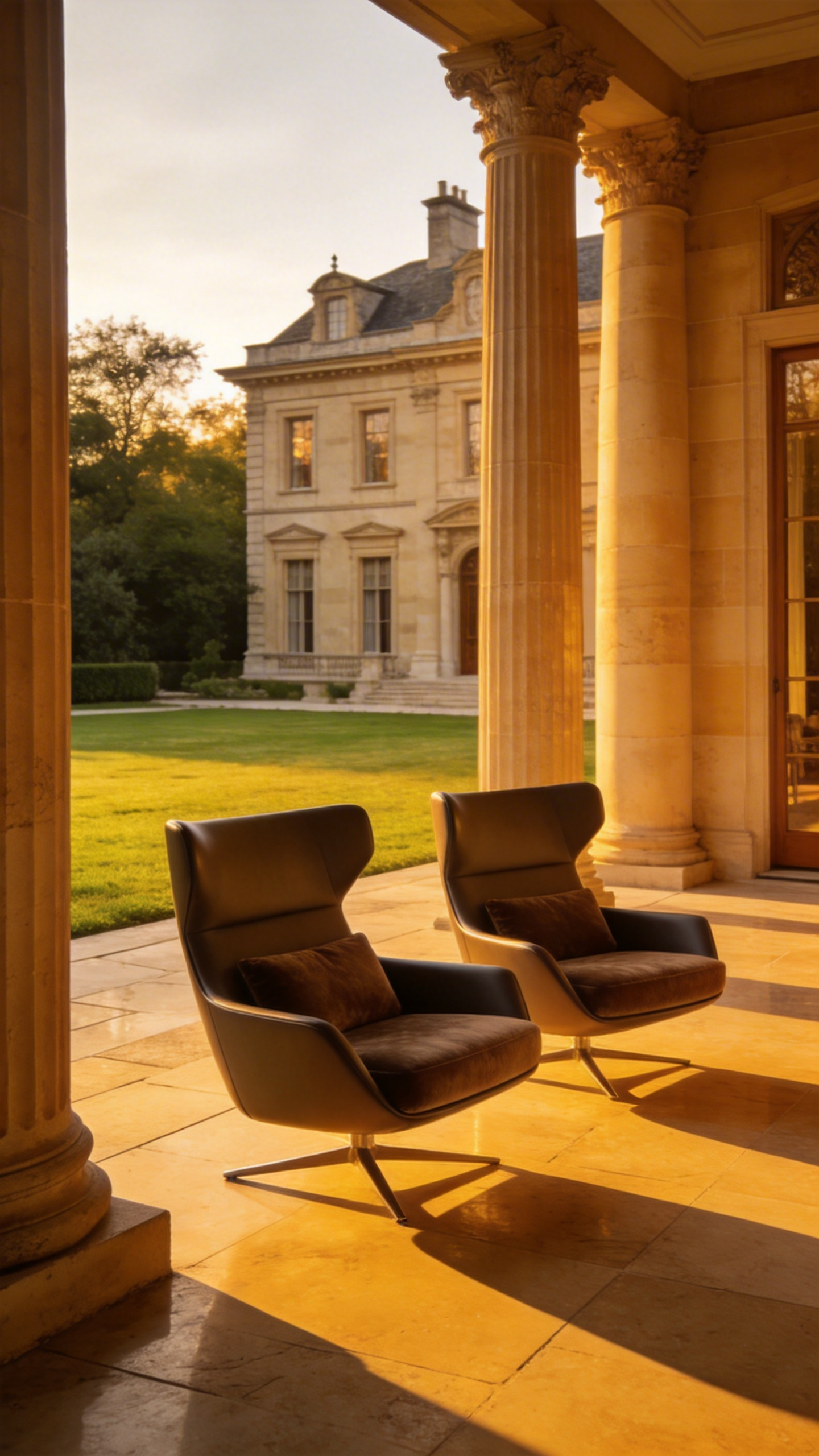
Indeed, modern luxury relies on clever, hidden ergonomics. Traditional manor seating often caused flat surface fatigue. Consequently, modern designers cast lightweight aluminum to precisely mimic 18th-century wrought iron. Still, these modern frames feature subtle, body-contouring curves. Next, contemporary porches prioritize a deep seating standard. In fact, modern seats reach inviting depths of up to 28 inches. Therefore, you can enjoy relaxed postures once reserved strictly for drawing rooms.
Similarly, material choices play a big role in this delicate balance. Historically, rich damasks were strictly indoor luxuries. Now, synthetic performance fabrics weave UV-stabilized acrylics on computerized Jacquard looms. Indeed, they mimic the puckered texture of European hammered silks. Yet, these textiles remain completely fade-resistant and easily bleach-cleanable. Naturally, pairing weathered teak with performance linen creates a beautifully curated sensory contrast.
Finally, sensory details soften the typical coldness of expansive stone spaces. Specifically, outdoor-rated wool-texture rugs absorb harsh echoes. This simple acoustic softening transforms the porch into a hushed sanctuary. Meanwhile, layered lighting dramatically enhances the feeling of old-world authority. For example, minimalist LED strips pair beautifully with hand-forged metal lanterns. Ultimately, this warm lighting makes the outdoors feel exactly like a high-end interior.
5. The Renaissance of Wicker and Rattan: From Victorian Conservatories to Modern Front Porches
Wicker furniture has a fascinating history rooted in Victorian health practices. Specifically, 19th-century society embraced woven pieces to combat the perceived dangers of heavy upholstery. Therefore, breathable rattan became a staple in grand British glass-walled conservatories. Today, this classic aesthetic has migrated to the modern front porch. However, natural jungle vines struggle against the harsh elements of outdoor living. Consequently, contemporary designers now utilize high-density polyethylene resin. In contrast to cheap plastics, this premium material features infused color. Next, manufacturers gently twist these synthetic fibers as they cool. This technique perfectly mimics the irregular texture of hand-stripped natural vines.
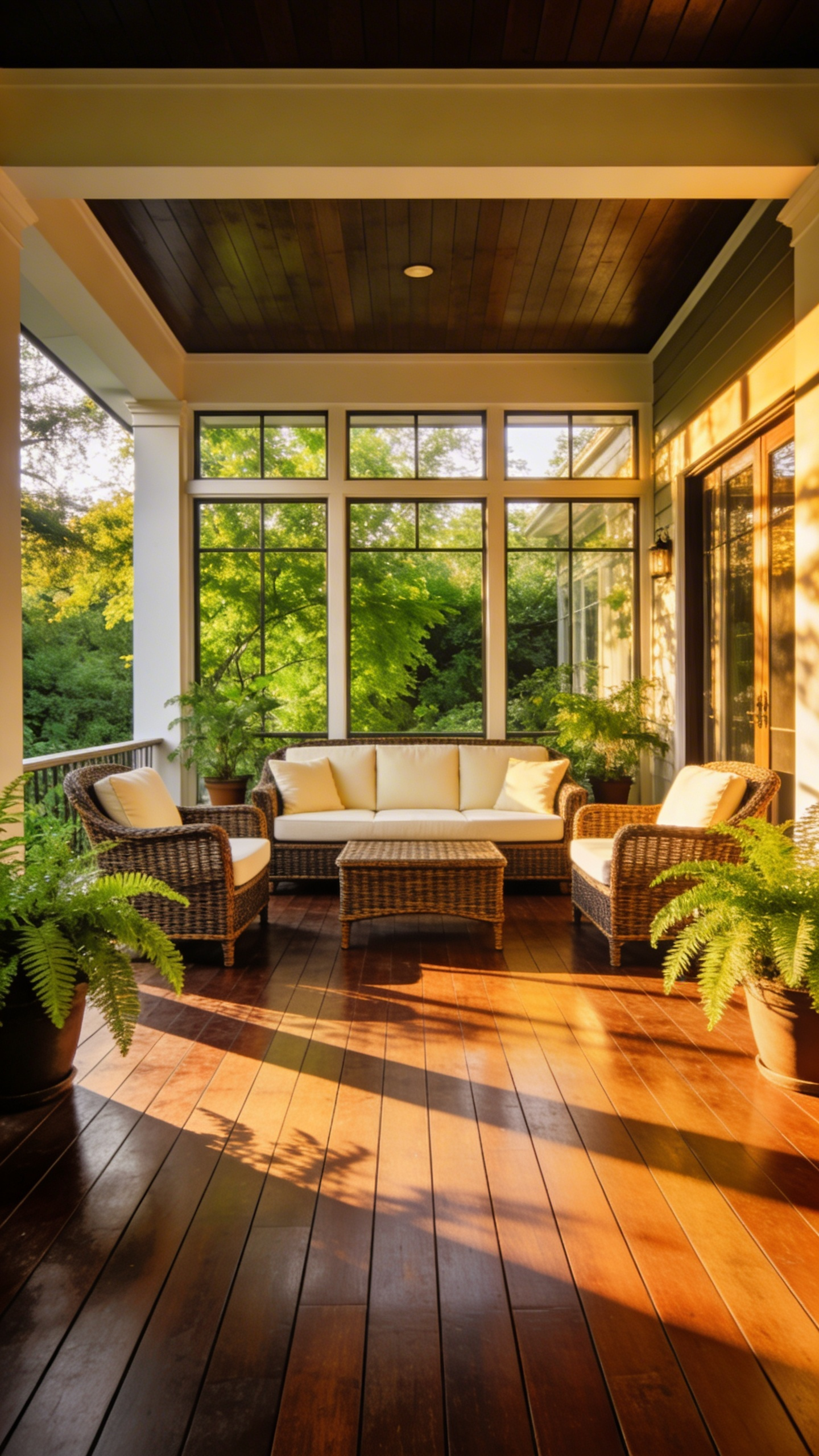
Visually, a major design shift defines this modern renaissance. Instead of dark espresso tones, homeowners increasingly favor a lighter blond aesthetic. Specifically, this raw-wood look mirrors sun-bleached rattan while remaining weatherproof. Beyond durability, wicker provides an unmatched sensory experience outdoors. For instance, the gentle acoustic creak of a woven chair easily triggers psychological relaxation. Indeed, the open-cell weave stays remarkably cool even in direct sunlight. Finally, the naturally curved shapes of woven furniture create a visually soft environment. Ultimately, these designs lower cortisol levels much better than rigid, modern architectural lines.
6. Forged in History: Styling Cast and Wrought Iron with a Contemporary Sensibility
Iron furniture offers a deeply grounding presence on any classic British porch. Historically, highly ornate cast iron motifs were widely favored by the Victorians. However, contemporary outdoor styling requires a noticeably fresher, pared-back approach. Instead, modern design strips away fussy scrolls to favor purer geometry. Specifically, you should look for exaggerated curves or minimalist skeletal frames. These sweeping metal silhouettes act as beautiful linear sculptures outdoors. Therefore, your lush garden landscape remains perfectly visible through the negative space.
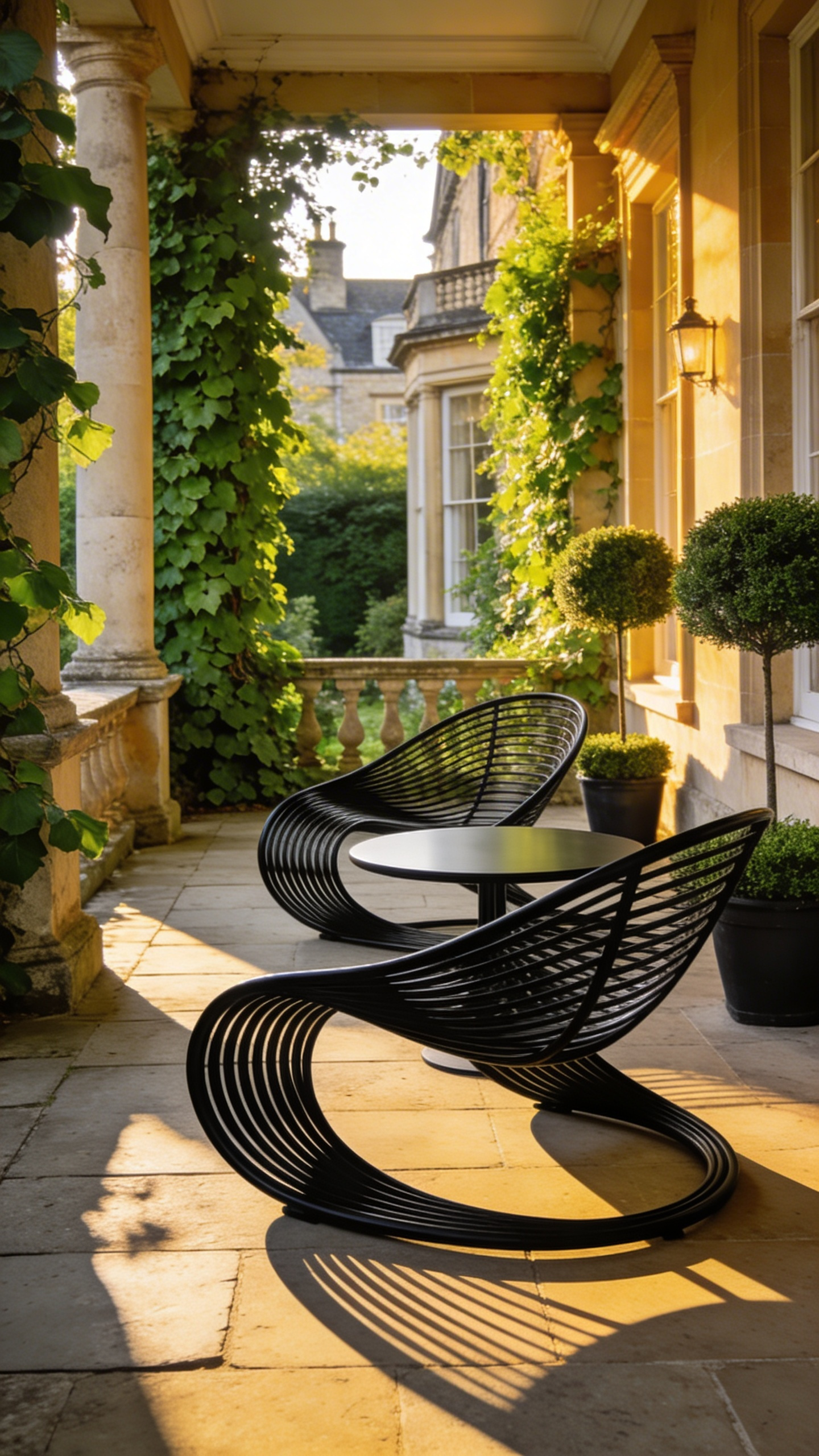
Next, true iron possesses an unmatched sensory and acoustic heft. A solid, hand-forged frame yields a quiet, undeniably luxurious permanence. Consequently, setting down a glass creates a satisfying, muffled thud. This avoids the cheap, high-pitched clatter of hollow aluminum. Naturally, iron is also a highly efficient thermal conductor. To balance this daily temperature shift, designers utilize clever material layering. For instance, warm teak armrests beautifully interrupt the cold metal surface. Indeed, oversized performance-linen cushions soften the rigid, unyielding iron frame.
When curating your porch, the furniture finish matters immensely. Today, glossy black paints are rapidly being replaced by matte textures. Specifically, soft sage greens and textured blacks are the modern standard. These electrostatic powder coatings mimic the light-absorbing charm of vintage iron. In fact, they gently highlight the authentic hammer marks of wrought steel. Next, these modern finishes provide a completely UV-stable protective barrier. Thus, your expensive travertine stone decking remains entirely safe from rust stains.
Finally, always consider the visual weight of your seating arrangement. To prevent visual heaviness, simply incorporate contrasting, organic elements. For example, pair a heavy wrought-iron sofa with a woven jute rug. Ultimately, this brilliant balance creates a welcoming, contemporary outdoor room.
7. Timeless Teak: The Crown Jewel of Weathered Elegance and Enduring Craftsmanship
Teak remains the undisputed gold standard for luxury porch furniture. Specifically, its prestige originates from a rich British maritime heritage. Indeed, eighteenth-century shipwrights utilized this durable timber for the HMS Victory. Consequently, retired sailors crafted the first garden benches from decommissioned vessels. Today, this noble wood bridges classic British design with modern living.
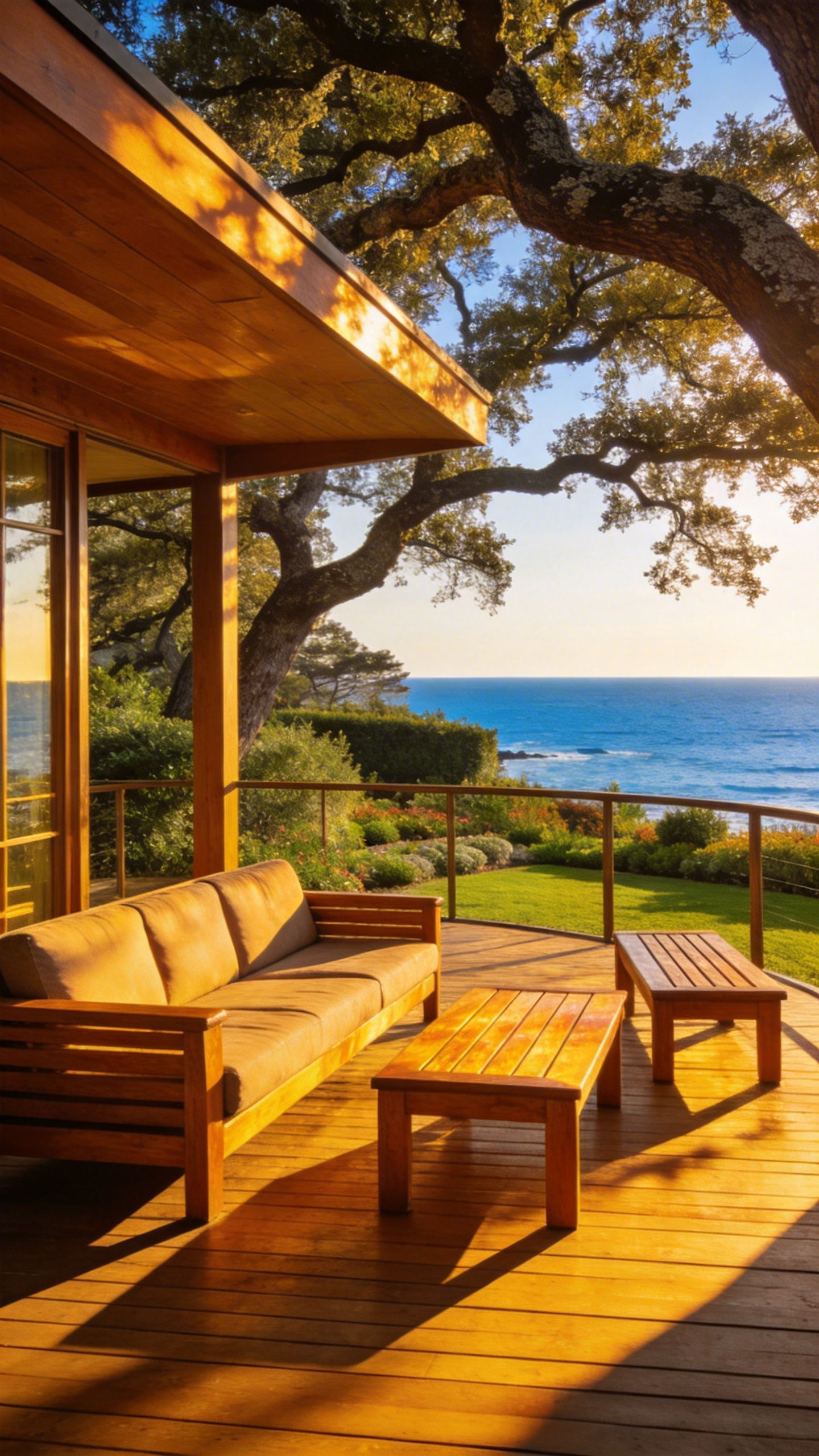
Fundamentally, teak possesses a unique matrix of natural oils and silica. Therefore, it acts as a self-sealing hardwood that repels water internally. Next, these chemically stable oils naturally resist fungi, rot, and termites. Comparatively, other common woods rely heavily on topical sealants to survive. However, teak has a naturally low coefficient of thermal expansion. As a result, it rarely warps or cracks under sudden humidity fluctuations.
Next, enduring craftsmanship relies entirely on the timber’s inherent quality. Particularly, Grade A heartwood provides essential density for classic mortise-and-tenon joinery. In fact, luxury furniture makers use wooden dowels instead of metal screws. Otherwise, metal fasteners can react with the natural oils and cause staining.
Meanwhile, teak undergoes a beautiful aesthetic metamorphosis when exposed to sunlight. Naturally, the initial honey-gold hue oxidizes into a sophisticated silver-gray patina. Surprisingly, this elegant silvering is a sacrificial layer that protects the inner wood. Thus, modern British design houses favor leaving teak completely untreated. Conversely, applying topical oils traps moisture and creates an unnecessary maintenance loop. Ultimately, sourcing sustainable Indonesian timber ensures enduring elegance for any porch.
8. High-Performance Heritage: Translating Traditional Tweeds and Tartans into All-Weather Textiles
Historically, classic British textiles brought rich permanence to drawing rooms. Today, we can extend this aesthetic outdoors. Specifically, high-performance fabrics translate traditional tweeds into all-weather marvels. Originally, historic Scottish tweeds relied on coarse sheep fibers. Consequently, they felt famously scratchy against the bare skin. Modern textile houses, however, achieve that texture quite differently. Instead, they spin solution-dyed acrylic bouclé yarns with irregular tensions. Thus, you get barefoot luxury that mimics multi-tonal weaves perfectly.
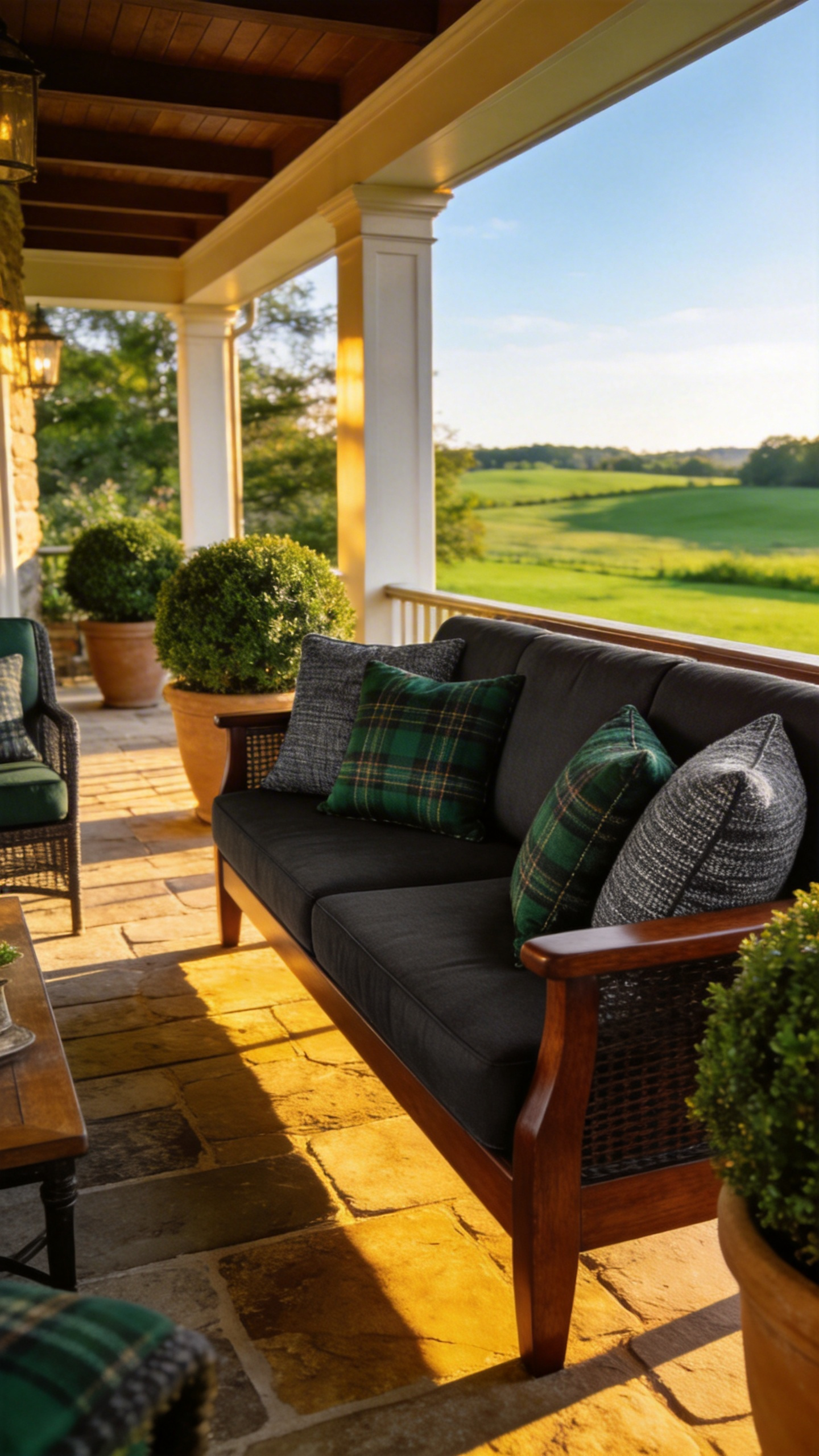
Next, these modern estate tweeds serve a brilliant practical purpose. Naturally, heathered yarns actively mask inevitable outdoor environmental debris. Previously, highland fabrics camouflaged gamekeepers against the rugged Scottish landscape. Likewise, these new porch tweeds cleverly hide dust and pollen. Similarly, traditional tartans have recently evolved from basic flat prints. In fact, luxury brands weave thick acrylic ropes into architectural grids. Therefore, outdoor cushions gain physical presence and resist sagging completely. Indeed, these dimensional fabrics endure over 30,000 abrasion cycles easily.
Culturally, this movement satisfies a growing craving for English Country styling. Unfortunately, classic wool plaids would mildew quickly on damp patios. Conversely, these new acrylic iterations are entirely bleach-cleanable and UV-resistant. Ultimately, modern material science lets us comfortably domesticate the outdoors. Indeed, you can honor classic design without sacrificing durability.
9. The Art of the Patina: Selecting Materials Designed to Age Gracefully in the Elements
In traditional British design, brand-new outdoor furniture often signals a lack of history. Instead, I prefer materials that gracefully age. Specifically, this weather-worn look provides a profound sense of permanence. For instance, golden teak transforms beautifully over time. Due to a compound called tectoquinone, exposed teak develops a silvery-gray skin. In fact, this natural weathering acts as a biological defense mechanism. Ultimately, the surface takes on a velvety, suede-like texture. Therefore, leading designers warn against oiling teak to maintain its color. Doing so simply traps moisture and invites mildew.
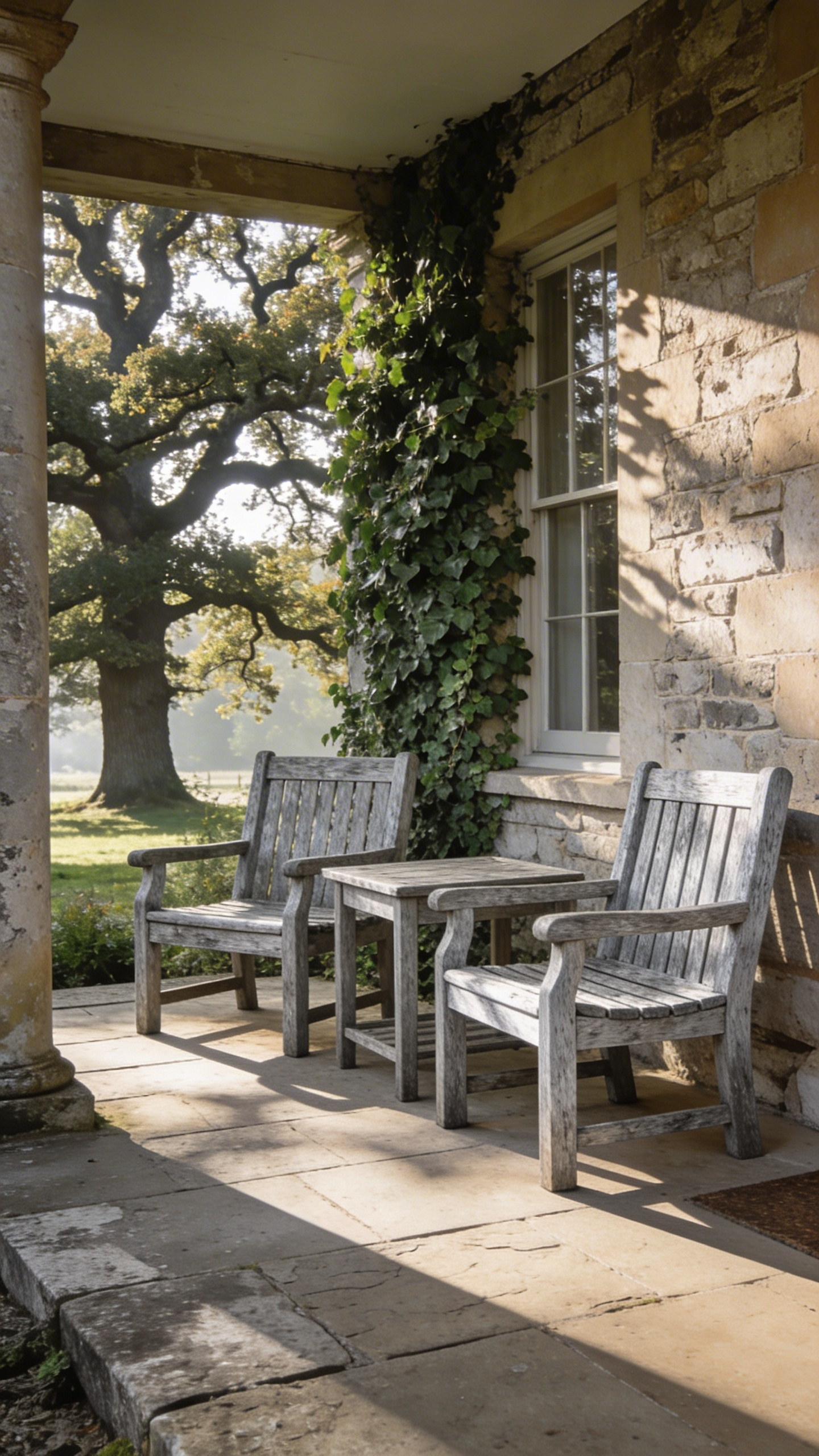
Similarly, certain metals improve with harsh coastal exposure. For example, copper and bronze are highly self-passivating materials. Consequently, they create their own protective skin through rapid oxidation. This striking verdigris patina clings tightly to the metal. As a result, it seals the layers underneath from destructive oxygen. Conversely, modern stamped steel simply rusts until sudden structural failure occurs. Authentic wrought iron, however, safely develops a dark, textured skin.
Meanwhile, heavy stone accent pieces embrace the elements through texture. High-fired terracotta often develops a microscopic network of surface cracks. Indeed, this elegant crazing is a hallmark of antique-grade ceramics. Next, porous stones like limestone readily invite microscopic botanical life. Often, moss and lichen transform these pieces into true landscape monuments. Finally, selecting these patinated materials requires a holistic ecosystem view. Naturally, aging hardwoods release tannins that might stain light porch rugs. Thus, careful placement ensures this artistic decay remains a beautiful asset.
10. The Anchor Piece: Reimagining the Traditional Porch Swing for the Contemporary Eye
Historically, the porch swing functioned purely as a cooling station. Today, contemporary design elevates this classic furniture into a sculptural destination. Specifically, modern architects employ the prospect and refuge theory. This concept transforms the swing into a comforting threshold piece. Consequently, it provides a cozy enclosure while offering clear horizon views. Next, designers have abandoned bulky wooden slats for skeletal, minimalist frames. These modern pieces brilliantly utilize negative space. Therefore, the anchor never blocks your carefully curated garden view.
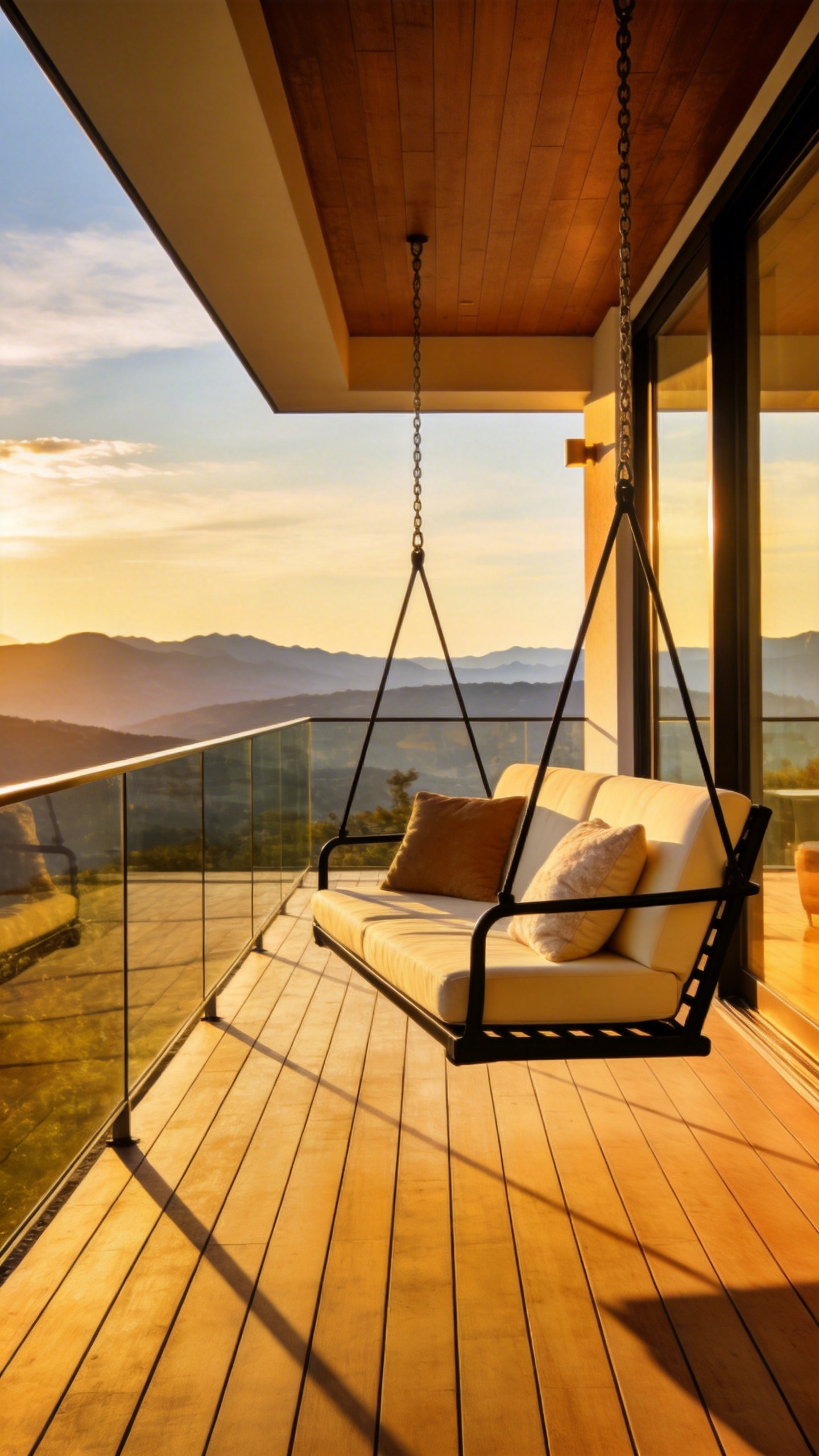
Mechanically, the nostalgic creak of traditional swings is now considered noise pollution. Instead, marine-grade ropes and stainless steel swivels create a silent sway. Ultimately, this frictionless movement lowers cortisol and induces pure meditation. Similarly, the scale of these anchor pieces has shifted dramatically. Indeed, the standard bench has evolved into the luxurious daybed swing. Holding a twin mattress, it elegantly supports deep lounging or outdoor work. Naturally, dense materials like treated teak support this architectural weight safely.
Visually, ceiling-integrated hidden anchors make these substantial pieces appear to float effortlessly. Meanwhile, matte black and charcoal shadow finishes help the furniture recede. Thus, the vibrant surrounding landscape remains the true focal point. However, placement requires careful consideration in modern home layouts. Typically, traditional benches remain at the front to welcome neighbors. Conversely, oversized daybeds retreat to screened back pavilions for private family lounging.
11. The Conversation Circle: Engineering Symmetrical Seating for Alfresco Entertaining
Designing an inviting alfresco space requires more than just placing beautiful furniture outdoors. Specifically, the arrangement must manage the invisible threads of human attention. Therefore, the modern conversation circle is the gold standard for outdoor entertaining. Historically, Victorian porches featured linear rows of chairs facing the street. Conversely, contemporary British design focuses on cultivating an intimate inner circle.
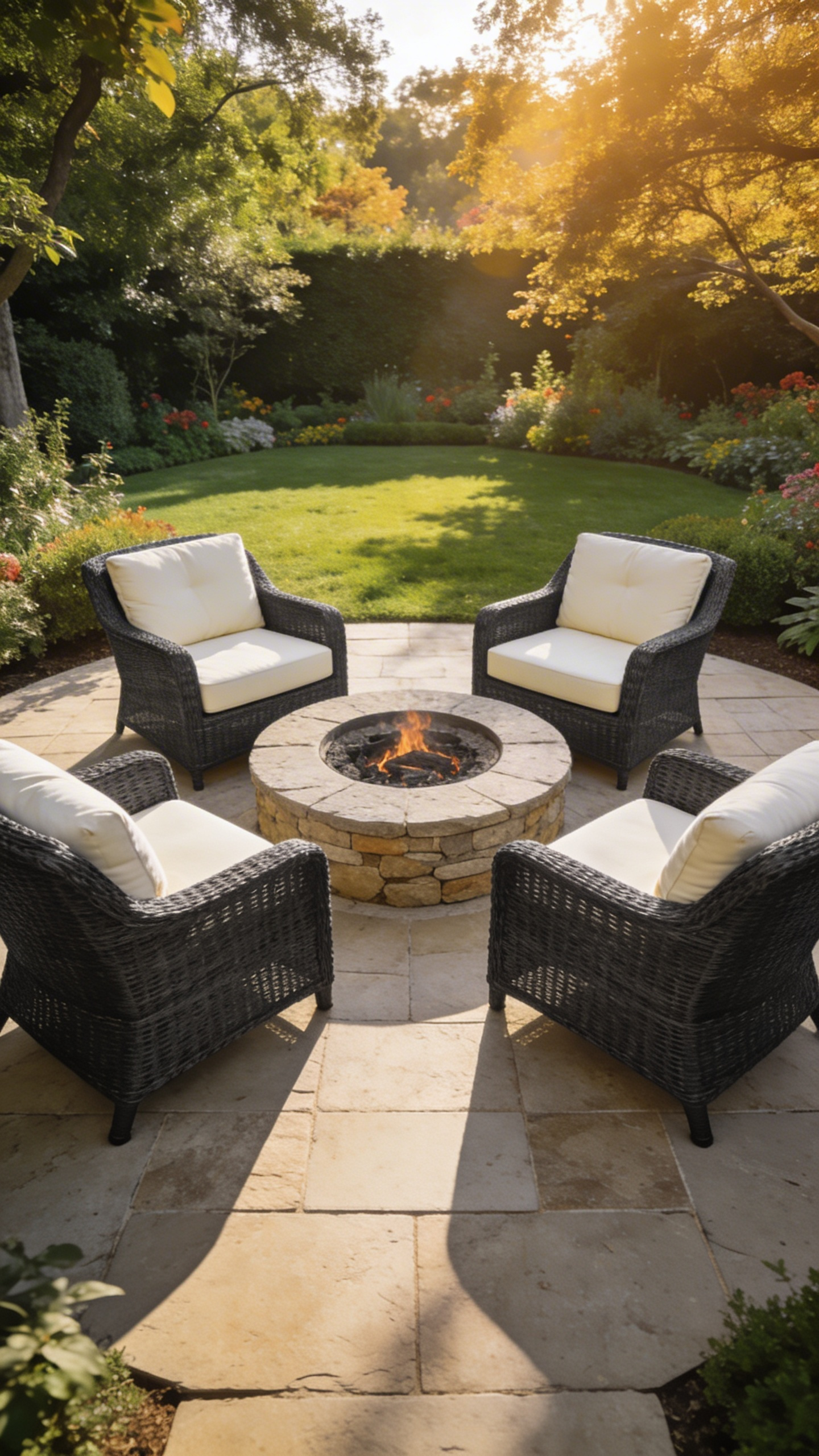
Ideally, the distance between seated guests should measure five to seven feet. Expanding this radius forces voices to rise and breaks delicate social connections. Next, perfect bilateral symmetry provides a vital psychological anchor. Matching pairs of classic club chairs bring a soothing sense of order. Consequently, this symmetrical layout reduces visual noise against the chaotic backdrop of nature.
Additionally, this circular geometry creates a brilliant acoustic chamber outdoors. For instance, high-back woven seats act as small acoustic baffles. Thus, they neatly catch a speaker’s voice and reflect it inward. Dense outdoor cushions also absorb the ambient hum of wind and traffic.
Naturally, you must calculate precise clearance intervals for true comfort. For example, maintain a sixteen-inch gap between the seat and the central fire table. You should also ensure a three-foot circulation zone behind the chairs. Finally, angle the seat pitch to a relaxed fifteen-degree recline. Ultimately, this precise ergonomic engineering invites guests to comfortably linger all evening.
12. Structural Botanicals: Integrating Heritage Planters and Jardinieres as Functional Furniture
In the nineteenth century, British porches functioned as vibrant social theaters. Specifically, large structural botanicals acted as massive architectural anchors. These heritage jardinieres functioned more like heavy furniture than mere accessories. For example, a cast-iron urn filled with soil could weigh over four hundred pounds. Consequently, designers used this dead load to define distinct outdoor rooms. Next, matched Royal Doulton pedestals often flanked classic entryways. Thus, they created permanent thresholds transitioning from stairs to elegant seating.
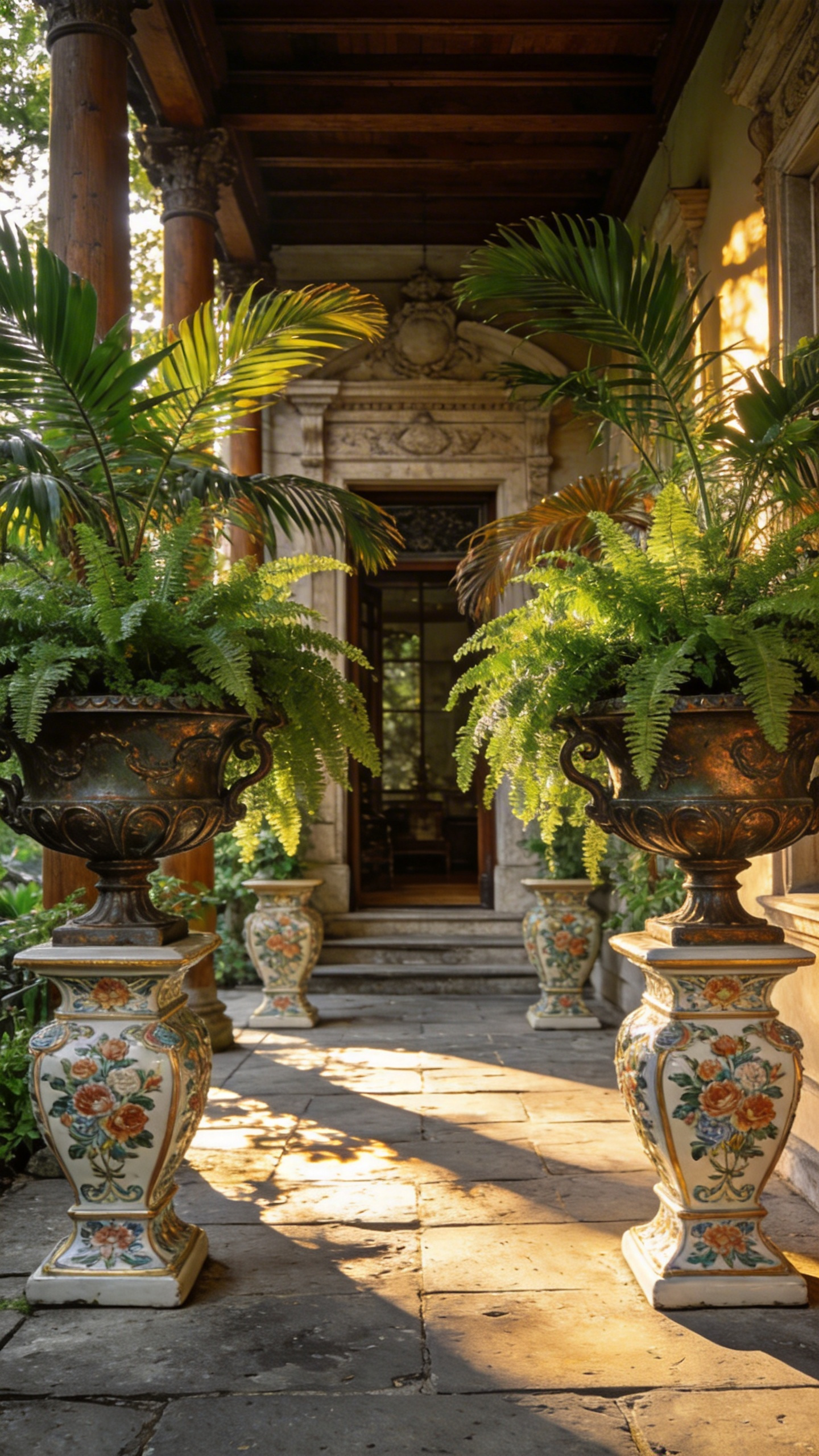
Beyond structure, these versatile pieces offered hybrid utility for domestic living. Indeed, Victorian catalogs from Minton featured flat-topped tiered flower stands. Therefore, homeowners could easily rest a drink alongside lush greenery. Similarly, smooth Majolica garden seats provided a brilliant dual purpose. Usually, they elegantly displayed trailing ivy during quiet daily routines. However, hosts quickly cleared them to offer extra guest seating.
Next, these heavy botanicals created essential sensory screens for privacy. Naturally, fragrant jasmine in permanent corner urns masked unpleasant street odors. Meanwhile, large ferns with arching fronds acted as natural visual dividers. In this way, they facilitated intimate conversations between wicker rocking chairs. Material choices also dramatically enhanced the overall porch sensory experience.
For instance, heavy cast-iron jardinieres absorbed sunlight throughout the day. Subsequently, they radiated that warmth to extend chilly evening gatherings. Indeed, the cold glaze of a ceramic pot contrasted beautifully with warm teak benches. Ultimately, owning a monumental Burmantofts jardiniere proudly domesticated exotic nature. Therefore, planters successfully transformed wild plants into refined structural furniture.
13. Layering the Light: Transitioning from Classic Carriage Lanterns to Modern Articulated Sconces
Historically, carriage lanterns functioned purely as static architectural beacons. Instead, they provided a generalized ambient glow for wayfinding. Today, lighting design prioritizes the actual lived experience. Consequently, we see a shift toward modern articulated sconces. These fixtures bring illumination down to a human scale. Specifically, designers now mount these sconces lower. Heights between 40 and 48 inches are now standard. Therefore, the light aligns with a seated guest’s shoulder. This placement treats the porch like an authentic outdoor library, especially when paired with curated porch lighting ideas to illuminate your evenings.
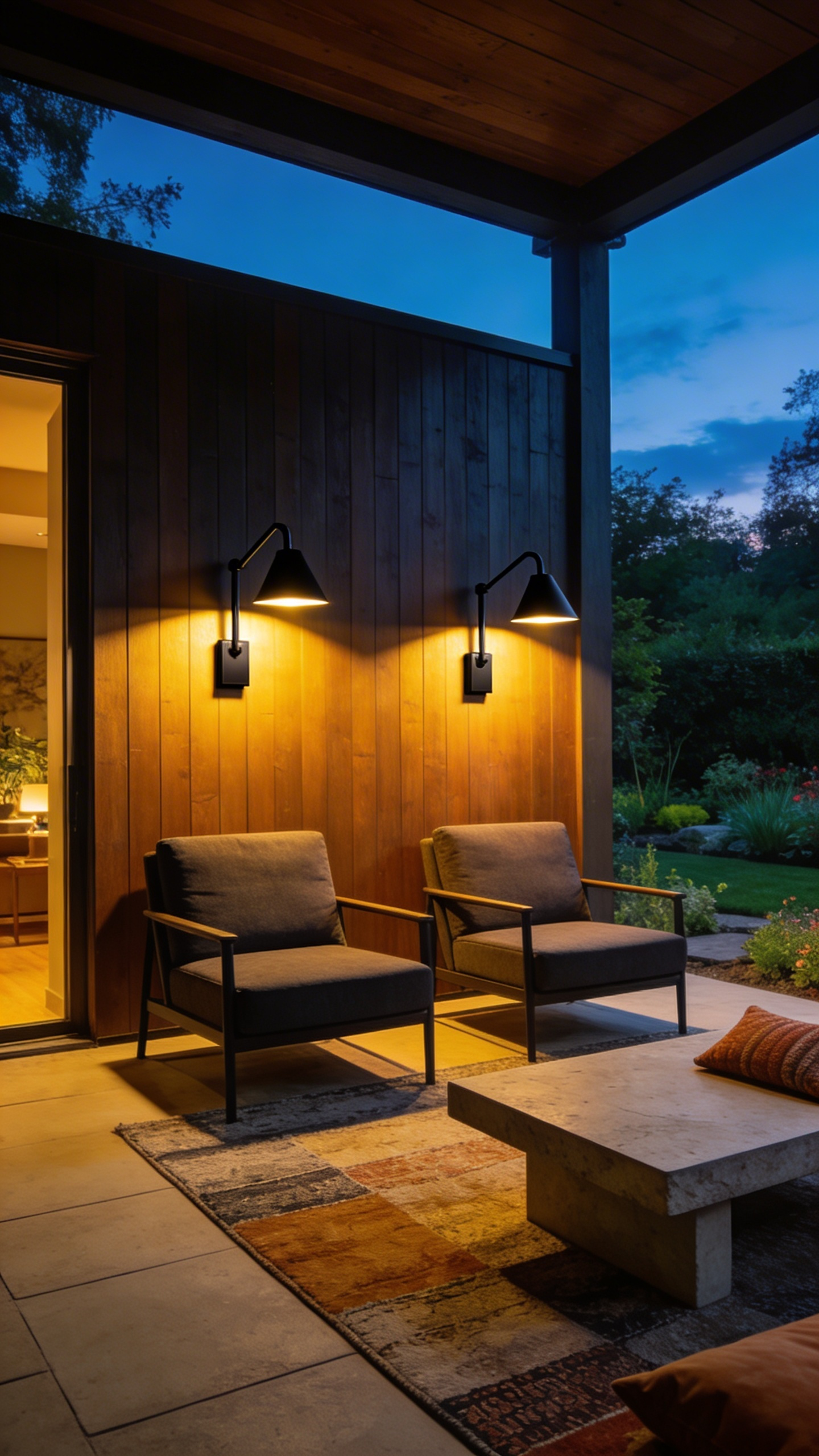
Next, the optical control of these sconces is transformative. Traditional lanterns often cast flat light onto smooth teak surfaces. Conversely, an articulated swing-arm directs a narrow beam downward. As a result, this light beautifully grazes woven wicker. It creates high-contrast shadows that emphasize handcrafted textures. Additionally, this focused approach builds intimate islands of light. The porch immediately feels like a sheltered, cozy enclosure. Indeed, modern porches serve dynamic roles as remote workspaces.
Articulated arms allow furniture to shift functions effortlessly. By simply pivoting the fixture, you create a bright workspace. Ultimately, classic carriage lanterns handle the macro architectural lighting. Meanwhile, articulated sconces manage the micro interactions with furniture. For example, placing the base roughly 15 inches from a chair backrest works perfectly. This setup provides a targeted pool of light for reading. Indeed, hooded designs shield the bulb to reduce harsh glare. Thus, warm lighting softens modern metal and glass surfaces. This layered lighting strategy gives users total agency over their environment. Consequently, it transforms an exposed outdoor space into a welcoming nest.
14. Grounding the Gallery: Selecting ‘Indoor-Quality’ Weatherproof Rugs
Transforming a transitional porch into a curated outdoor gallery requires careful grounding. Specifically, designers rely on indoor-quality weatherproof rugs to anchor these spaces. Historically, outdoor mats felt distinctly abrasive and utilitarian. Today, modern textile engineering offers a luxurious alternative. For instance, heat-set polypropylene creates a beautifully soft hand-feel. When choosing the perfect porch rug, look for high-density weaves that mimic the texture of traditional wool. Next, recycled PET yarns provide a squishy, silk-like underfoot experience. Yet, these innovative materials remain entirely hydrophobic and UV-resistant.
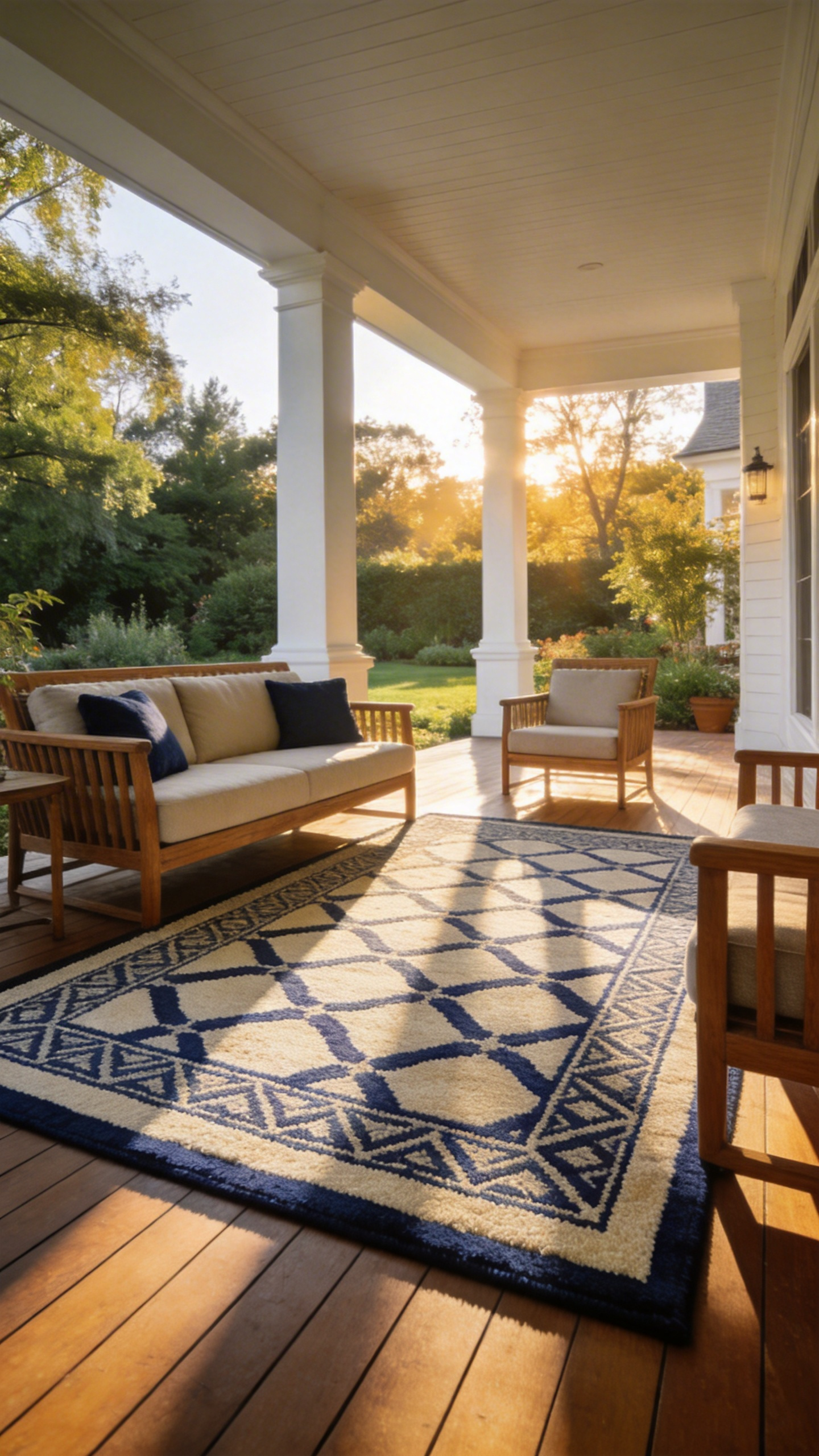
Visually, a rug acts as a psychological stabilizer against outdoor noise. Therefore, selecting a high-low pile construction adds necessary aesthetic depth. This sculpted texture beautifully catches shadows beneath heavy teak furniture. Next, high-density power looms allow for complex, painterly Persian motifs. Instead of pixelated patterns, you achieve true gallery-grade elegance. Similarly, cloth-bound or hand-turned edges provide a polished, tailored frame. Thus, this superior edge finishing prevents hazardous corner curling.
Indeed, true performance rugs also master outdoor moisture management. Heavy rubber backings trap water and cause damaging wood rot. Instead, premium weatherproof rugs utilize breathable, permeable weaves. This construction allows rainwater to pass through easily. Finally, these sophisticated textiles feature solution-dyed polymers. Because the color enters the fiber early, sun fading is completely prevented. Ultimately, your vibrant outdoor gallery remains timelessly elegant for years.
15. The Morning Conservatory Concept: Styling the Porch for Solitude and Contemplation
Historically, the traditional British morning room beautifully captured early eastern sunlight. We can reimagine this liminal concept on the modern porch. Specifically, this sensory zone bridges subconscious sleep and active daily demands. Proper furniture styling relies heavily on careful sun-path planning. Therefore, we purposefully position chairs against the solid house wall facing outwards. This spatial arrangement mimics the innate safety of a protected cave opening.
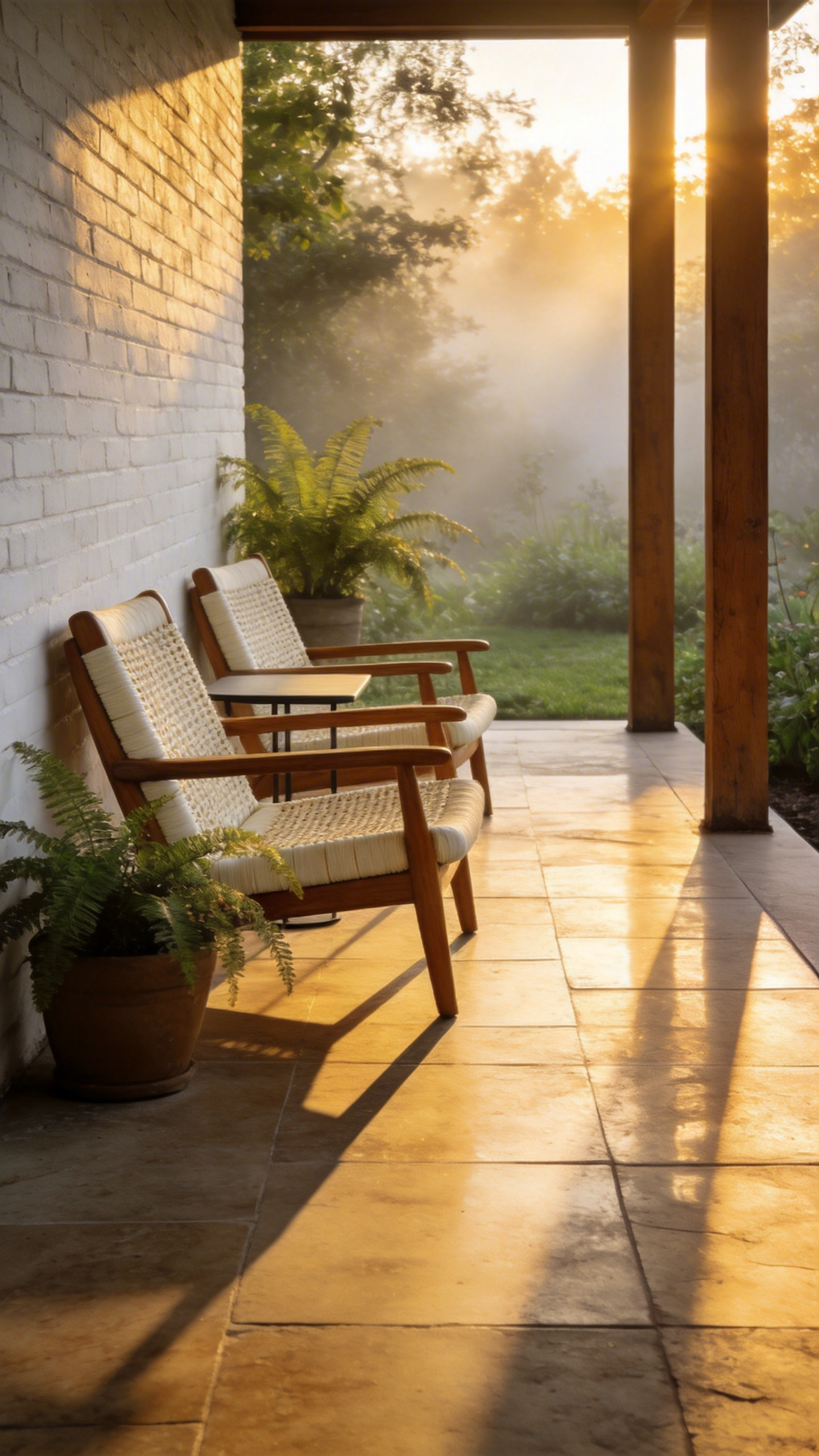
Next, early morning light carries cool, short-wavelength blue tones. This natural exposure effectively boosts serotonin while actively suppressing residual melatonin. Consequently, you must prioritize gentle matte finishes over high-gloss surfaces. Untreated teak and powder-coated linen aluminum successfully prevent harsh visual glares. As a result, your mind rests gently during quiet outdoor contemplation.
Achieving perfect solitude also requires very deliberate acoustic material choices. Interestingly, classic thick-weave rattan possesses brilliant inherent sound-dampening properties. The open-cell honeycomb geometry naturally allows harsh sound waves to diffuse organically. Conversely, flat metal or solid wood bounces ambient noise around relentlessly. Authentic materials like woven Danish cord simply refuse to creak or click.
Quiet morning routines involve subtle micro-movements like journaling or holding warm tea. Thus, low-profile seating with slightly pitched backs provides the absolute ideal ergonomics. A 105-degree cantilevered back angle comfortably facilitates alert relaxation instead of sleepiness. Additionally, we replace large communal dining tables with intimate, heavy satellite pedestals. Ultimately, this highly focused styling eliminates visual clutter and preserves your sanctuary.
16. The Twilight Terrace: Adapting Your Seating Arrangement for Evening Soirées
Adapting your outdoor space for an evening soirée requires a deliberate shift in perspective. Specifically, the daytime porch often faces outward toward the garden or street. A twilight terrace must focus inward to encourage social bonding. Therefore, you should arrange your seating in circular or U-shaped clusters. Maintaining 18 to 48 inches between chairs naturally fosters intimate, low-volume conversation. Additionally, the primary focal point must migrate as the sun sets. Instead of the horizon, anchor your furniture around a central fire table. This creates a warm campfire effect that draws guests together beautifully.
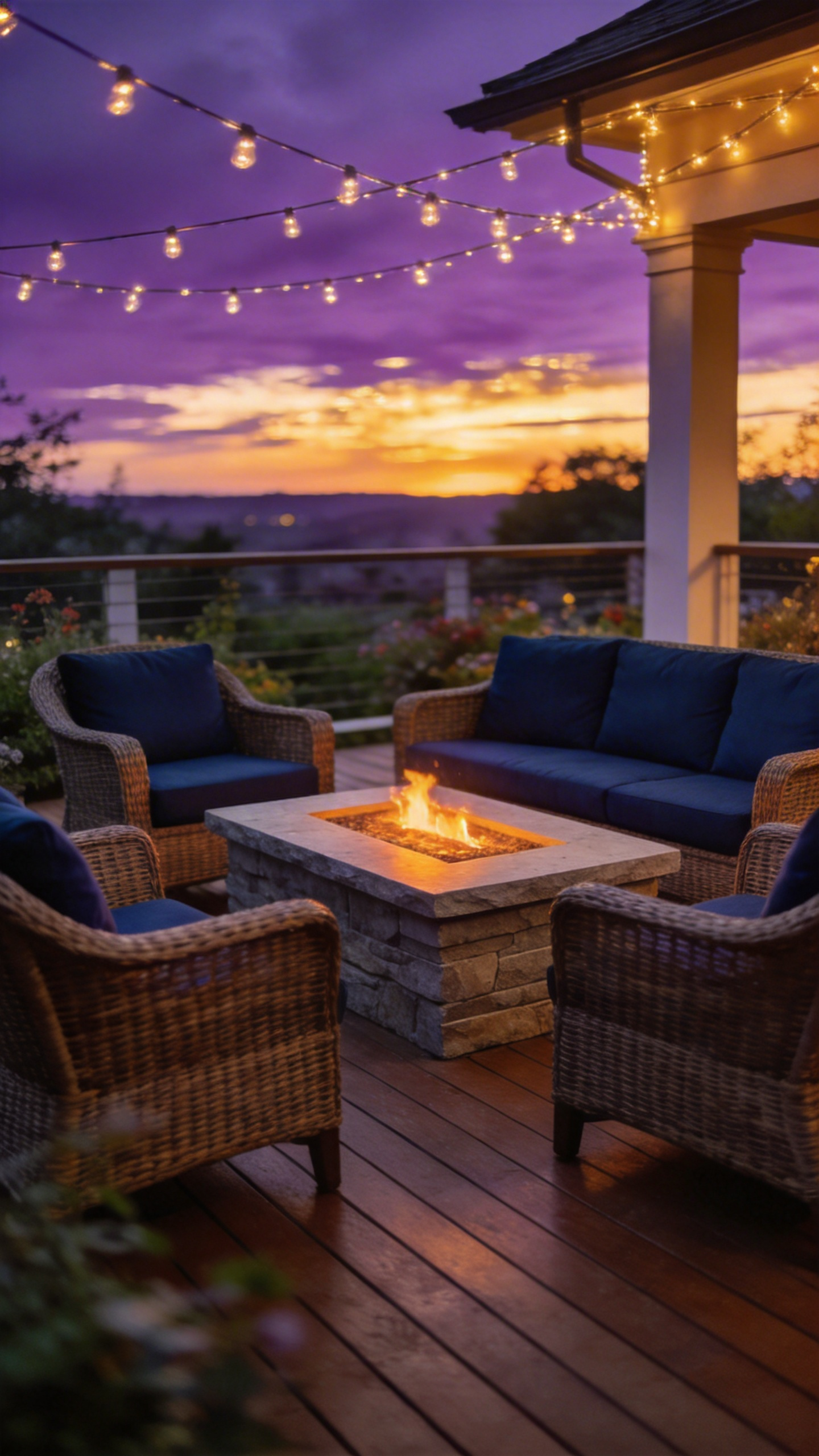
Next, sensory design plays a vital role in this evening transition. Classic British garden design traditionally champions the inclusion of fragrant night borders. Thus, placing your modular seating near night-blooming jasmine creates an immersive atmosphere. Tactile warmth also becomes essential under soft artificial light. For example, layering heavy linens or bouclé cushions mimics indoor luxury perfectly. Indeed, these plush materials act as brilliant acoustic dampeners against exterior walls. This strategic upholstery creates a private sonic cocoon for your guests.
Meanwhile, integrating modern technology elevates the classic evening rite. Heated outdoor sofas provide uniform warmth without the bulk of patio heaters. Alternatively, high-thermal-mass concrete tables absorb daytime heat and release it slowly. Finally, incorporating light-reflecting finishes allows your seating to gently catch the moonlight.
17. The Mixed-Era Method: Curating Weathered Antiques Alongside Modern Performance Pieces
I love how the Mixed-Era Method wholly rejects the matching showroom aesthetic. Instead, this curatorial approach layers classic British heritage with modern functionality. Specifically, it pairs the raw grit of weathered antiques with pristine performance pieces. You might place a pitted wrought iron settee alongside a sleek concrete table. Ultimately, this juxtaposition creates a striking sensory contrast across your open-air spaces. We often call this structural tension the fine balance of grit and glaze.
Weathered teak naturally oxidizes into a beautiful silver-grey patina over time. Next, these authentic heritage materials develop small surface cracks that add tactile depth. Conversely, modern powder-coated aluminum provides a surgically smooth, UV-resistant baseline. Therefore, a flawless modern finish makes nearby antique imperfections look entirely intentional.
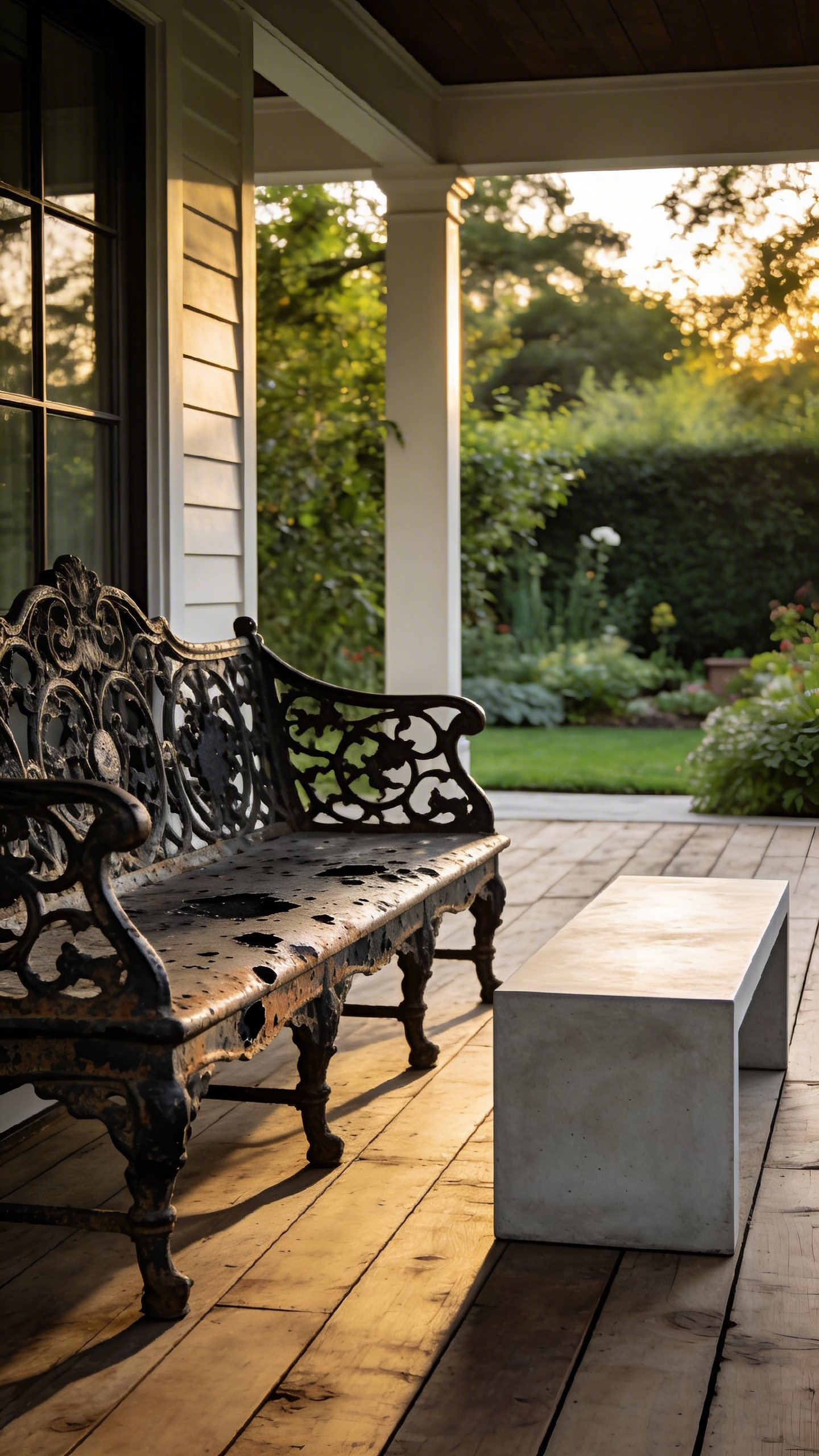
To avoid a cluttered aesthetic, expert designers rely heavily on the 80/20 rule. Specifically, dedicate eighty percent of the porch to modern furniture for foundational comfort. Then, reserve the remaining twenty percent for high-impact heritage accent pieces. For instance, a singular vintage peacock chair successfully anchors the space with historic soul.
Blending these distinct eras also requires careful material management. After all, genuine untreated antiques remain quite vulnerable to the elements on open porches. Thus, specialists highly recommend protecting historical wood with modern marine-grade sealers. Indeed, adding high-performance acrylic cushions to vintage iron frames drastically improves daily comfort. Consequently, these plush modern cushions prevent the antique metal from becoming an unusable hot seat. Ultimately, this thoughtful method crafts an outdoor narrative full of character and ease.
18. The Final Polish: British Accessories that Elevate the Porch from an ‘Outside Space’ to a ‘Room’
To elevate a porch from a mere transition point, intentionality is paramount. Specifically, British design treats this threshold with immense architectural gravity. Therefore, incorporating a heavy cast-iron boot scraper easily anchors the space. Its tactile, scraping metal sound signifies the formal beginning of the home. Similarly, wall-to-wall coir matting replaces tiny seasonal mats. Consequently, this custom approach immediately removes echoes and mimics an indoor carpet.
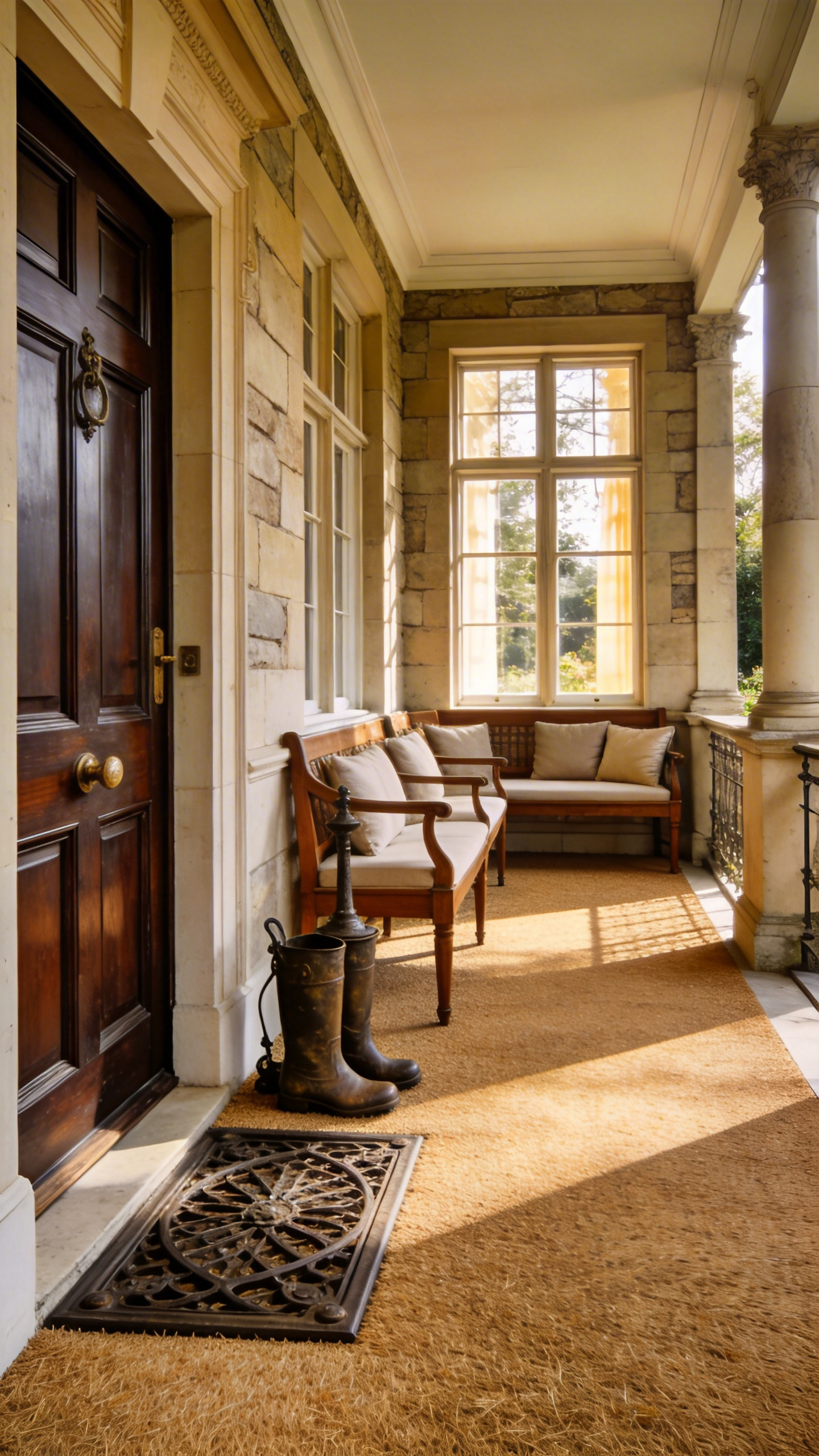
Next, proper seating establishes a true furniture heritage. For instance, a classic Lloyd Loom chair bridges the indoor-outdoor gap beautifully. Woven from twisted kraft paper, it offers a distinct, nostalgic creak. Additionally, painting it in heritage green beautifully connects it to your interior palette.
Above all, lighting must create an ambient visual ceiling. Instead of harsh security floods, you should hang a handmade copper lantern. Over time, these raw materials develop a stunning green verdigris patina. Ultimately, a hanging fixture encloses the entire space in a warm, inviting glow.
Meanwhile, heavy composite stone urns root the house deeply into the garden. Importantly, these thick lead-effect planters hold daytime heat for evening comfort. Next, you can plant fragrant jasmine or sweet box nearby. Naturally, this creates an invisible sensory wall of sweet, floral scent.
Finally, the perfect polish requires luxurious, indoor-quality textiles. Today, modern British brands craft outdoor fabrics entirely from recycled plastic bottles. Amazingly, these durable weaves perfectly mimic fine linen or herringbone wool. Consequently, layering a classic ticking stripe pillow suggests confident all-weather occupancy. Indeed, this refusal to let climate dictate comfort defines true British style. In the end, investing in artisanal porch furniture transforms your home’s exterior into an enduring sanctuary of grace and relaxation.
Frequently Asked Questions
What is the most durable material for porch furniture?
For premium homeowners, Grade A teak is widely considered the gold standard for durability. Its natural oils repel water and resist pests without chemical sealants. Additionally, marine-grade stainless steel and high-density polyethylene (HDPE) resin are excellent choices. In fact, these work beautifully for coastal or high-moisture environments where rust and rot are concerns.
How do I choose the right scale of furniture for a small porch?
To maximize style in a compact space, prioritize leggy, minimalist frames. These allow the floor to remain visible, creating the illusion of more room. Next, opt for multi-functional pieces, such as a garden stool that doubles as a side table. Finally, avoid oversized deep-seating sets that can overwhelm the architectural footprint.
Can luxury porch furniture stay outside during the winter?
While high-performance materials are designed to withstand the elements, you should always use breathable, custom-fit covers during harsh winter months. This protects the finish from freezing moisture and debris. Therefore, your investment easily maintains its pristine appearance for generations.