I often see people assume the rustic aesthetic just means dropping a rough wooden table into a room. However, the true history of the British rustic living room is far more interesting. In the eighteenth century, working-class families used unhewn stone and raw timber out of necessity. Therefore, local materials were simply the default for survival. Transportation was just too expensive. To truly create a rustic living room that feels authentic, we must look at Georgian architects. Specifically, they began using these rough materials to signal ancient family power. This elite practice created a deliberate visual paradox in manor houses.
Next, the aesthetic shifted toward the romantic ideals of the Picturesque movement. Wealthy landowners built ornamental cottages to celebrate rugged nature. Later, tastemakers like Nancy Lancaster transformed this look. They created the luxurious English Country House style. In fact, this defined premium living through heritage and muddy-boot comfort. True luxury was no longer about shiny surfaces. Instead, a premium space needed to look inherited.
Today, modern luxury prioritizes natural elements to lower human stress levels. Indeed, raw textures like reclaimed oak provide essential tactile feedback. Fake rustic finishes are now considered a failure in high-end design. In this guide, I will show how this aesthetic evolved from rural survival to contemporary luxury. Next, we will explore ways to integrate this authentic heritage into your home.
I. The Philosophical Anchor: Rethinking Heritage
Rethinking heritage goes beyond stylistic nostalgia. Instead, it anchors the space to ground the people living in it. Specifically, this approach rejects the idea of a sterile house. It prioritizes spatial authenticity. Historically, philosopher Martin Heidegger called this deep connection “dwelling.” Today, contemporary designers translate this into absolute structural authenticity. For instance, heavy timber trusses connect the earth to the sky. Therefore, the room becomes a deliberate sanctuary.
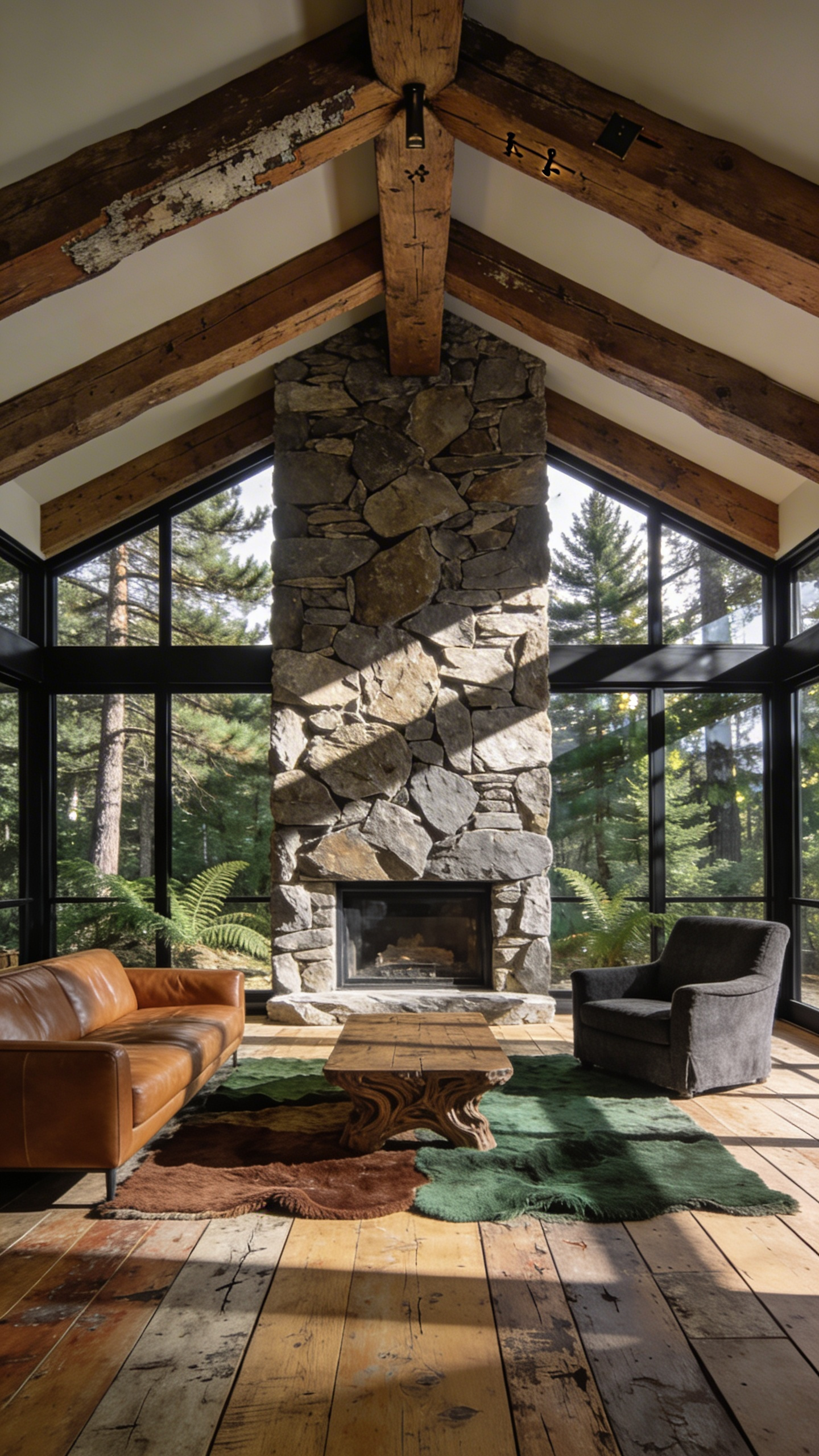
Modern rustic spaces embrace memory through material patina. In fact, a reclaimed oak table is a sensory vault. Its well-worn scratches invite deep reflection. Therefore, designers avoid perfectly preserved, untouchable antiques. Rather, they favor the visible scars of daily use. High-end experts often use a hero material to center the room. Typically, this might be antique Heart Pine. This culturally dense piece tells stories of past artistry. However, this selective curation takes restraint. It prevents an artificial theme park effect.
Next, we must embrace the concept of curated decay. Indeed, I prefer breathable mineral washes over thick, glossy lacquers. A natural stone wall needs to breathe and age gracefully. In the end, this restraint harmonizes raw materials with contemporary British living.
1. The New Countryside Philosophy: Trading Cabin Clichés for Curated Elegance
The modern rustic living room is experiencing a profound transformation. Specifically, designers are rejecting literal cabin themes. Instead, they embrace an aesthetic inspired by classic English country houses. This means favoring high-quality rustic living room furniture over mass-produced pieces. Therefore, these spaces feel like evolved family estates.
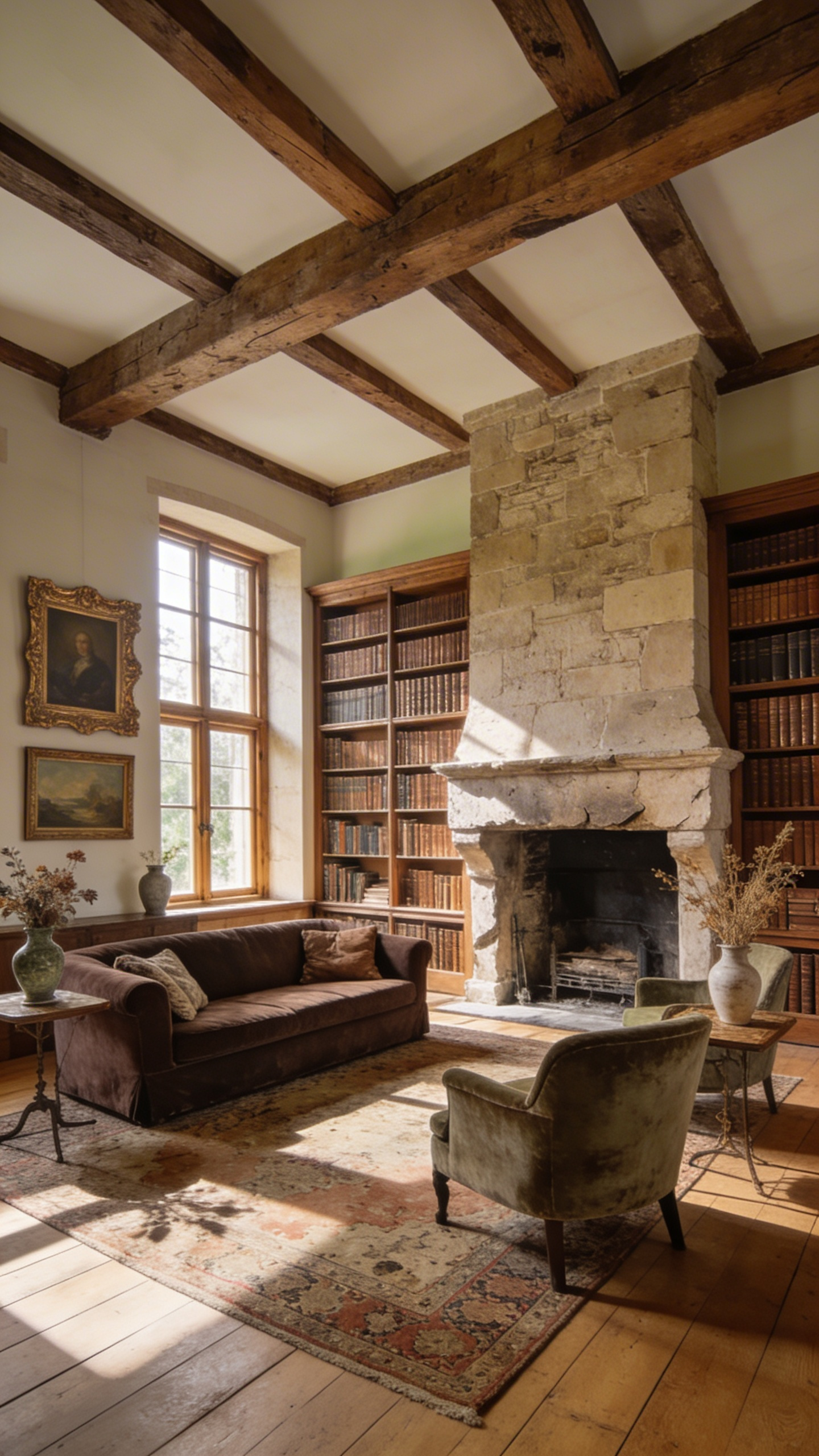
Homeowners now seek dead-flat patinas rather than high-gloss finishes. In fact, the design focus has shifted toward tactile quiet. Visual weight no longer relies on heavy logs or dark colors. Rather, sophisticated palettes highlight the physical feel of a surface. Breathable limewash walls react dynamically to shifting light. Unlacquered brass and honed stone oxidize naturally. Meanwhile, texture defines the entire room. A space might pair rough-hewn oak with slubby Belgian linen.
This curated elegance relies on thoughtful high-low curation. Indeed, the matching furniture suite is entirely obsolete. A sleek velvet sofa might sit against reclaimed wood. This practice follows the proven 70/30 rule of composition. Specifically, seventy percent provides a rustic foundation with architectural bones. The remaining thirty percent introduces elegant, contemporary art. Clichéd signage is completely discarded for purposeful objects. Next, singular, architectural branches replace dusty faux plants. This intentional approach gracefully lowers cortisol to create a true sanctuary.
2. The Aristocratic Embrace of Patina: Why Authentic Wear Always Outshines Manufactured Age
In British stately homes, brand-new furniture often signals a lack of lineage. Instead, aristocrats embrace authentic patina as a marker of hospitality. A rustic living room is a living record rather than a museum. Specifically, real wear tells a family’s history across generations. Manufactured age merely mimics this weight.
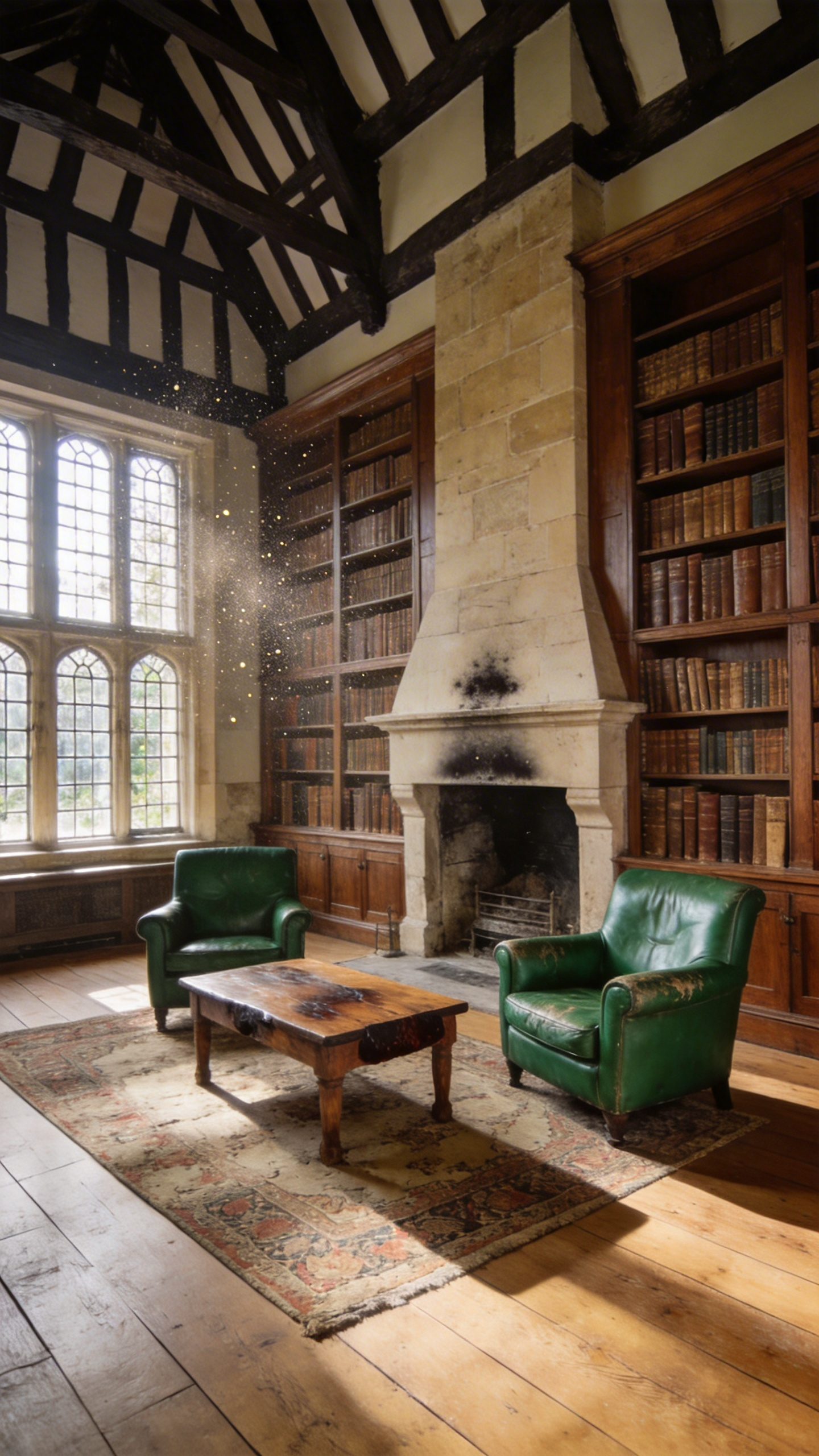
The physical difference between authentic and fake aging is profound. Decades of human contact compress wood fibers through burnishing. Therefore, natural oils react with the wood’s tannins. An authentic piece develops a multi-dimensional inner glow. Meanwhile, factory distressing relies on flat pigments that choke the grain.
In fact, the human brain easily detects fake wear. Manufactured wormholes or scuffs usually appear unnaturally random. Authentic wear, however, strictly follows human habit. For instance, a rustic door slowly wears down precisely around its handle. This logical wear creates a sense of profound stillness in interiors. Random factory damage just generates restless visual noise.
Real aging actually alters the chemical structure of the material. Specifically, photodegradation causes old wood to clarify over time. Aged beeswax and natural wood emit a grounding, historic scent. Authentic patina proves that a piece has truly survived. Therefore, these earned imperfections always outshine any manufactured costume.
3. The Tension of Eras: Balancing Heavy Antiques with Nimble, Contemporary Silhouettes
In high-end design, balancing heavy antiques with modern pieces relies on visual gravity. Specifically, massive 19th-century oak armoires are powerful anchors within a room. They actively draw the eye downward to establish history. However, filling a space entirely with these anchors causes claustrophobia. Therefore, British designers introduce nimble, contemporary silhouettes to provide visual float. For instance, a minimalist blackened steel lamp beautifully utilizes negative space. This balance mimics nature by breaking up dense wood and stone.
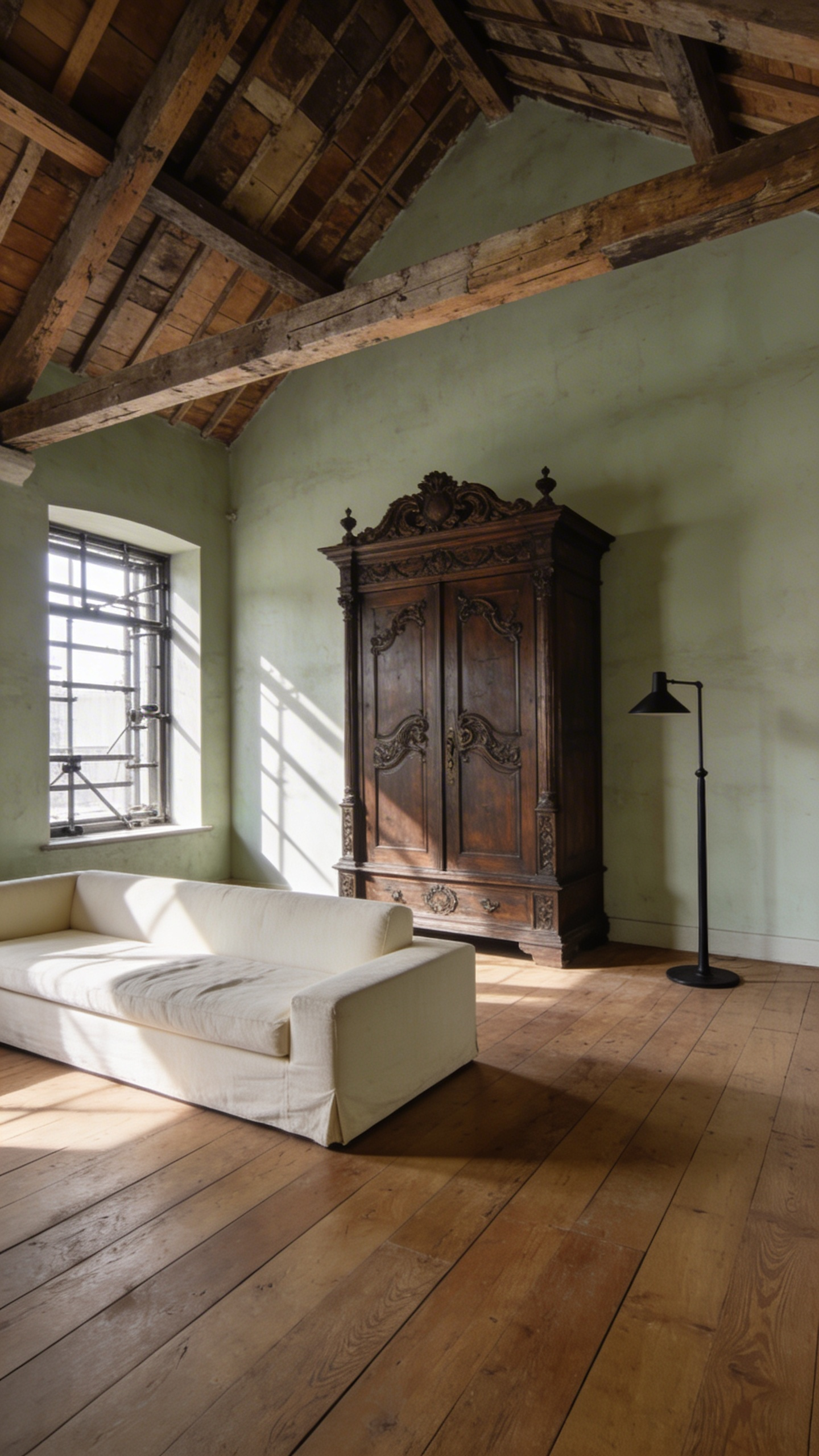
The tension between eras thrives on tactile material contrasts. Old farmhouse chests carry a deeply hand-planed patina of utility. Conversely, modern seating utilizes smooth, precise materials like cold-rolled steel. Indeed, placing rough-hewn cedar near a sleek table creates lovely sensory friction. The contemporary precision elevates the antique into a curated sculpture.
Spatial awareness remains vital to avoid a dark wall of wood. I always recommend surrounding solid traditional antiques with leggy contemporary companions. This strategy preserves the floor plane so light travels freely. This stylistic tension satisfies the psychological comfort-progress paradox. Heavy primitive tables offer a secure harbor. Next, wire-frame chairs provide a forward glance. Together, these elements create spaces that feel grounded yet refreshingly modern.
4. Beyond the Wood Panel: Formulating a Nuanced, Heritage-Inspired Earth Palette
To formulate a true heritage palette, we must look beyond the literal brown of timber. Instead, we should investigate the chemical properties of natural pigments. This creates a sophisticated backdrop for living room wall decor ideas emphasizing soul over symmetry. Specifically, understanding the alchemy of earth tones prevents a flat design. Natural pigments change dramatically when heated. For example, raw sienna offers a cool, yellowish-brown hue. Burnt sienna provides a fiery reddish-brown. Therefore, layering these undertones creates vital temperature tension.
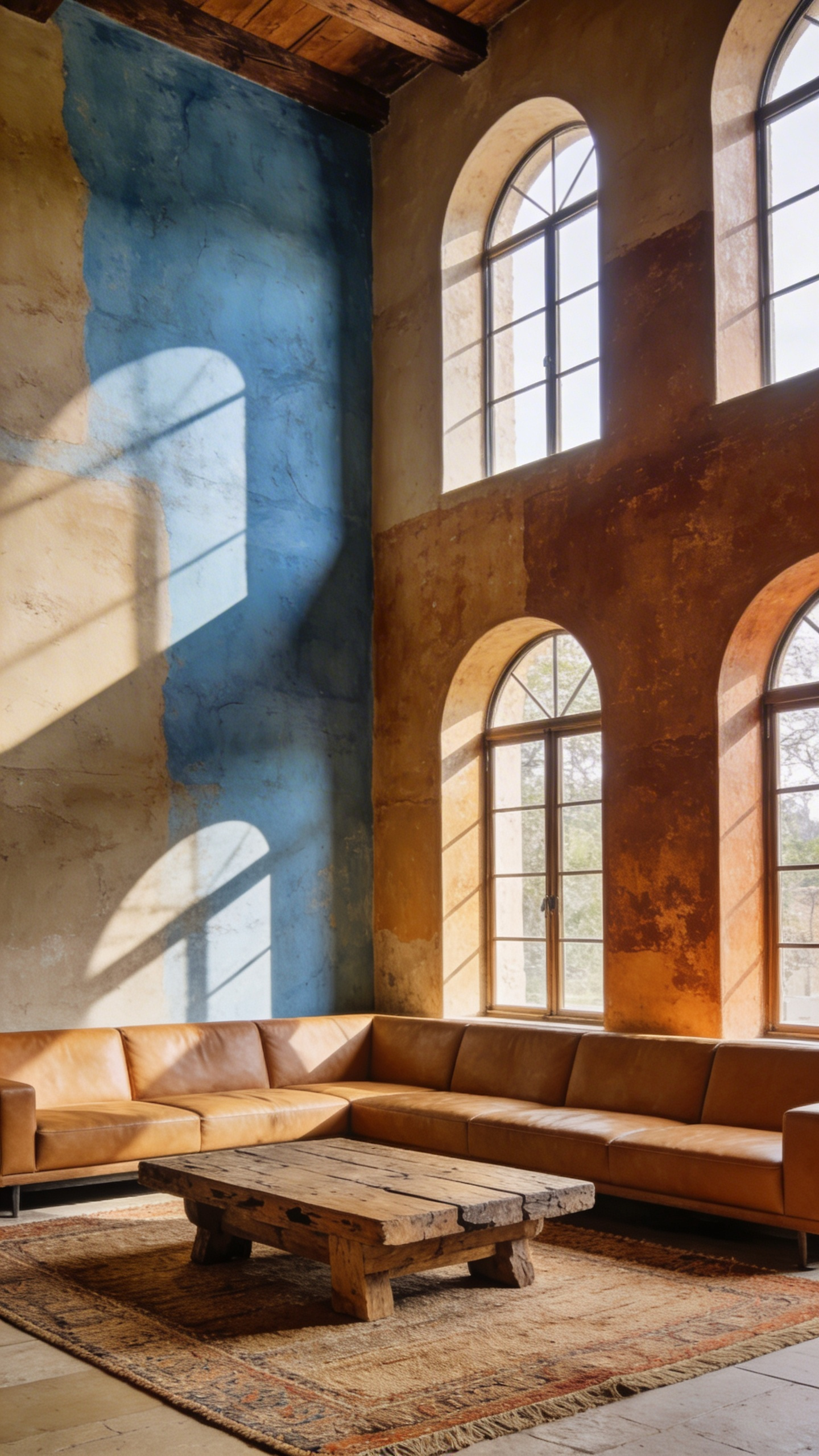
Embracing muddy neutrals is crucial for authenticity. High-chroma colors reflect light too perfectly. They make a rustic room feel artificial. Desaturated tones like grey-brown absorb light beautifully. These soulful hues provide a forgiving backdrop for rustic imperfections.
The paint medium itself matters immensely. Standard acrylic paint creates a flat, plastic film. However, traditional finishes like limewash and clay paint offer sensory depth. Limewash actually forms calcite crystals as it cures. Light scatters across the wall rather than reflecting uniformly. Clay paint delivers an ultra-matte, velvety finish. This tactile quality softens heavy stone and wood features.
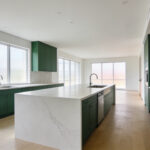
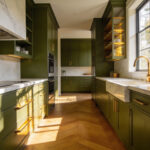
These wall colors should interact directly with your timber. For instance, painting walls a muted olive makes reclaimed oak pop. Green tones pull warmth directly from the honey-yellow wood grain. Historically, colors like warm buff and brownish-gray drab were practical choices. Today, referencing these working colors adds distinct narrative gravity. Indeed, this nuanced approach creates a space that feels authentically lived-in.
II. Material Exploration: The Tactile Foundation
In a rustic living room, material exploration is a deliberate study of sensory grounding. Specifically, true British style relies heavily on this tactile foundation. Reclaimed timber is the cornerstone of this layered aesthetic. Old-growth wood provides tight rings for superior structural stability. These historic pieces carry a profound bio-historical narrative. Their deep nail holes and saw marks spark engaging conversations.
Modern environments usually feature smooth, light-reflecting glass or polished marble. Conversely, rustic manors prioritize raised textures like hand-hewn stone. Therefore, these rough surfaces absorb light to create visual warmth. The room feels instinctively cozy and inviting. I often recommend a subtle seventy-thirty material texture split. Specifically, light-absorbing natural elements should dominate seventy percent. Next, sleek wrought-iron accents provide the remaining thirty percent. This clever material juxtaposition prevents the space from feeling muddy. The tension between rough and smooth feels exceptionally luxurious.
Presently, our hands constantly touch cold, glossy digital screens. Therefore, a rustic homestead is a necessary tactile counterweight. Nubby wool throws and raw linen curtains actively lower modern stress. These spaces reject the pristine anxiety of contemporary minimalism. Instead, traditional materials like solid oak take a beating gracefully. Daily wear simply adds beautiful patina to the home.
5. Reclaimed Timbers as Art: Treating Architectural Beams as Sculptural Statements
Architectural beams now transcend their simple structural origins. Today, designers treat reclaimed timber as found-object sculpture. Specifically, the ceiling becomes a dynamic fifth wall. Asymmetrical patterns create a striking architectural tension. Cantilevered frames actually sculpt the air volume within high-vaulted rooms.
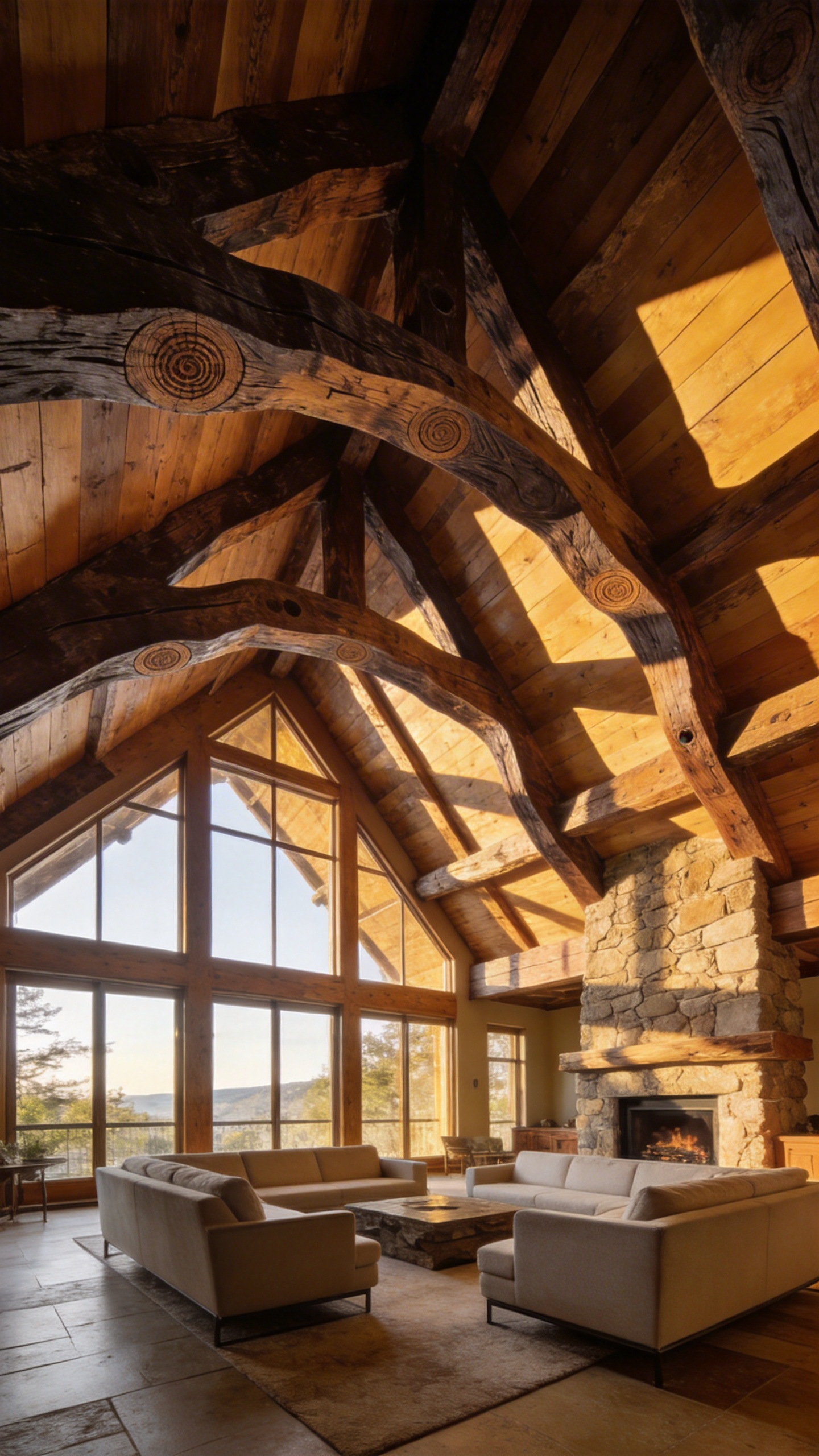
The true art hides in the wood’s beautiful imperfections. Deep adze grooves and circular saw marks reveal centuries-old craftsmanship. Designers employ wall grazing to highlight these deep textures. Narrow-beam fixtures cast long, dramatic shadows into natural wood cracks. Leaving a subtle shadow gap creates a brilliant halo effect. Massive timbers appear to weightlessly float above the room.
Crucially, we must preserve this historical narrative with matte hard-wax oils. Traditional shiny varnishes quickly flatten the beautiful, sun-bleached story. Therefore, traditional finishes like Renaissance Wax stabilize the wood authentically. These raw elements fulfill a primal human need for biophilia. Tactile cracks and authentic pine scents gracefully lower blood pressure. Knowing a beam once supported an old London warehouse adds lasting legacy. For instance, antique heart pine offers a glowing, rich orange-red patina. Massive hand-hewn oak is a perfect rugged central ridge.
6. The Evolution of the Hearth Stone: Elevating Masonry to a Textural Focal Point
Historically, the hearth stone was a purely utilitarian fireproof slab. Today, it is the primary textural anchor of modern rustic living spaces. Specifically, this evolution shifted the fire from a survival tool to a sensory experience. The late nineteenth-century Arts and Crafts movement sparked this transformation. Architects began reimagining the traditional flat hearth as a recessed inglenook. Rough-hewn masonry climbed the walls to create a refined, natural atmosphere.
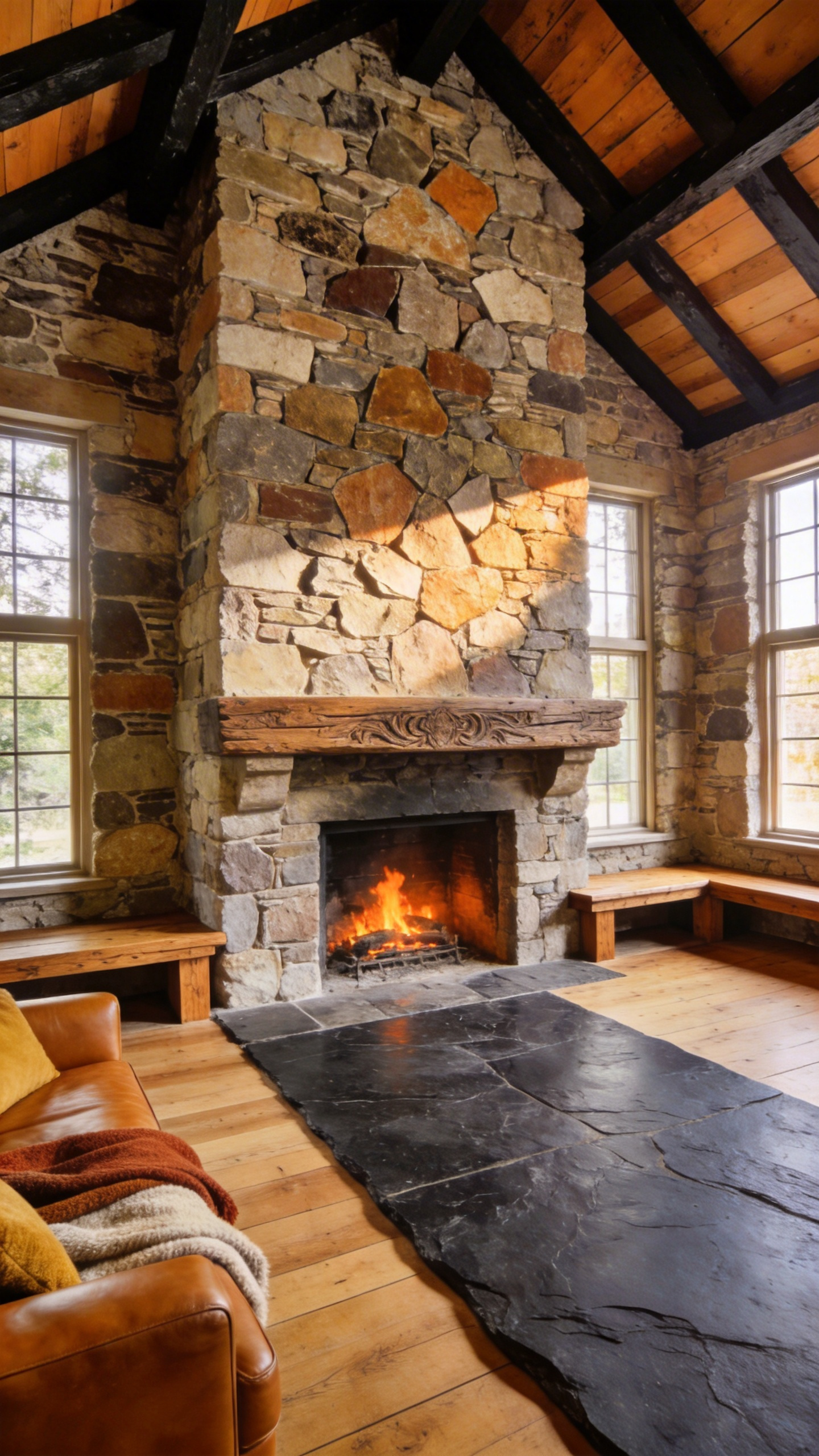
Modern British design often elevates this stonework through specific installation techniques. For instance, the overgrout method pipes mortar generously across the stone faces. This creates a washed-out look mimicking a classic country estate. Conversely, the dry-stack technique hides the mortar entirely to emphasize raw honesty. Therefore, gravity and precision cuts create deep shadows and rugged textural relief.
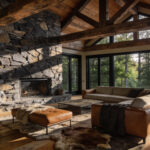
The choice of local stone provides a unique geographic thumbprint. Adirondack fieldstone offers a rough, intimate shelter with its jagged edges. Smooth river rock delivers a gentle experience suited for lakeside retreats. Bringing masonry from floor to ceiling provides a vital visual anchor. This immense weight prevents open-concept rooms from feeling detached from nature.
These thick walls also function as thermal batteries that re-radiate heat. Architecturally, a monolithic stone lintel over the firebox is the symbolic brow. Indeed, its incredible scale draws the eye immediately toward the flame. This striking feature reinforces the psychological stability of the home.
7. Forged Heritage: Integrating Wrought Iron, Copper, and Burnished Brass Sensibilities
Integrating mixed metals moves a rustic living room away from matched trends. Instead, it creates a lived-in legacy. Specifically, this forged heritage approach relies on a careful material hierarchy. Wrought iron is the structural anchor of the space. It should comprise roughly sixty percent of your metallic finishes. This dark, light-absorbing metal grounds heavy elements like fireplace screens. Next, copper provides the rhythmic pulse of the room. Making up thirty percent of the mix, it bridges cold iron and refined brass. Indeed, raw copper introduces a reddish-orange warmth that enhances natural wood grains.
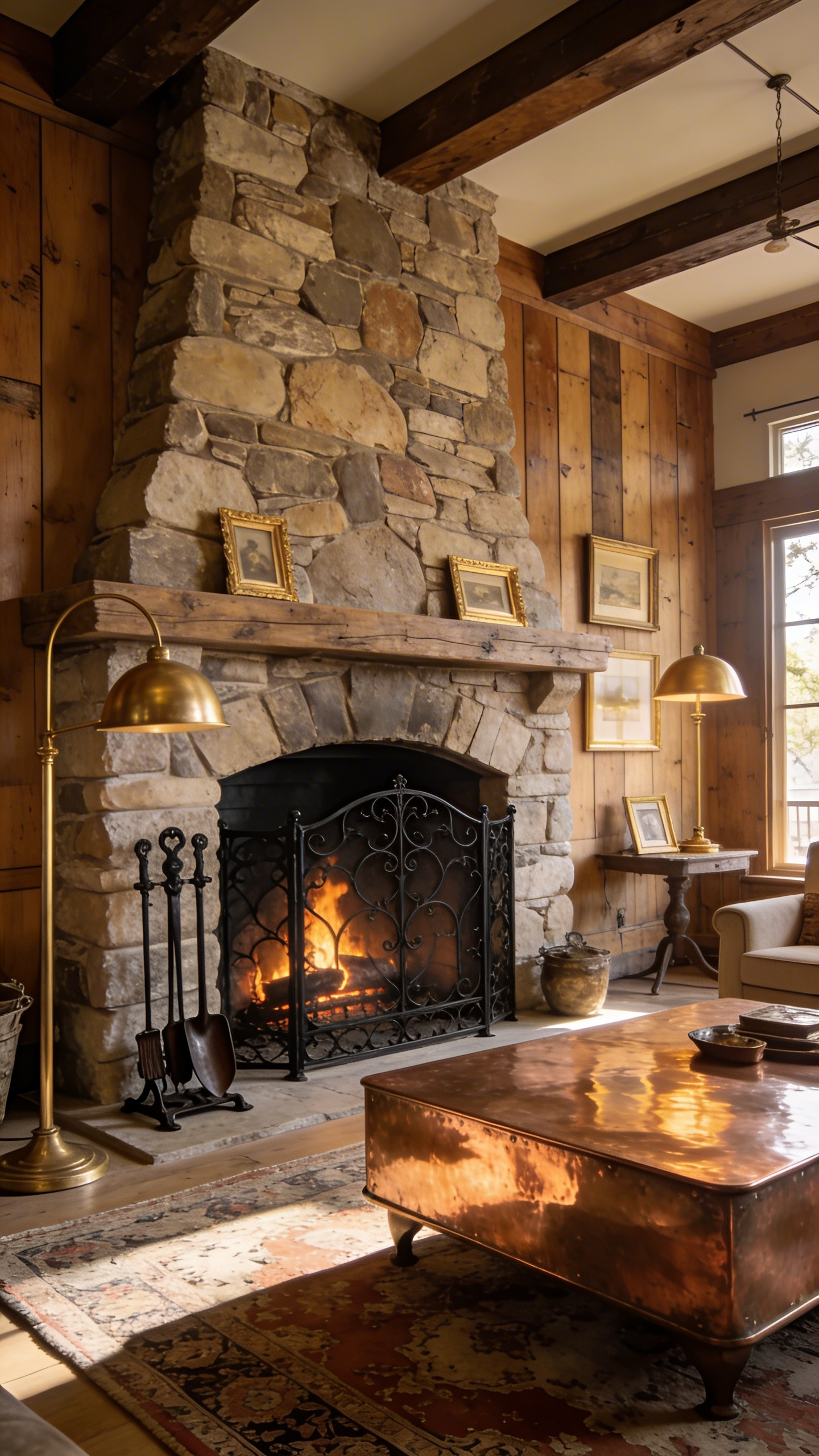
Finally, burnished brass is the room’s prized jewel. This metal historically signified wealth and dedicated maintenance. Today, a burnished finish softens brass into a dignified, inherited glow. These choices emphasize the beauty of living finishes. Unlacquered brass and raw copper oxidize gracefully over the years. Therefore, the room visually grows alongside its inhabitants.
Pairing hammered iron with silky brass creates brilliant sensory tension. Each metal interacts uniquely with light and sound. Iron defines sharp architectural shadows across the room. Meanwhile, burnished brass diffuses ambient light like a delicate softbox. Brass also adds melodic acoustic resonance to heavy interior hardware. This deliberate layering weaves an authentic British design narrative.
8. The British Textile Matrix: Layering Heritage Tweeds, Modern Bouclé, and Raw Linen
Mastering the British Textile Matrix elevates any rustic living room into a curated sanctuary. Specifically, this approach requires a hierarchy of distinct sensory weights. First, raw linen provides a breathable, organic foundation for large seating. This high-GSM flax features distinctive slubs that create a tactile rhythm. Linen is also a brilliant seasonal thermoregulator for the room. It feels delightfully crisp in summer while trapping essential heat during winter.
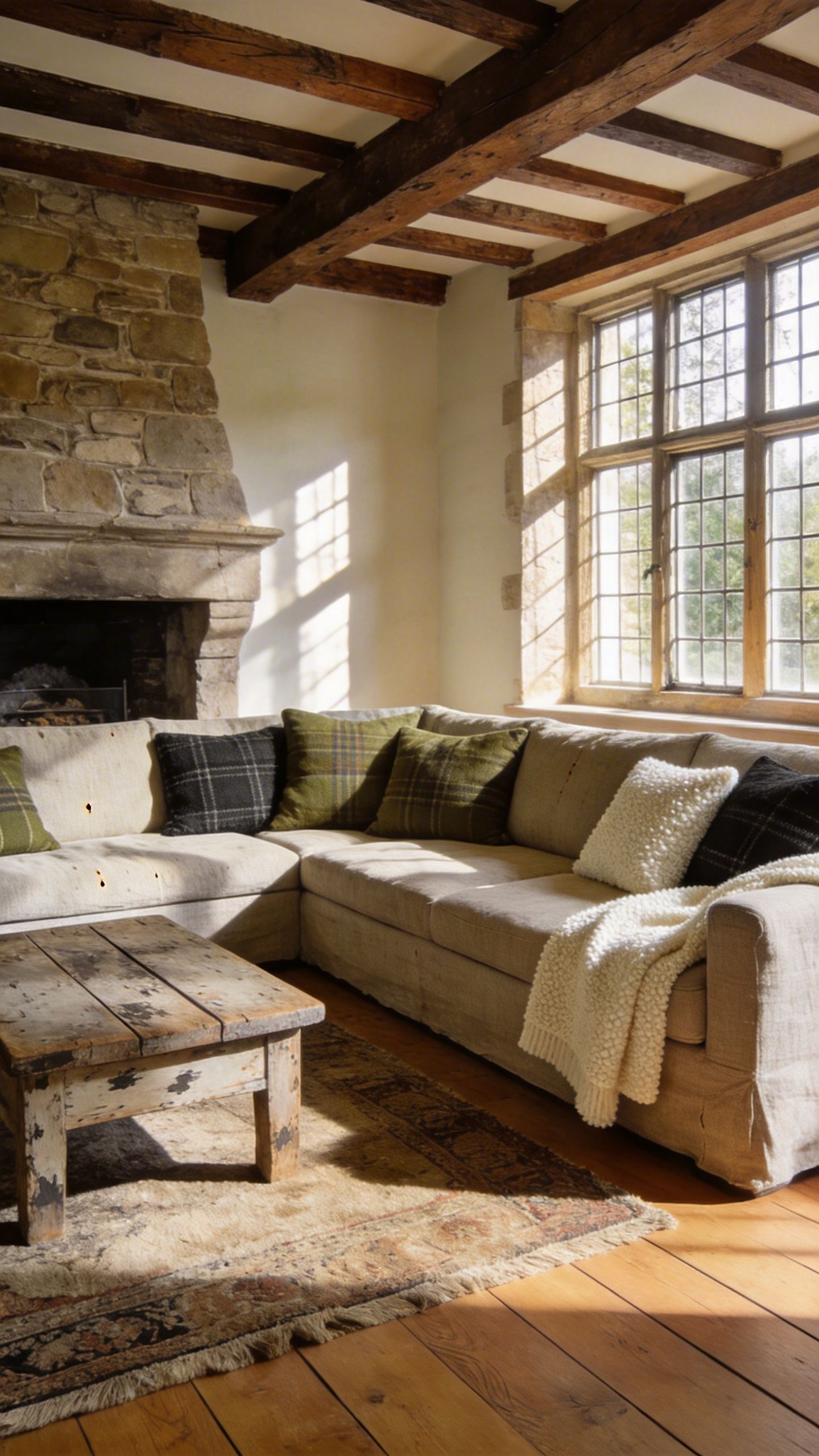
Next, heritage tweeds introduce crucial architectural grounding to the space. For instance, authentic Harris Tweed is meticulously handwoven in the Outer Hebrides. Its 1,560 hand-tied threads offer beautiful irregularities that machine-woven fabrics lack entirely. This heavy wool carries a faint, evocative scent of peat smoke and lanolin. Therefore, tossing Donegal tweed cushions adds rugged narrative weight to softer furnishings.
Finally, modern bouclé is a sculptural safe haven within the design. Historically, this looped yarn softened the rigidity of mid-century modern furniture. Today, high-end bouclé absorbs natural light to create a matte, cloud-like depth. Designers strategically use it on curvilinear ottomans to soften rustic architecture.
This three-point contrast prevents a clinical or dusty atmosphere. Instead, the carefully layered textiles invite genuine, long-term lounging. Moving from scratchy tweed to nubby bouclé creates a rich sensory interplay. Indeed, this textural complexity achieves true quiet luxury without relying on gloss. Your living room feels authentically lived-in and deeply connected to British heritage.
9. Artisanal Clay and Earth-Fired Ceramics: Grounding the Space with Human Craftsmanship
Artisanal ceramics offer more than mere aesthetic appeal in a rustic living room. Specifically, these earth-fired pieces are a biological reset for the modern home. For example, interacting with handmade clay textures significantly drops cortisol levels. Micro-irregularities like thumbprints and gritty sand stimulate mechanoreceptors in our skin. This tactile feedback anchors our attention and promotes immediate relaxation.
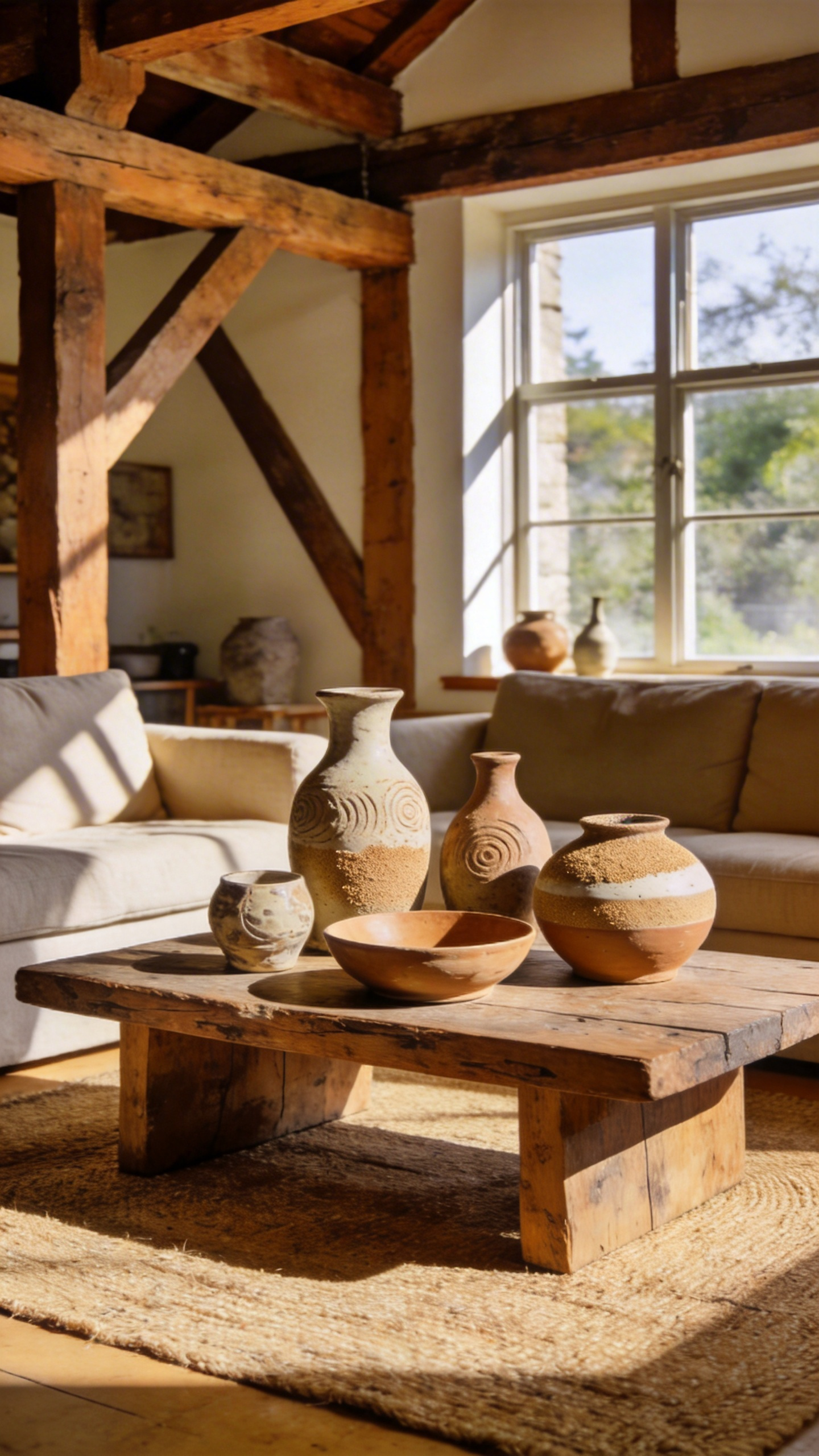
The ancient process of atmospheric firing surrenders control to nature. In fact, techniques like pit firing rely on moving flames and settling wood ash. Therefore, the kiln environment dictates the final appearance. No two pieces are ever completely identical. This unpredictability perfectly captures the wabi-sabi beauty of imperfect objects. These clay vessels carry encoded cultural history from their makers. Bringing this tangible human spirit into the room adds a deep sense of fascination.
To achieve material synergy, I constantly pair clay with wood and stone. While wood provides warmth, clay is a bridge to structural stone. For instance, placing a matte terracotta urn on a slate hearth builds a clear sensory hierarchy. Over time, these porous, unglazed surfaces absorb natural oils from human hands. Eventually, this living patina proves the object is an active participant in your home.
III. Spatial Application: Orchestrating the Room
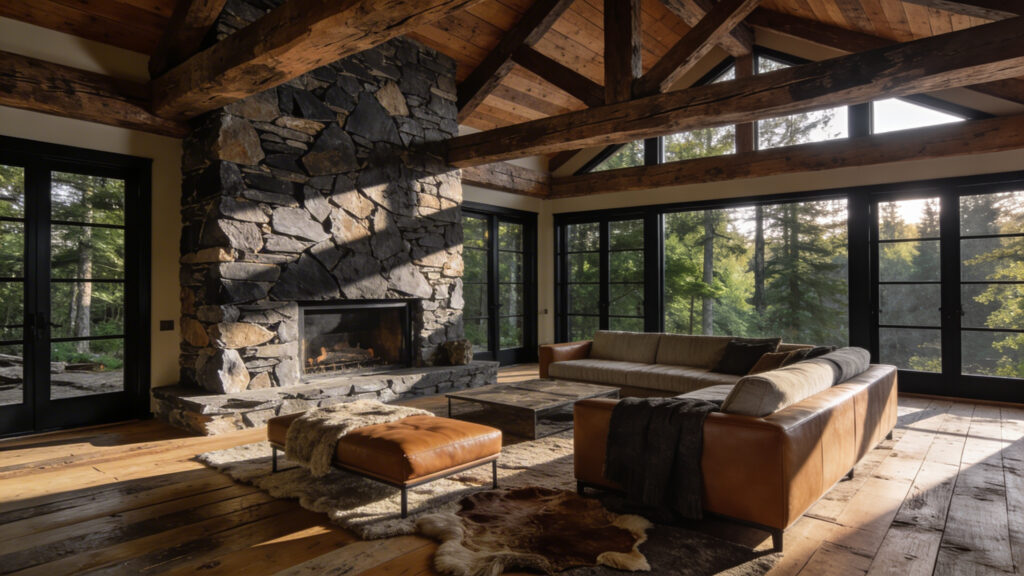
Managing heavy architectural elements requires careful orchestration in rustic design. Specifically, the fireplace is the primordial nucleus of the room. Therefore, it is a gravitational anchor for your layout. Secondary pieces should orbit this focal point in intimate conversation circles. These seating groupings should measure roughly six to eight feet across. This specific spacing allows the heavy materials to breathe comfortably. It also triggers a deep psychological sense of prospect and refuge. Structural features are vital spatial delineators rather than oppressive walls. For instance, heavy exposed ceiling beams visually lower the room’s height. They create a cozy, intimate scale within grander spaces.
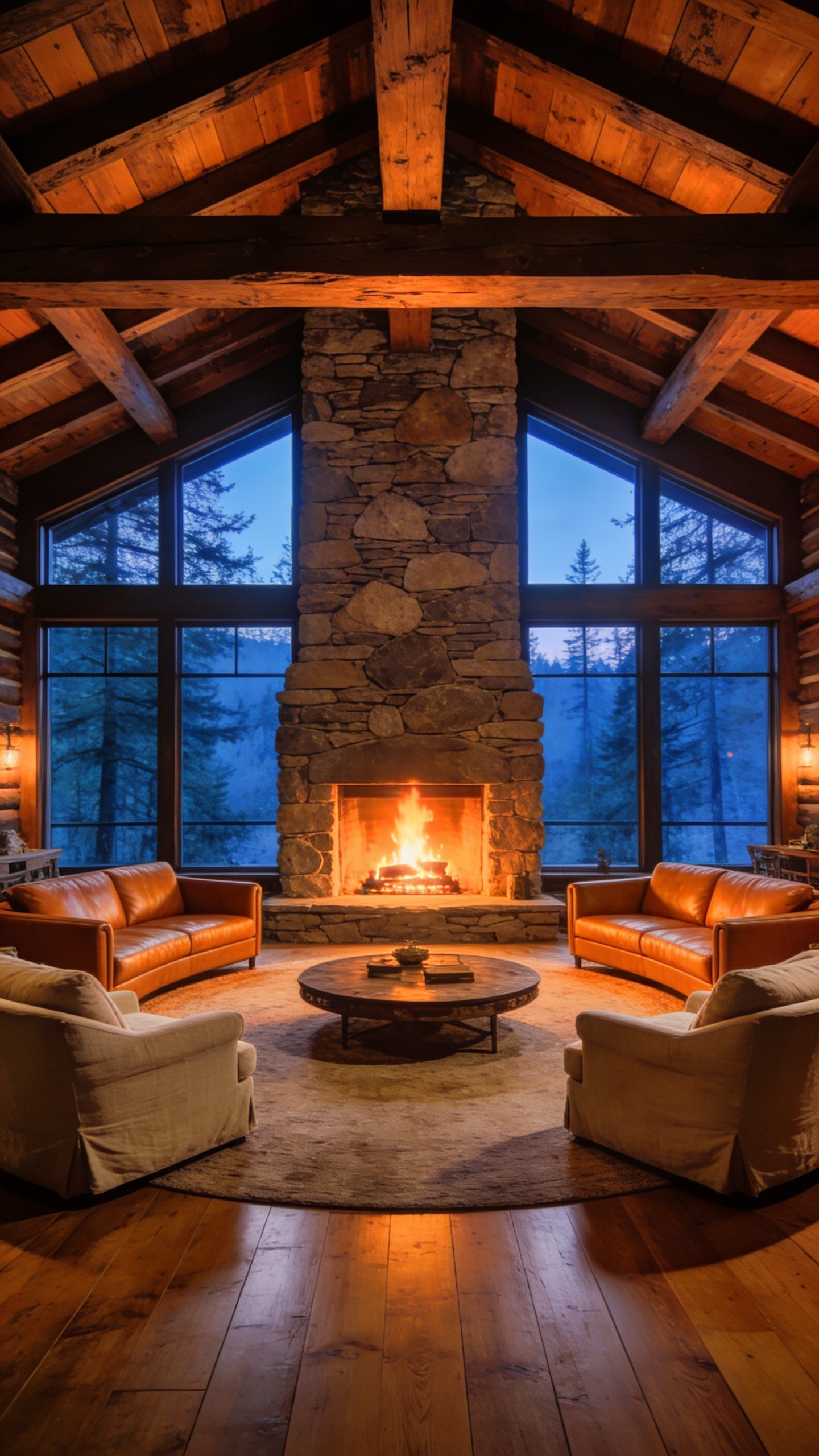
Strict adherence to the golden ratio elevates these coarse textures. Limit your furniture and decor to sixty percent of the room. The remaining forty percent must remain as restful negative space. This deliberate absence prevents an oppressive log cabin overload. Scale contrast is equally crucial for maintaining a modern British lightness. For example, pair a visually heavy leather sofa with a leggy iron table.
Next, you must orchestrate the sensory tempo of the space. Ideally, guide guests from hard slate floors onto soft wool rugs. This tactile shift signals a distinct transition into a private sanctuary. Incorporate heavy linen curtains or tapestries to dampen live acoustic echoes. As a result, the room remains a hushed, comfortable retreat.
10. Anchoring the Manor: How to Use Antique and Woven Rugs to Define Open Floor Plans
Open floor plans require invisible architecture to define zones. Specifically, rugs are the sturdy soil for your room. However, a single antique piece often lacks the required scale. Therefore, British design houses frequently employ strategic layering. First, lay a foundational jute or sisal rug. This coarse texture provides a beautifully rustic canvas. Next, layer a smaller, faded antique Persian or Oushak on top. This prevents a treasured heirloom from looking like a floating postage stamp. The tactile contrast between rough jute and plush wool whispers quiet luxury.
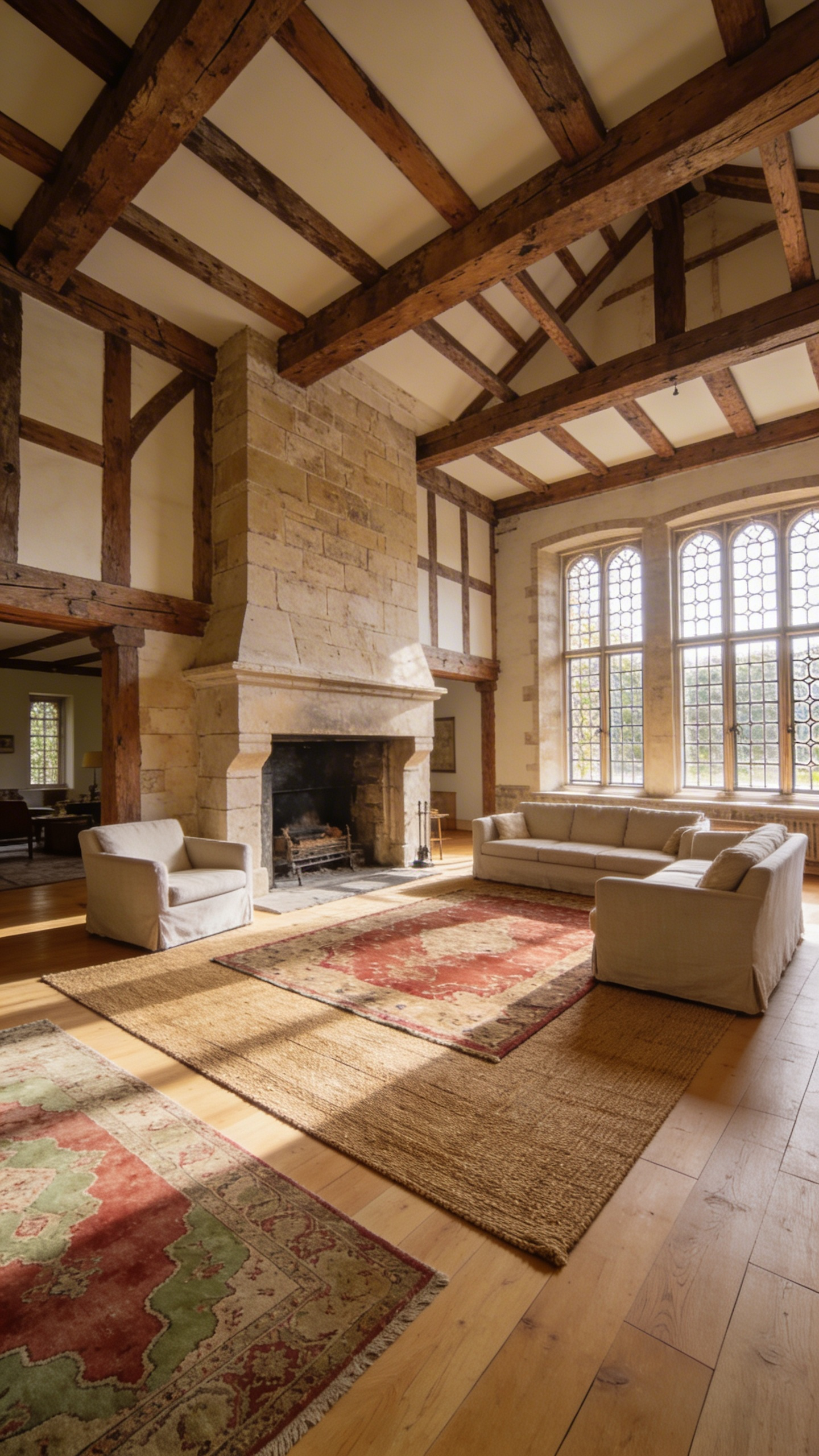
Historically, English manor houses used rugs to carve out intimate hearth zones. Today, you can replicate this by creating a psychological island. Specifically, anchor floating furniture using the all-legs-on rule. Every sofa and chair must sit completely upon the rug. The seating area feels entirely distinct from adjacent spaces. Similarly, dining spaces require a 24-inch rug buffer around the table. This ensures chairs remain inside the boundary even when pulled out.
Beyond aesthetics, dense wool rugs serve crucial acoustic and thermal functions. Uncovered hard floors in open spaces often create unpleasant echo chambers. Fortunately, hand-knotted wool naturally absorbs these bouncing sound waves. Wool’s natural crimp also provides excellent thermal insulation. In fact, it can reduce floor heat loss by nearly ten percent. Finally, connect multiple rug zones using subtle chromatic echoes rather than matching sets. For instance, pair a large-scale muted Oushak with a smaller flatweave Kilim. Sharing just one secondary thread color elegantly guides the eye across your manor.
11. The Modern Manor Hearth Arrangement: Seating Strategies that Honor the Fireplace
The “Modern Manor” aesthetic blends historic scale with contemporary minimalism. Specifically, the hearth is an architectural anchor dictating social flow. To achieve this, modern designers avoid theatre-style seating. Instead, they embrace precise conversational geometry. For example, I strictly maintain a seven-to-nine-foot conversation circle. Beyond this distance, guests must naturally raise their voices. This volume increase shatters effortless manor-house intimacy. Symmetrical mirroring also honors the fireplace beautifully. Placing two identical sofas facing each other creates a formal axis. The eye moves toward the fire naturally while focusing on guests. Designers float these seating groups away from the walls. Anchoring them with a massive natural fiber rug feels exceptionally cozy. This creates an intimate room within a cavernous stone space.
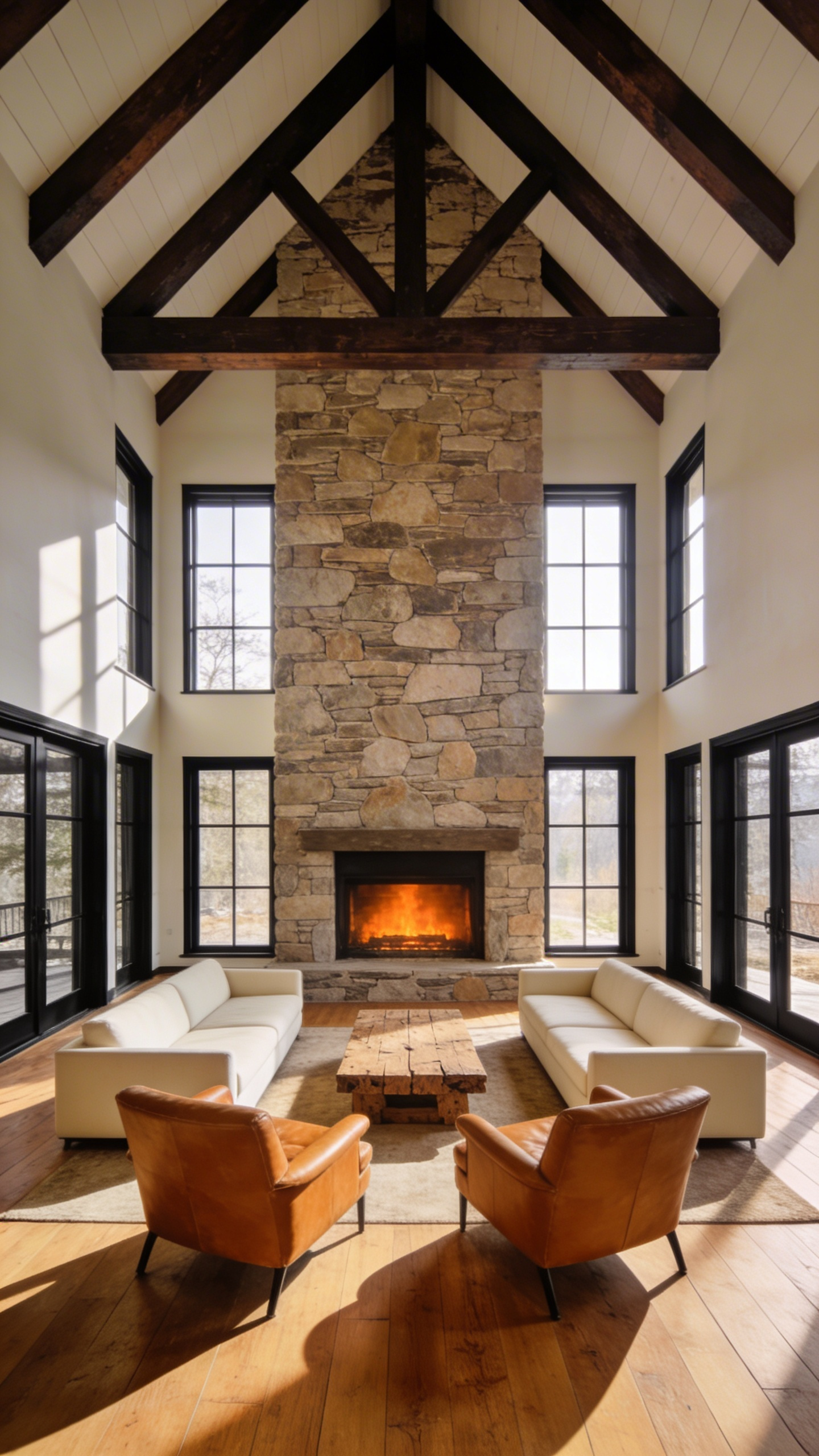
Historically, inglenooks provided refuge in drafty, high-ceilinged rooms. Today, built-in structural wings flanking the hearth physically hug the seating area. Creating a secondary snug offers a solitary, fireside retreat. A single wingback chair placed near the flames feels wonderfully protected. This positioning honors the prospect-and-refuge theory perfectly. Low-profile daybeds placed in front of the fire radiate warmth against the back. Simultaneously, occupants enjoy a wide prospect view of the larger room. Your furniture must match the hearth’s material gravity. Therefore, pair rugged fieldstone with heavy bouclé or thick-weave linen.
Balancing the fireplace and modern media requires careful axial negotiation. Mounting a television above a classic mantel feels like design sacrilege. Instead, place your media center at a ninety-degree angle to the hearth. An L-shaped layout honors both focal points easily. One sofa section faces the glowing embers directly. Meanwhile, the perpendicular section provides a comfortable view of the television. Always use low-slung furniture to preserve unobstructed sightlines to the flames.
12. Tailored Comfort: Using Deep-Seated Upholstery to Soften the Edges of Raw Materials
The concept of tailored comfort found in the most luxurious living rooms marries disciplined construction with expansive proportions. Specifically, deep-seated furniture is a vital sensory bridge in rugged spaces. In fact, an expansive seat depth of 24 to 28 inches triggers a deep nesting instinct. Humans naturally seek this soft anchor amidst heavy stone and reclaimed wood. However, standard overstuffed sofas can quickly look sloppy against these raw architectural elements. Therefore, designers rely on hidden internal structures like kiln-dried hardwood frames. A dense foam core wrapped in duck down maintains a beautifully sharp silhouette.
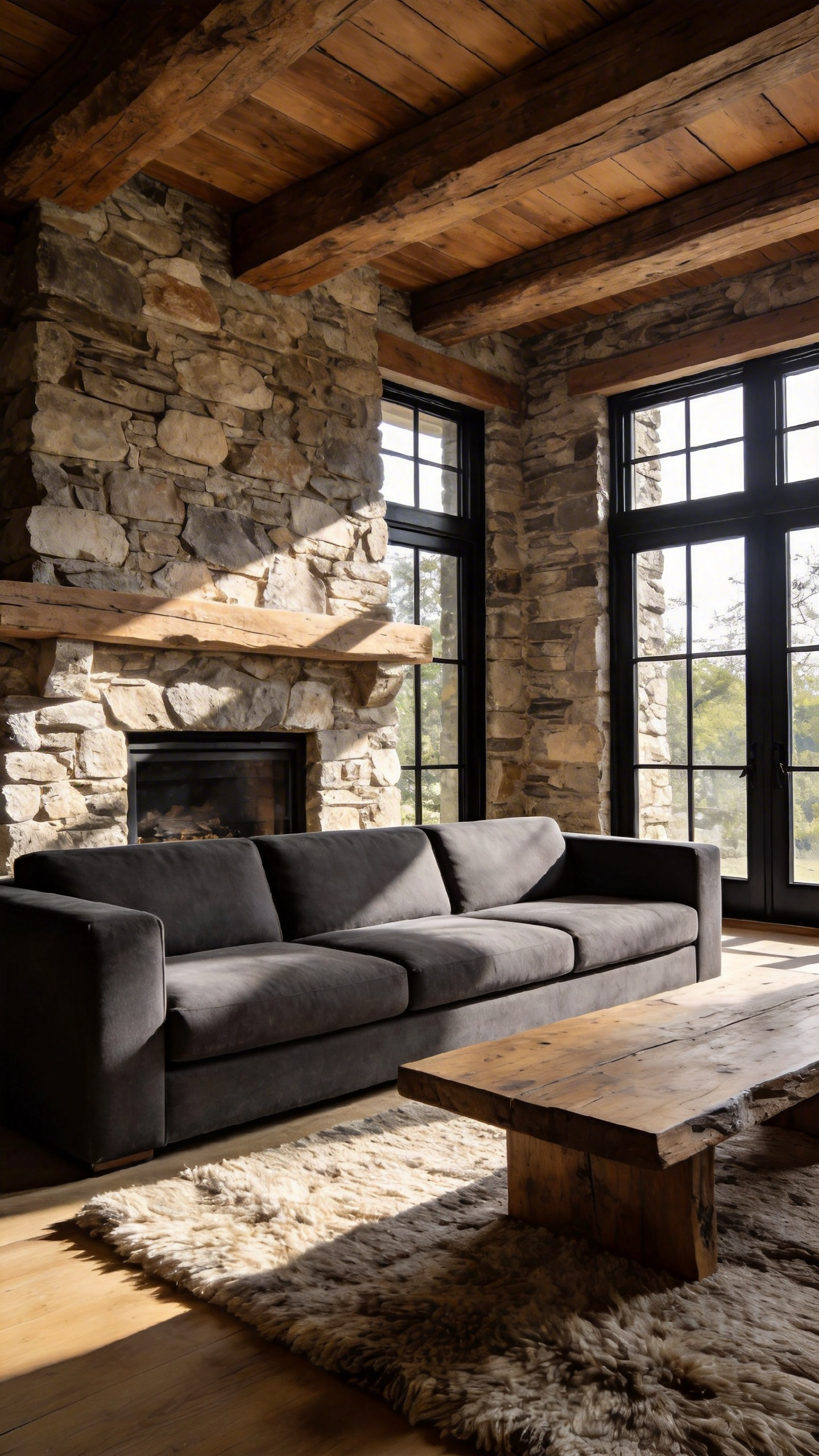
Meanwhile, master upholsterers employ highly clever technical buffers. For example, applying a traditional fox edge softens the harsh bite of a wooden frame. This firm burlap roll ensures you feel a rounded transition instead of sharp planks. Waterfall tailoring allows thick upholstery fabrics to flow smoothly over the front seat edge. Indeed, this organic drape visually mimics soft moss growing over a rugged stone surface. Heavy piping is a neat structural border between wild timber and civilized luxury.
Thoughtful material choices play a significant role in this ongoing sensory dialogue. For instance, natural upholstery fibers like wool and linen create a warming micro-climate. This textile warmth balances the literal coldness of the surrounding bare masonry. Distressed aniline leather beautifully bridges the gap between refined tailoring and wild nature. Over time, a deep leather sofa develops a rich, organic patina. As a result, the upholstery ages gracefully into the room alongside weathered timbers.
13. Illumination with Lineage: Balancing Ambient Lighting and Wrought-Iron Chandeliers
Wrought iron represents a historical record of human intervention with fire. Specifically, a chandelier connects modern comfort to traditional medieval ironwork. However, authentic iron possesses a living, matte finish that absorbs light. Therefore, its visual weight requires a carefully planned lighting balance. Otherwise, a massive fixture can create a heavy black hole effect. To achieve equilibrium, designers utilize a tri-level layering technique. First, the central chandelier establishes the room’s primary identity and mood. Next, wrought-iron wall sconces bridge the visual gap at eye level. Hidden LED uplighting on timber beams softly washes the ceiling. This layered approach ensures the chandelier is seen beautifully in relief.
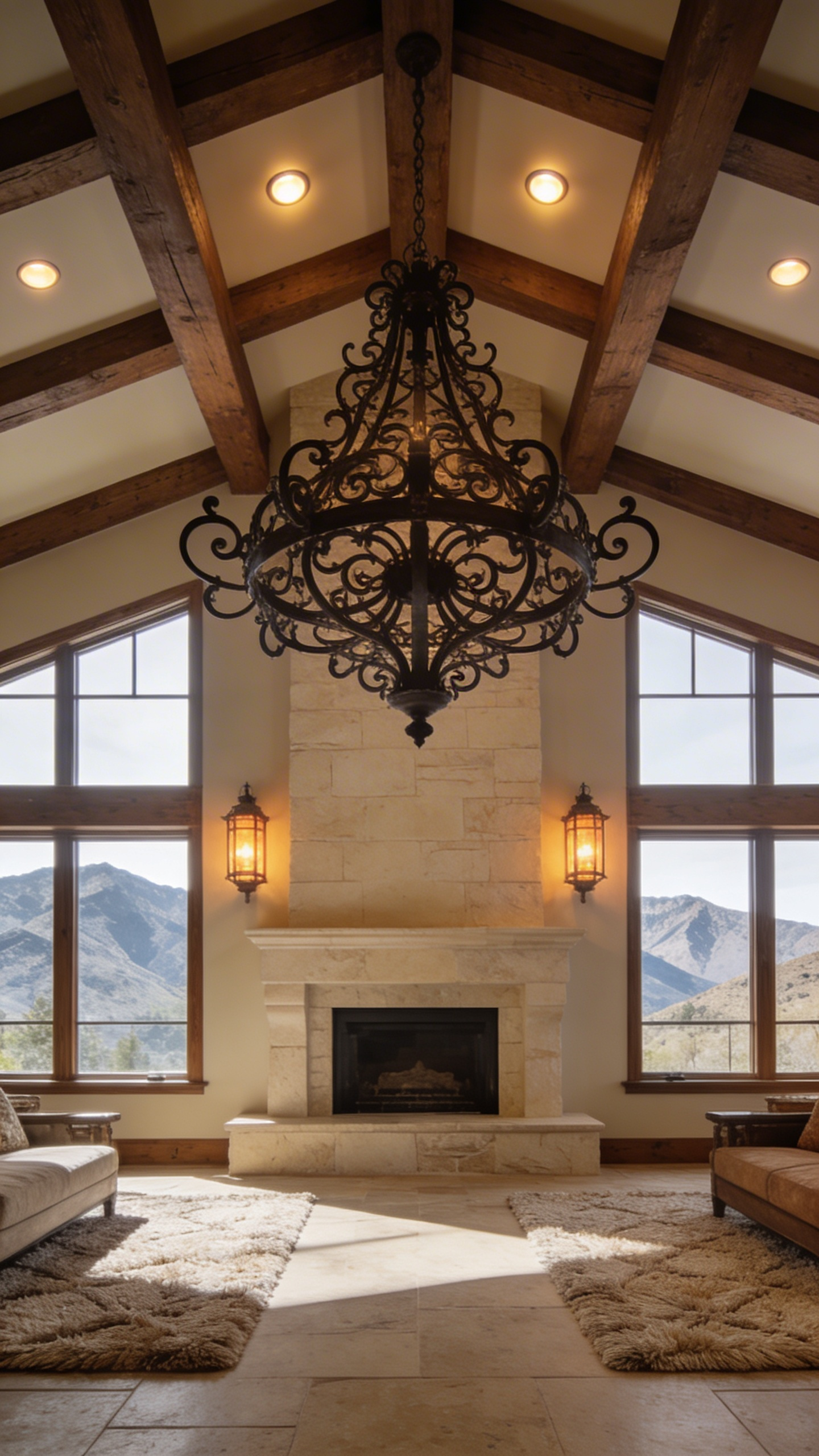
The light that misses a surface is equally crucial. In fact, these skeletal iron structures create brilliant, kinetic shadow play. Specifically, placing the fixture on a high-quality dimmer reveals architectural tattoos across the walls. At lower settings, the heavy iron frame disappears into the shadows. Meanwhile, the warm amber glow simulates a historic British manor house. Importantly, the scale of this heritage piece must command the entire room. Therefore, professionals often over-scale rustic fixtures to properly anchor the seating area. The iron’s thickness must visually complement the room’s heavy wooden beams.
Finally, managing the color rendering index is a critical technical step. Wrought iron is inherently a visually cool and dark material. Ambient light must remain strictly below 2700 Kelvin. Warm dim technology transforms the cold metal into a vibrant forge glow. As a result, the chandelier is a natural extension of the warm hearth.
14. Mastering Vertical Scale: Displaying Architectural Salvage and Oversized Antique Mirrors
Mastering vertical scale transforms a grand rustic living room entirely. It involves a sophisticated play on expansive volume, diffused light, and deep history. Mounting tall architectural salvage draws the eye upward to highlight the room’s height. This mimics the cathedral effect to actively promote abstract thinking. However, expansive vaulted ceilings can sometimes feel isolating without proper grounding. Therefore, oversized antique mirrors are crucial proportional anchors. They provide a much-needed human-scale reference point for the eye.
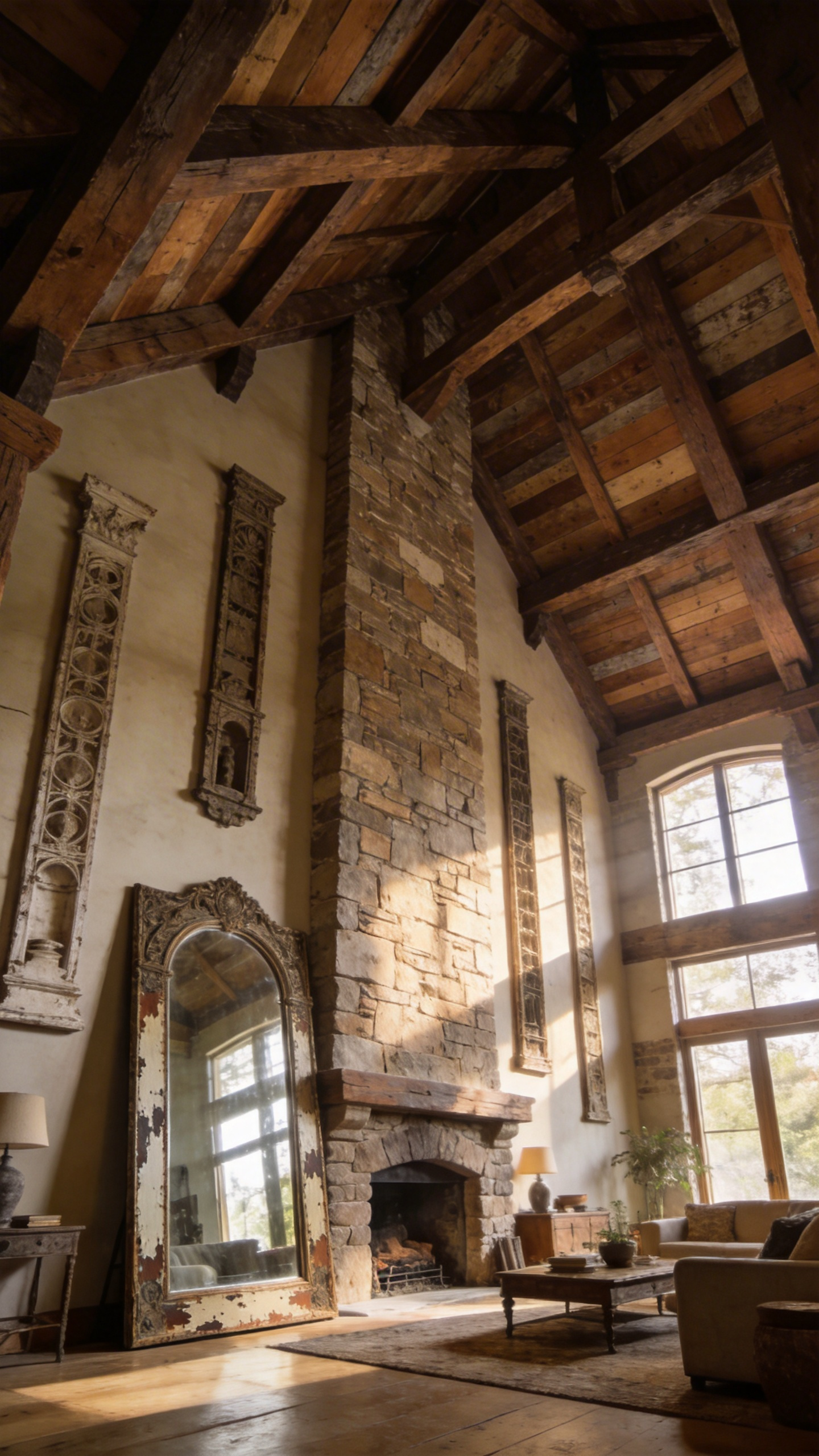
Modern clear glass often clashes harshly with soft organic materials. Instead, I prefer mirrors displaying heavy foxing or beautiful romantic decay. This natural silver oxidation blends beautifully with rough reclaimed wood. Antiqued glass diffuses atmospheric light softly across the entire rustic interior. It instantly reduces harsh shadows against darker timber walls and stone hearths. You must pair visually heavy wooden salvage with lighter glass mirror frames. Otherwise, the living space might feel visually oppressive or uncomfortably bottom-heavy.
Using authentic architectural salvage adds instant narrative and historic provenance. Incorporating a salvaged stone pediment creates a striking sustainable design statement. Displaying these incredibly weighty vintage pieces requires careful structural planning. For instance, mounting solid oak church doors demands a deeply secured metal French cleat. Alternatively, casually leaning an oversized mirror against the wall creates a relaxed aesthetic. You must always perform a strict reflection audit before finalizing your placement. Specifically, ensure your massive focal mirror reflects a beautiful rustic chandelier or outdoor view. It should never simply reflect a dark cluttered corner or a blank ceiling.
IV. Lifestyle Integration: The Lived-In Experience
Today, a truly lived-in space rejects the fragile museum-style aesthetic. Instead, it embraces the Japanese philosophy of Wabi-Sabi. Specifically, this means celebrating the beauty of age and daily wear. For example, honest materials like reclaimed oak naturally develop a rich patina. A scratch on a coffee table is never a flaw. Rather, it is a timestamp of a life well lived.
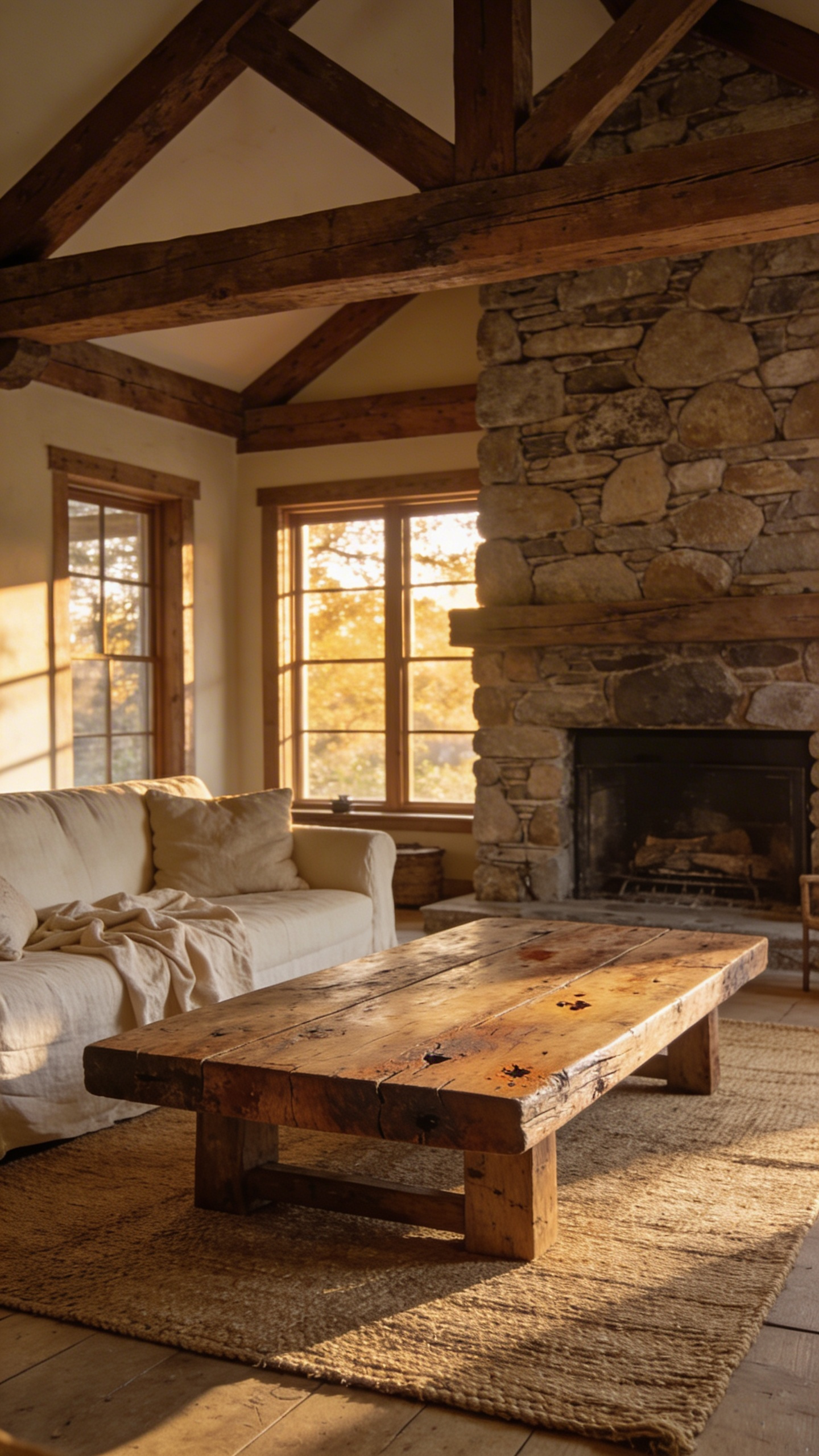
Historically, the rustic living space functioned as the essential keeping room. Currently, this tradition evolves into the hearth-centric great room. Therefore, modern furniture arrangements prioritize prospect and refuge. Deep-seated sectionals typically face a central stone fireplace. This layout encourages slow living and meaningful conversation.
However, integrating modern technology often threatens this organic atmosphere. To prevent visual noise, designers increasingly utilize invisible tech. For instance, screens are disguised as high-quality framed art. Smart hubs remain hidden behind handcrafted wooden panels. Warm-dim LEDs mimicking a dying fire maintain the sanctuary feel.
Scientifically, these rustic materials also create a powerful sensory haven. In fact, environmental psychology shows that organic patterns actively reduce cortisol levels. Thick timber beams and heavy wool throws provide vital neurological grounding. The design goal is intentional character rather than show-home perfection. Weaving personal artifacts into the architecture creates a deeply authentic home.
15. The ‘Muddy Boots’ Welcome: Where Unpretentious Practicality Meets High-End Prestige
Historically, Andrew Jackson’s 1829 inauguration saw muddy boots trampling over delicate White House chairs. However, this once-disgraceful clash of rugged reality and elite prestige now defines modern luxury. Specifically, the English country house aesthetic has long championed this unpretentious approach to grand spaces. In fact, true prestige today means owning a living room that never demands fragile perfection. Instead, we embrace stealth wealth through exceptionally durable, soulfully imperfect natural materials.
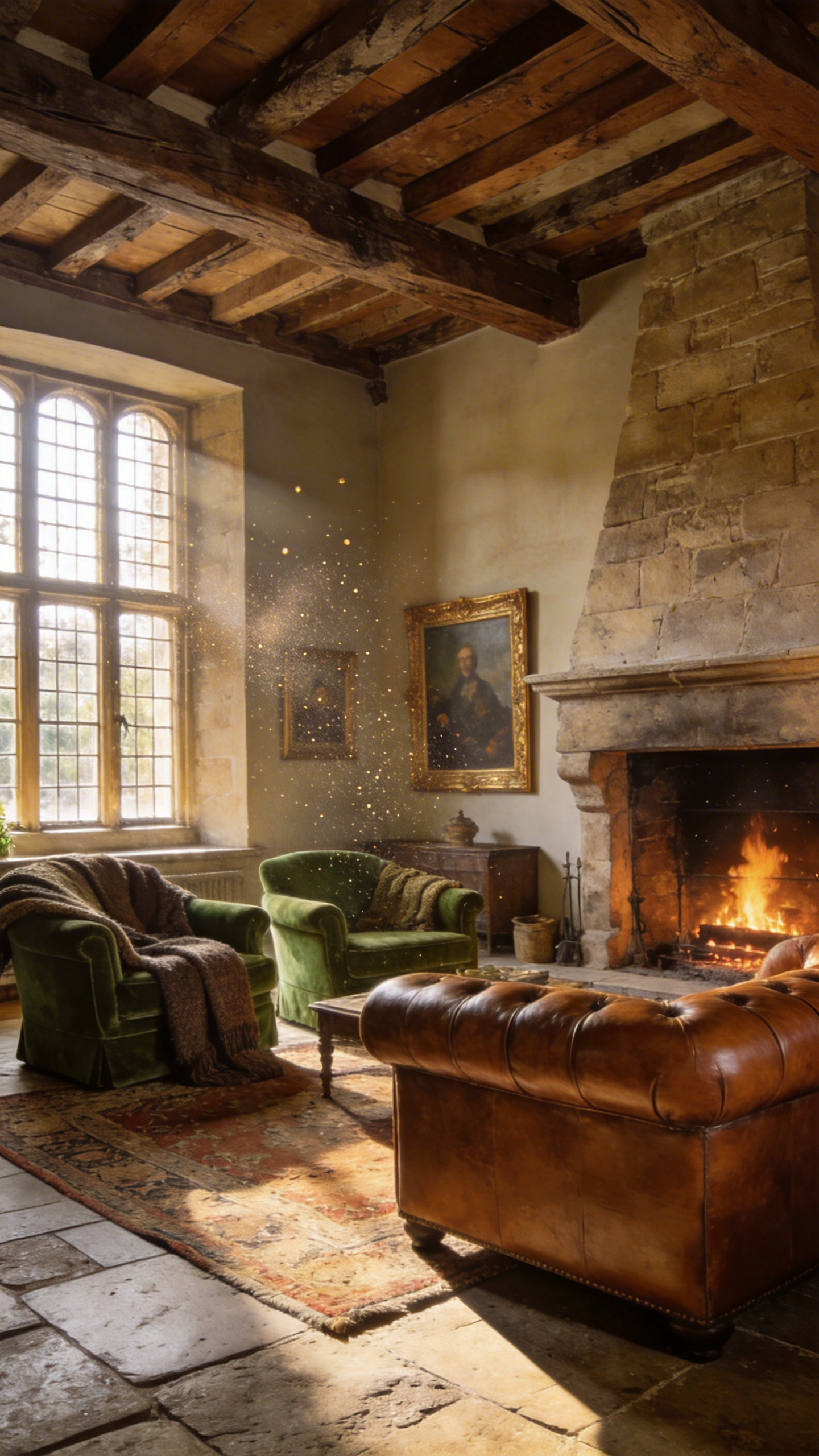
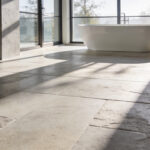
For example, wide-plank reclaimed heart pine floors easily disguise scuffs from heavy outdoor boots. Honed basalt and wire-brushed limestone tiles offer an elegance that hides daily dirt. The architectural threshold between the rugged outdoors and the refined indoors completely disappears. Modern estates utilize continuous stone flooring alongside vast floor-to-ceiling glass panels. High-end upholstery also plays a vital role in this scruffy luxury aesthetic. Namely, indestructible performance linens mimic antique textiles while repelling damp dog paws effortlessly. Thick top-grain leather sofas are chosen specifically to develop a rich, fifty-year patina. This approach democratizes the formal parlor into a highly practical social space. Therefore, a rustic living room becomes a place that works hard while radiating quiet wealth.
16. Curated Collections: The Fine Line Between Meaningful Accumulation and Visual Clutter
Curated collections often distinguish a house from a deeply personal home. Historically, these groupings evoke the classic cabinet of curiosities. However, mastering this look requires a careful curator’s eye. Specifically, your objects should feel gathered rather than casually bought. Therefore, avoid modern synthetics that easily break the rustic spell. Instead, celebrate items possessing an honest, deeply weathered patina. Indeed, a vintage copper pot shares a consistent aging language. These pieces enter their third life as meaningful artifacts.
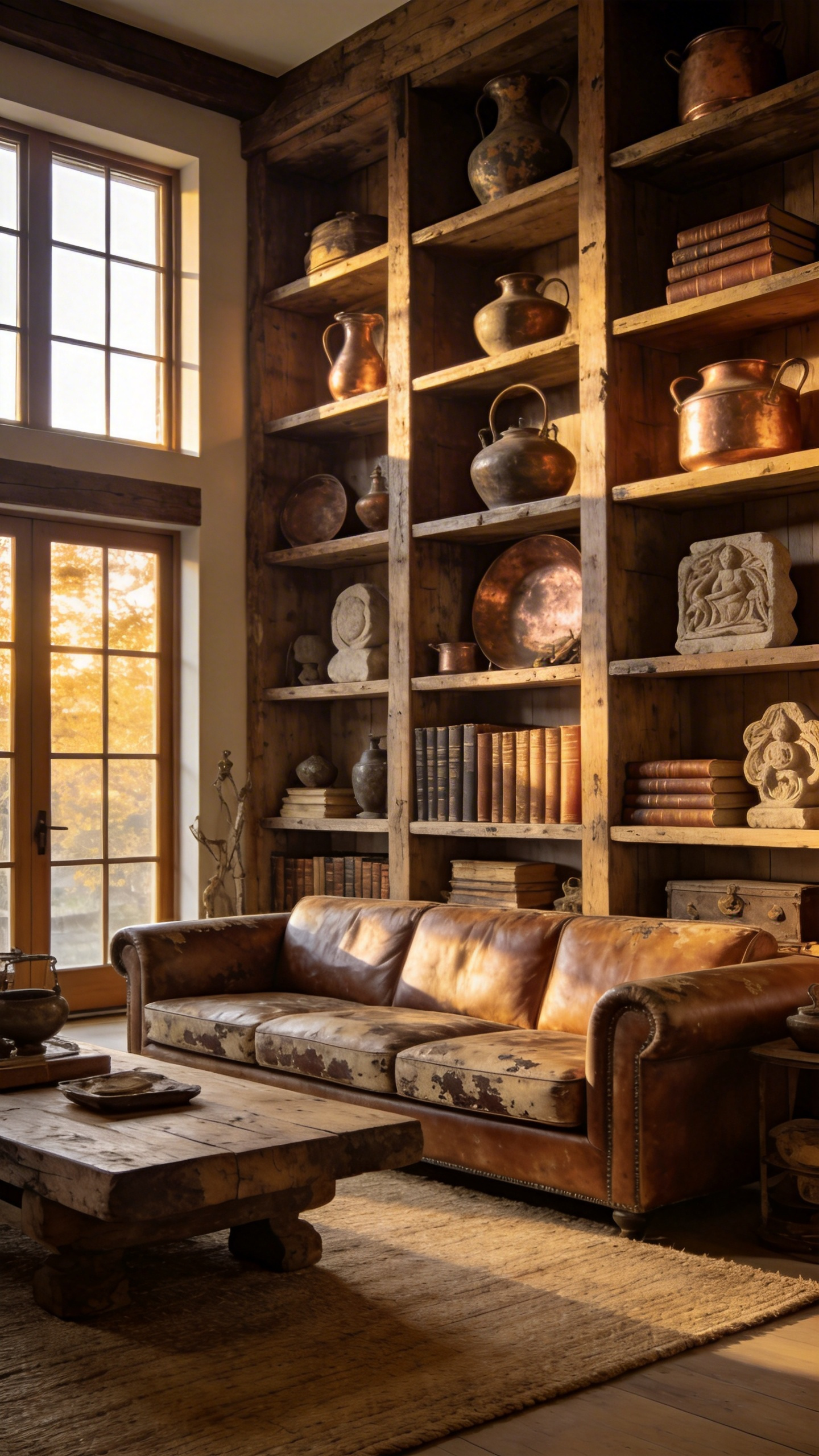
Visual weight plays a crucial role in rustic spaces. Heavy timber and fieldstone architecture can quickly feel quite chaotic. Scattering small items across a heavy mantle creates visual noise. Fortunately, you can fix this by utilizing the rule of massing. For instance, cluster related items together on a single wooden tray. This clever grouping creates a cohesive visual island. Top designers rely on the 60/40 rule of negative space. In practice, leave forty percent of your horizontal surfaces entirely empty. As a result, this visual silence provides a vital resting point.
Finally, the most successful British homes are living entities. You must rotate your pieces seasonally to prevent stagnant clutter. For example, display heavy hand-woven blankets during the colder winter months. Conversely, swap them for smooth river stones in the bright summer. This practice keeps your space breathing and beautifully honest.
17. The Conservatory Connection: Drawing the Wild British Garden into the Living Space
The modern rustic conservatory is more than a simple glass box. Rather, it is a vital architectural threshold. Specifically, it connects the wild British landscape with refined interior comfort. Historically, this design draws from William Robinson’s famous “Wild Garden” philosophy. Therefore, modern designers avoid stiff, formal boundaries. Instead, native climbers like English Honeysuckle gracefully dissolve the exterior lines. Allowing vines to scale window frames creates an unmanicured, lived-in aesthetic.
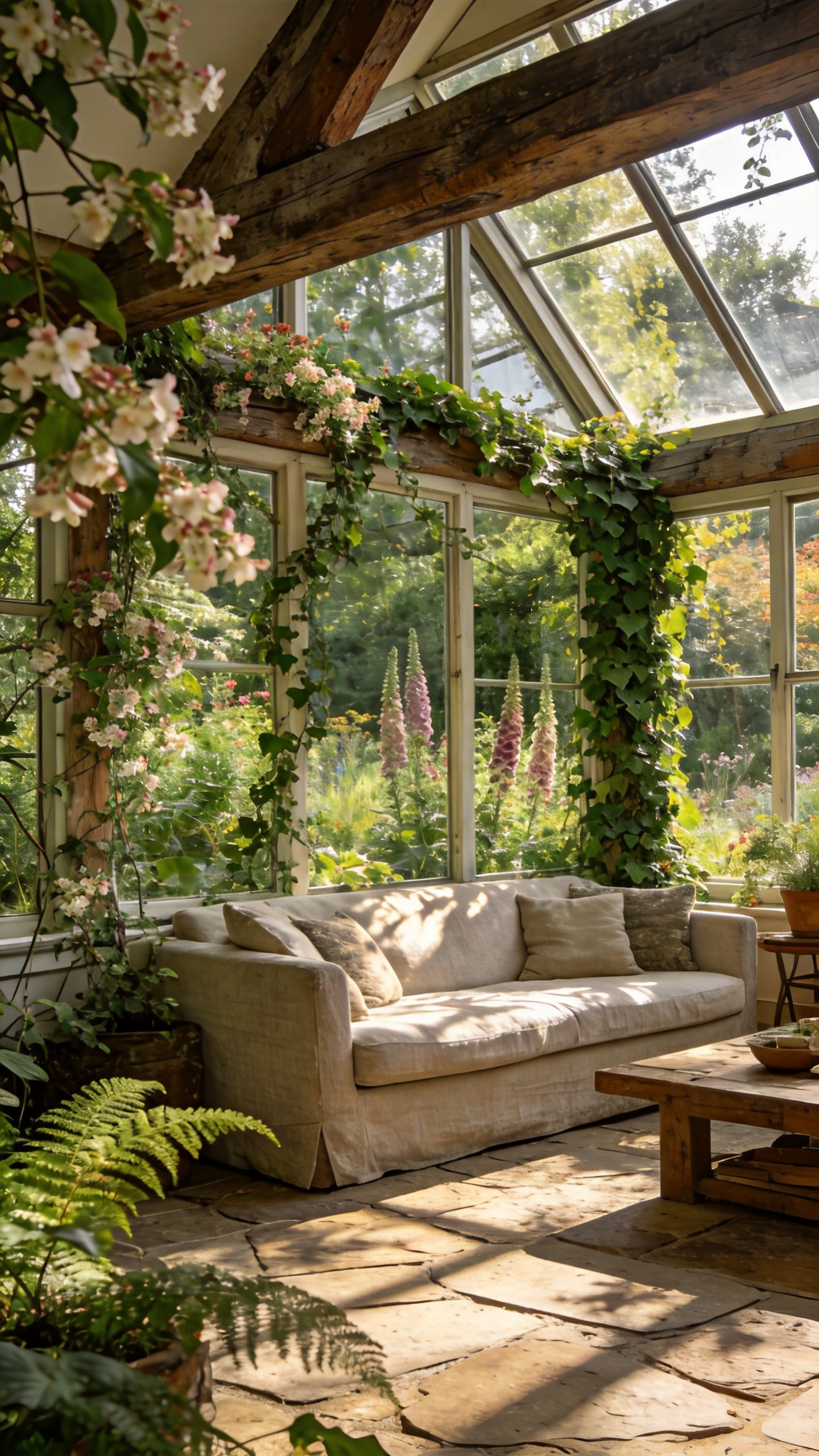
We must treat these robust plants as living architecture. For example, indoor-adapted grapevines create a natural, dappled ceiling. This leafy canopy brilliantly softens harsh summer sunlight. Night-scented jasmine introduces a temporal, fragrant shift. The wild garden announces itself powerfully at dusk.
Previously, classic conservatories were simply seasonal luxuries. Today, modern thermal glazing changes the entire experience. Specifically, soft-coat Low-E glass offers brilliant year-round insulation. Importantly, this microscopic metallic coating maintains a neutral, non-reflective appearance. As a result, your view of the landscape remains perfectly undistorted.
Meanwhile, continuous flooring is a critical narrative bridge. Reclaimed brick or flagstone is the ideal aesthetic choice. These durable materials withstand humidity effortlessly. They also provide essential thermal mass to hold the sun’s warmth. Next, add weathered terracotta pots to echo the outdoor earth. Finally, contrast these hard surfaces with heavy linen upholstery and wool rugs. This dialectic balances rugged wildness with true domestic sanctuary. In fact, visual access to untamed nature actively reduces cortisol levels. Therefore, the conservatory becomes your most calming, restorative living space.
18. Enduring Legacy: Designing a Rustic Room That Becomes More Beautiful with Every Decade
Creating an enduring legacy shifts your design mindset completely. Specifically, you move from buying a look to planting a forest. Therefore, the homeowner becomes a dedicated steward. Generic rustic styles often rely on synthetic topcoats. However, true longevity requires breathable, living finishes. For instance, unlacquered brass and oil-rubbed oak transform chemically. Human touch deepens the wood’s color over decades. This natural fuming creates a beautiful, warm glow. High-traffic areas polish rather than merely scratch.
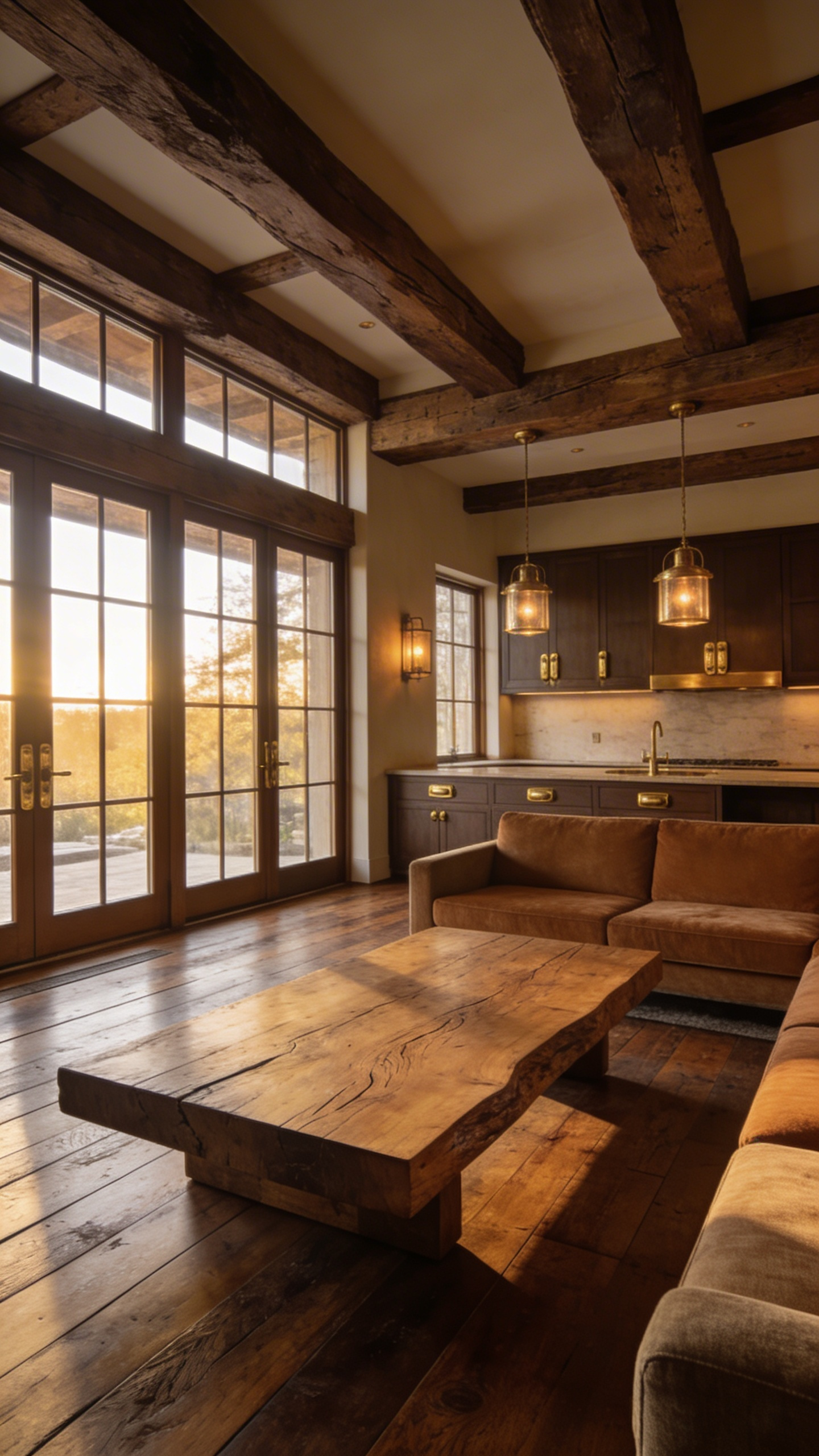
Timelessness demands a hyper-local approach to architecture. Historically, traditional homes utilized native stone and timber. Regional materials anchor your room in geological time. Similarly, sourcing local resources prevents a fleeting, dated appearance. Structural integrity becomes the primary decoration. Indeed, exposed mortise-and-tenon joints allow wood to breathe seasonally. These honest connections ensure the room remains repairable. Eventually, heavy harvest tables and hand-hewn beams will visually soften. These gently worn floorboards beautifully reflect the Wabi-Sabi philosophy. The room organically learns the physical movements of its family.
Finally, historical rustic spaces embraced deep shadows and warmth. Therefore, employ low-level sconces to create an atmospheric chiaroscuro. As the timber ages, it naturally absorbs this gentle light. This creates a psychological cocoon of lasting comfort. By investing in honest craftsmanship, you ensure the rustic living room remains a space of enduring beauty and quiet strength for generations to come.
Frequently Asked Questions
How do you make a rustic living room look modern?
To modernize a rustic space, focus on the 70/30 rule. Keep 70% of the room dedicated to authentic rustic elements like reclaimed wood or stone. Introduce 30% contemporary silhouettes. Minimalist metal lighting, clean-lined linen sofas, and abstract art provide necessary visual lightness. This prevents the room from feeling like a historical museum.
What colors go best in a rustic living room?
Authentic rustic palettes move beyond simple browns. Use nuanced earth tones like raw sienna, burnt umber, and desaturated olive greens. Traditional finishes like limewash or clay paint provide a velvety, matte texture. This absorbs light beautifully, highlighting the imperfections of natural wood and stone.
Is rustic style still in for 2026?
Yes, the rustic aesthetic has evolved into a movement focused on biophilic wellness and heritage. In 2026, the trend prioritizes material honesty. This means rejecting faux finishes for reclaimed timbers, unlacquered metals, and handmade ceramics. This shift toward sustainable, long-lasting design ensures that rustic interiors remain relevant for premium homes.