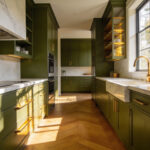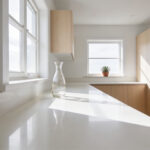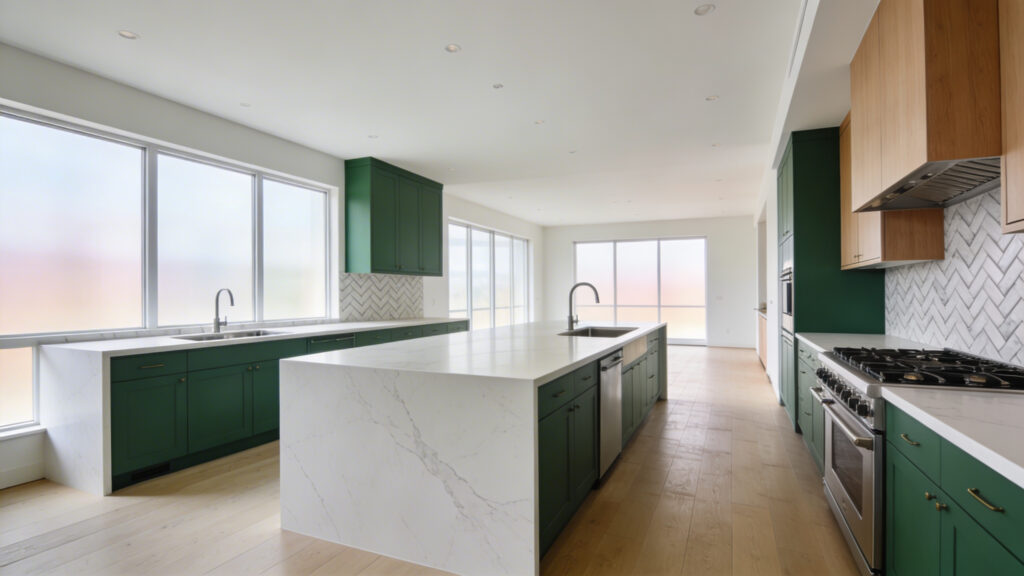
Many homeowners assume that a successful modern kitchen renovation relies solely on visual appeal. Indeed, design magazines often celebrate the drama of exotic stone surfaces and brass fixtures. As a result, the planning process frequently prioritizes these aesthetic finishes over structural necessities. Yet, this surface-level focus neglects the “Invisible 40%.” This critical concept represents the substantial budget and effort required for a room’s hidden backbone.
True luxury is defined by seamless flow rather than expensive decoration. Without a robust infrastructure, even a visually stunning kitchen generates daily micro-stress. For instance, “visual noise” from cluttered utility areas creates unnecessary cognitive load. Moreover, failing to account for ergonomic “reach bands” leads to physical strain during cooking. Therefore, balancing technical precision with the principles of harmony is essential for a serene environment and is one of the 24 ways to breathe soul into your kitchen renovation.
This guide reveals why modern renovation focuses on flow, not just finishes. We will explore how reliable mechanical systems provide a superior return on investment. Furthermore, we examine the psychological impact of “silent luxury” and acoustic comfort. Additionally, we discuss the shift from the traditional work triangle to intuitive multi-cook zones. Ultimately, prioritizing these invisible elements ensures your space remains a balanced sanctuary.
Foundational Layouts: Evolving beyond the 1950s ‘Work Triangle’ to modern ‘Work Zones’
To truly modernize a home, one must reconsider the kitchen’s historical purpose. Specifically, the famous “Work Triangle” originated in the 1940s from Lillian Moller Gilbreth’s “Efficiency Movement.” It was intended to optimize a single cook within a closed manufacturing environment. However, today’s kitchen acts as a multigenerational social hub. Consequently, the layout must evolve from saving steps to avoiding collisions between multiple people, often incorporating 18 essential ideas for modern kitchen design to maintain 2026’s leading trends.
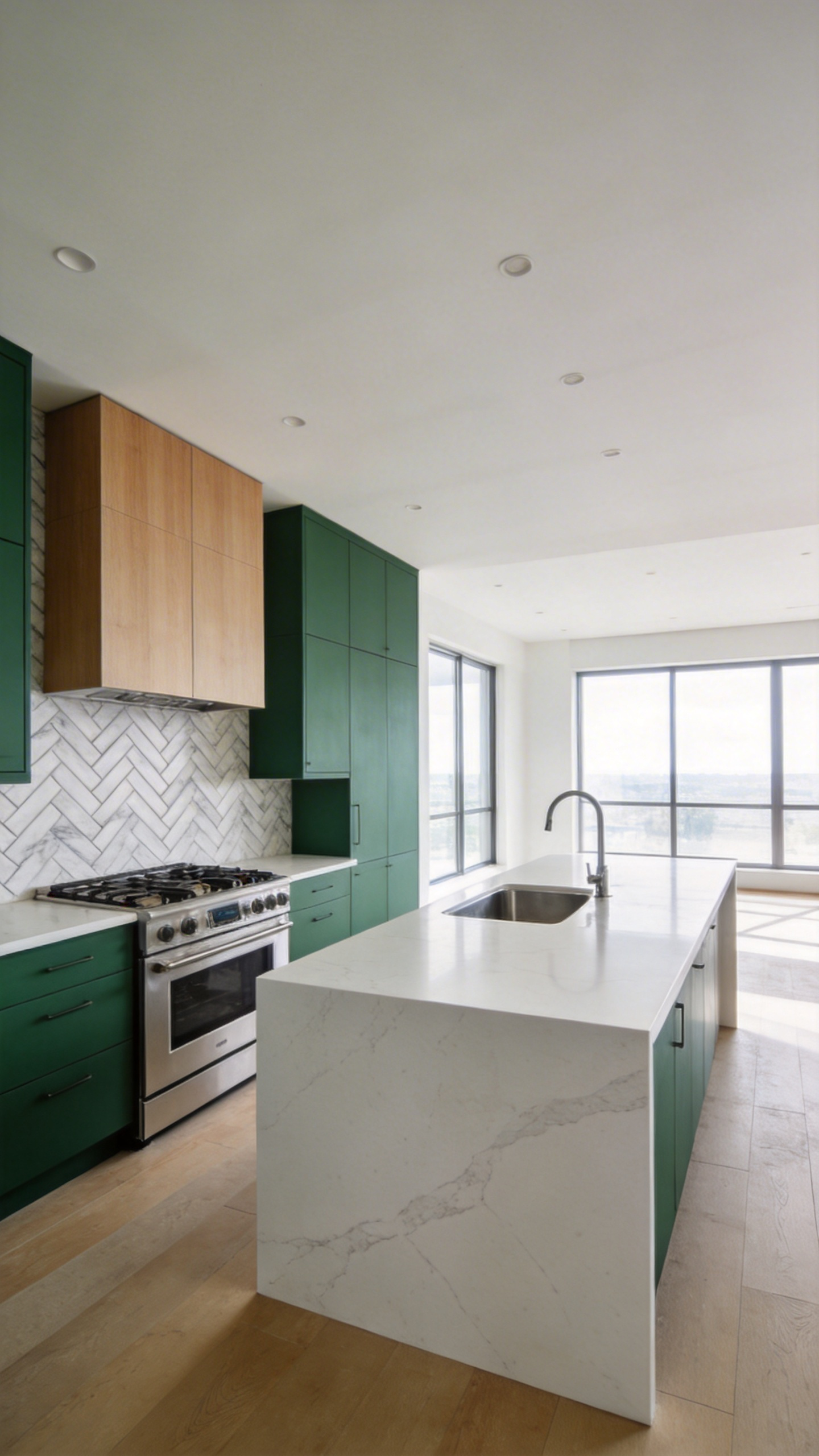
Therefore, contemporary designers utilize “Work Zones” rather than a rigid triangle. This approach creates self-contained ecosystems, such as a beverage station or a baking corner. Notably, global research by Blum identifies five distinct zones to organize consumables, cleaning, and preparation. Ideally, the “Prep Zone” should sit between cleaning and cooking areas to mimic natural food flow.
Furthermore, this zoning impacts technical spatial requirements. According to the National Kitchen and Bath Association, multi-cook households require wider aisles of 48 to 54 inches. This prevents the “kitchen dance” common in cramped triangles. Additionally, these zones offer opportunities for sensory design and bespoke finishes. For instance, a “Baking Zone” might utilize cool marble, differentiating it from a warm wood chopping block. Ultimately, the goal is finding a comfortable “Pivot Point” rather than walking a repetitive path.
The European approach to ‘Negative Space’: Breathing room in cabinetry design
The European approach to negative space is often termed “the art of subtraction.” Unlike traditional designs that prioritize filling a room, this ethos treats emptiness as a vital architectural element. Historically, this concept roots back to the Bauhaus movement’s shift away from clutter. Consequently, designers moved from bulky, standalone furniture to “fitted” cabinetry that seamlessly blends into the architecture. Therefore, the goal is eliminating “visual debt” to create a calm, blank canvas for living, following 19 modern kitchen interior design tips for a dream space.
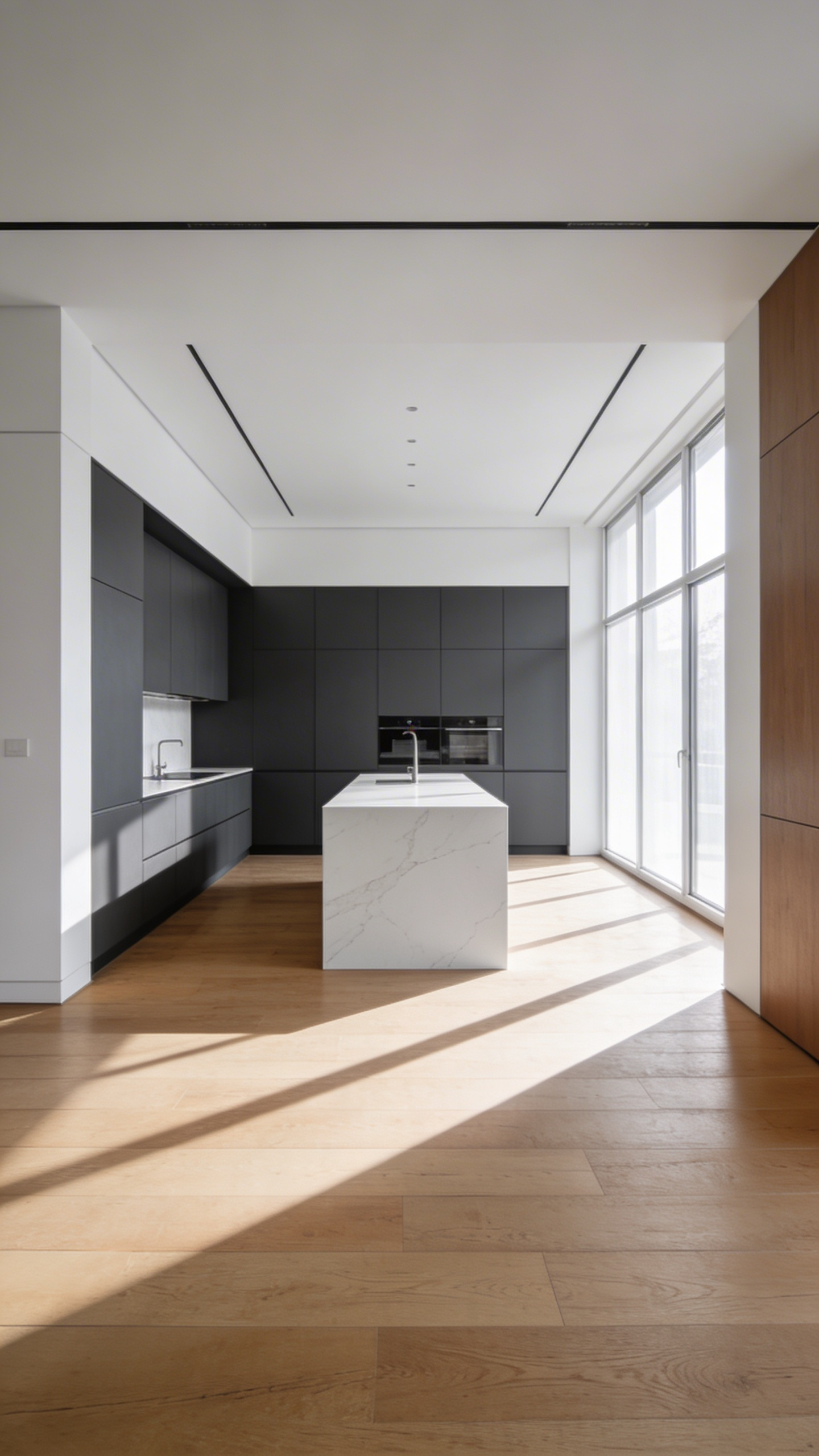
Specifically, technical innovations like the “Gola” profile exemplify this philosophy. In Italian, *Gola* translates to “throat” or “canyon.” Instead of adding hardware on top of doors, this system utilizes a continuous recessed channel. Thus, a simple shadow line effectively becomes the handle. This creates a sensory experience where the countertop appears to hover weightlessly above the drawers.
Furthermore, European designers often employ floating base cabinets to enhance this feeling of airiness. By anchoring units to the wall, the floor plane continues uninterrupted underneath the cabinetry. In fact, neuroarchitecture research suggests that seeing this continuous floor space significantly reduces cognitive load. Additionally, tactile materials like nanotech matte finishes absorb light to ensure total “visual silence.” Ultimately, these elements transform the kitchen from a heavy workspace into a sophisticated, breathable culinary sanctuary.
Adapting the Asian ‘Wet/Dry’ Kitchen concept for contemporary Western homes
Adapting the Southeast Asian “wet/dry” kitchen model involves more than just splitting a room. Fundamentally, this design shifts the kitchen from a utilitarian workspace to a social stage. Historically, traditional Asian wet kitchens managed intense heat and pungent aromas. However, in modern Western homes, this concept addresses “Open-Plan Anxiety.” Specifically, the goal is hiding the chaotic reality of cooking. The wet kitchen functions as a “backstage,” while the dry kitchen remains a pristine social anchor.
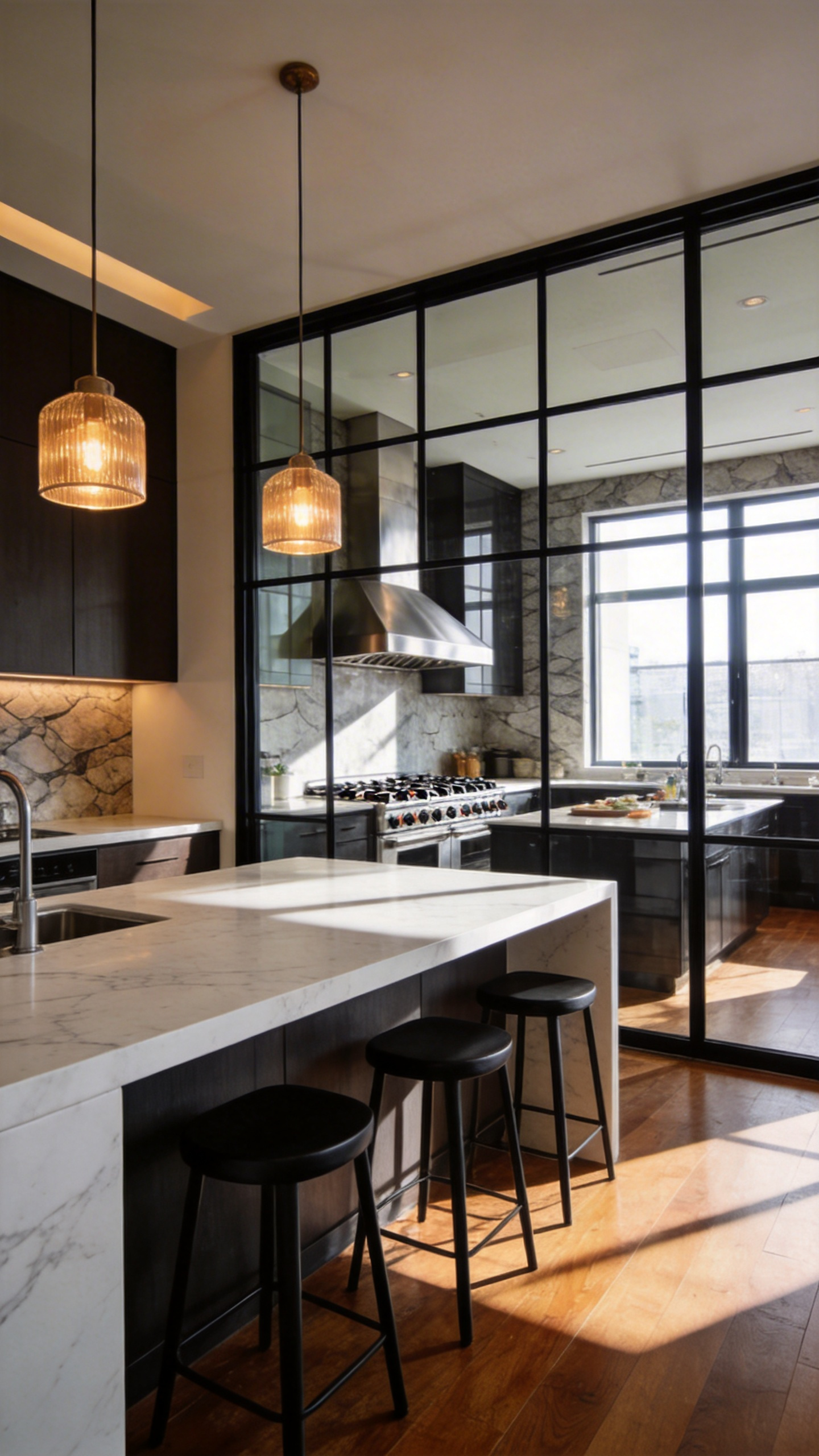
Therefore, material selection rigorously defines these zones. For the heavy-duty wet kitchen, designers prioritize industrial durability. For instance, non-porous stainless steel or sintered stone withstands heavy scrubbing. Conversely, the dry kitchen invites touch with “lifestyle” materials like honed marble or reclaimed wood. Furthermore, sensory control is paramount. High-powered ventilation systems often exceed 900 CFM to trap odors effectively within the wet zone. Simultaneously, sound-absorbing cabinetry dampens the noise of heavy appliances.
Nevertheless, total isolation poses a social risk. To avoid shutting the cook away, architects increasingly utilize semi-open zoning. For example, sliding fluted glass partitions maintain visual connection without leaking noise or steam. Interestingly, this approach also revitalizes historic Western properties. By converting cramped Victorian larders into high-tech wet zones, renovators preserve original architecture while gaining modern functionality. Ultimately, this fusion creates a home that honors culinary work without sacrificing social elegance.
The Monolithic Island: Treating the central workspace as functional sculpture
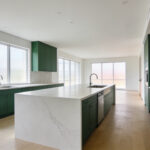
In modern renovations, the kitchen island has evolved from a utilitarian tool into a primary architectural statement. Specifically, the monolithic island represents a commitment to “functional sculpture.” In this context, luxury is found in the removal of visual noise, a philosophy architect Claudio Silvestrin calls “silence for the eyes.” Consequently, the island serves as an anchor, appearing as a singular volume carved from the earth itself.
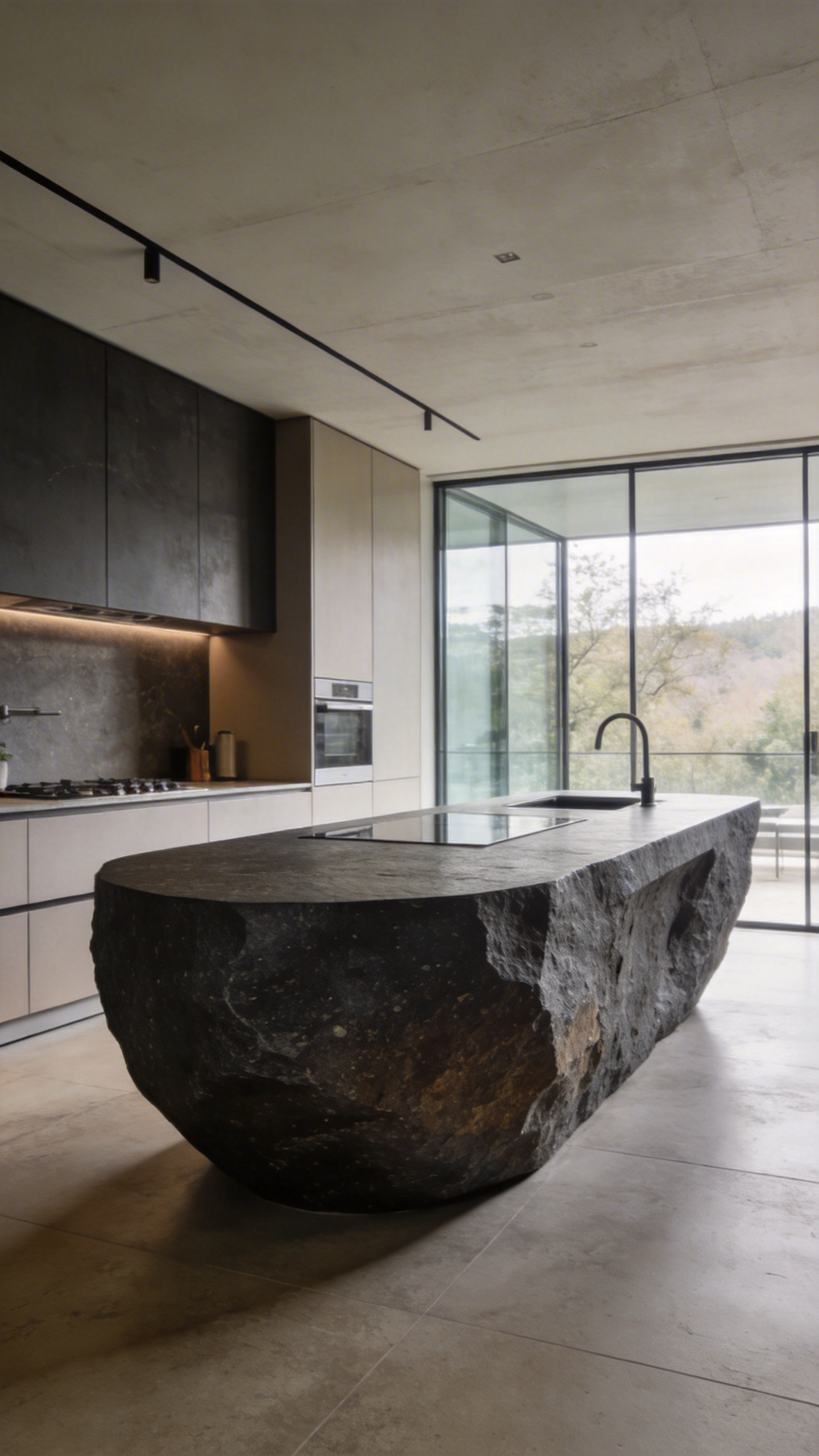
However, achieving this solid appearance requires architectural precision. Fabricators do not typically use solid stone blocks, as their immense weight would damage floor joists. Instead, they utilize mitered edges, cutting slabs at 45-degree angles. Therefore, the stone’s veining “folds” continuously around corners, creating the illusion of a solid block. Furthermore, technology plays a stealth role in this design. Innovations like the Gaggenau Essential Induction allow for cooking through stone surfaces, leaving the “sculpture” uninterrupted by glass cooktops.
Ultimately, the choice of material dictates the sensory experience. While polished marble reflects light, honed finishes offer a tactile “sensory silence.” For example, matte sintered stones absorb light, reducing glare in open-plan homes. Thus, the island becomes a grounding force, offering a cool, haptic counterpoint to our screen-heavy lives.
Material Psychology: Balancing cold European stone with warm organic timber
The interplay between stone and timber creates a vital psychological dialogue in modern kitchens. Primarily, this tension arises from thermal conductivity. Denser materials, like Carrara marble or Belgian Bluestone, possess high thermal effusivity. Consequently, they wick heat rapidly from the skin. This physical sensation signals cleanliness and precision to the brain. However, an excess of cold surfaces can trigger a sense of sterile isolation. Therefore, we introduce organic timber as a necessary counterbalance.
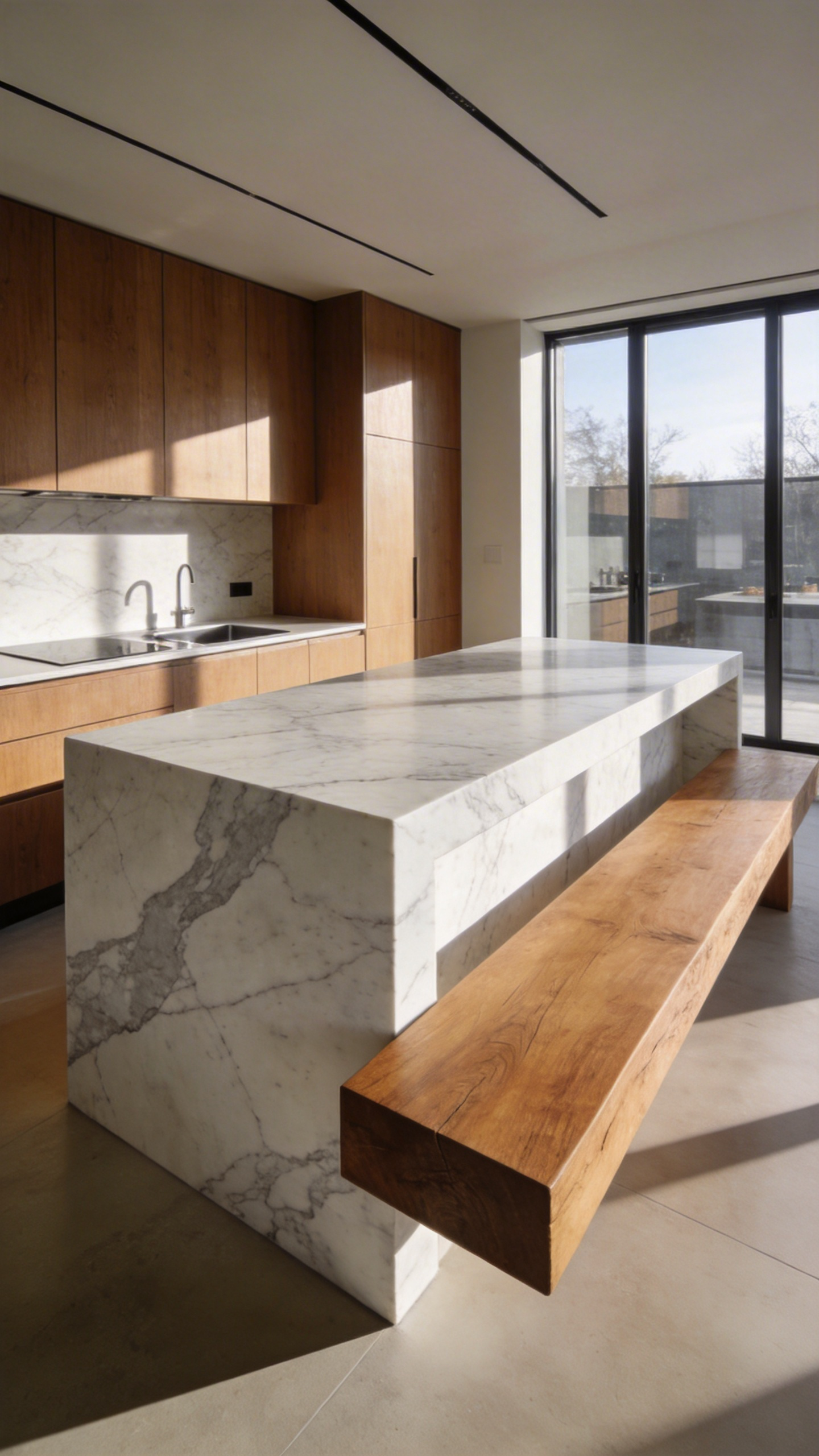
Specifically, wood acts as a thermal insulator. It retains warmth, naturally inviting human touch. In practice, placing a walnut breakfast bar against a cold stone island offers immediate sensory relief. This arrangement allows users to seamlessly oscillate between the “work-mode” of stone and the “rest-mode” of wood. Furthermore, drawing from European heritage grounds this contrast effectively. For instance, pairing deep, fossil-rich Belgian Bluestone with pale European White Oak creates a sophisticated, transitional atmosphere.
Beyond temperature, these materials actively manage our emotional state through visual rhythm. Stone represents permanence, serving as the room’s unshakeable architectural anchor. Conversely, timber represents growth, recording the home’s history through a slowly deepening patina. In fact, this biophilic synthesis lowers stress levels by mimicking nature’s inherent fractal patterns. Additionally, wood softens the acoustics of hard spaces, preventing an echo-chamber effect. Ultimately, stone provides the narrative of stability, while timber supplies the kitchen’s soul.
The Integrated Wall: Floor-to-ceiling joinery that conceals modern life
The concept of the “Integrated Wall” represents a significant shift in interior architecture. Specifically, the kitchen is returning to invisibility, but through high-tech engineering rather than domestic seclusion. Historically, kitchens moved from hidden service wings to social stages, yet today’s open plans often create visual clutter. Consequently, homeowners now seek a “quiet” architectural element that disappears entirely when the workday ends.
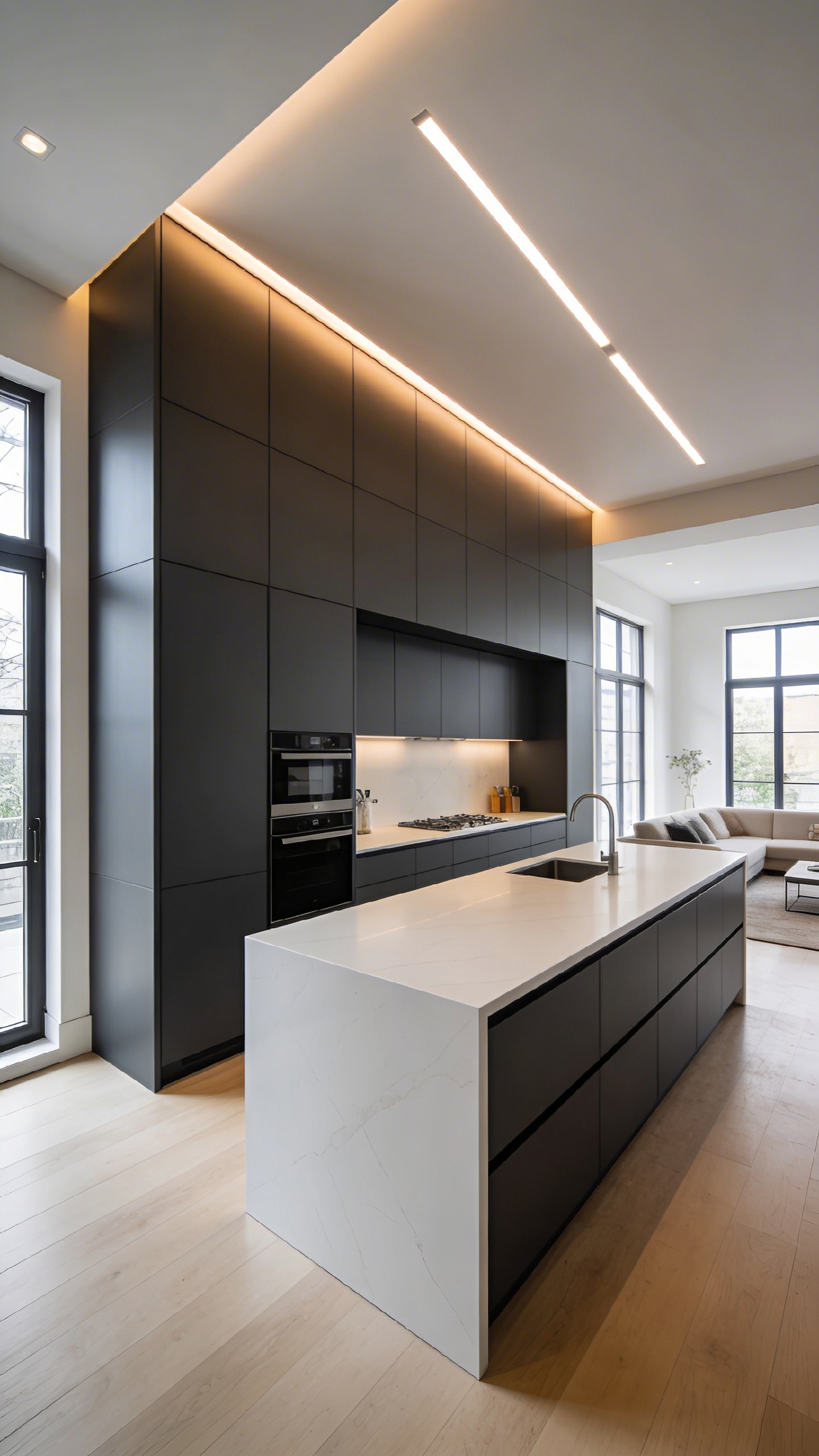
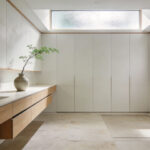
To achieve this, designers prioritize the reduction of “visual noise.” By applying a single material, such as smoked oak or matte lacquer, the cabinetry becomes a soothing monolith. Therefore, the brain perceives a solid wall rather than a collection of appliances, creating a necessary “sensory reset.”
Technically, this disappearance relies on sophisticated hardware like pocket-pivot doors. These systems allow heavy panels to slide into thin cavities, revealing the workspace only when needed. However, executing this look in renovations remains notoriously difficult. Since existing floors are rarely level, joiners must use a “shadow gap” at the ceiling to maintain the illusion of perfection. Furthermore, hidden convection chimneys are vital to vent heat from concealed ovens. Ultimately, the integrated wall balances the utility of a modern kitchen with the serenity of a curated living space.
Appliance Camouflage: Why the most sophisticated modern kitchens look appliance-free
The modern kitchen is undergoing a profound architectural shift. Specifically, “Appliance Camouflage” has evolved from a luxury whim into a fundamental design strategy. Consequently, the most sophisticated interiors are erasing the boundary between the culinary workspace and the living area.
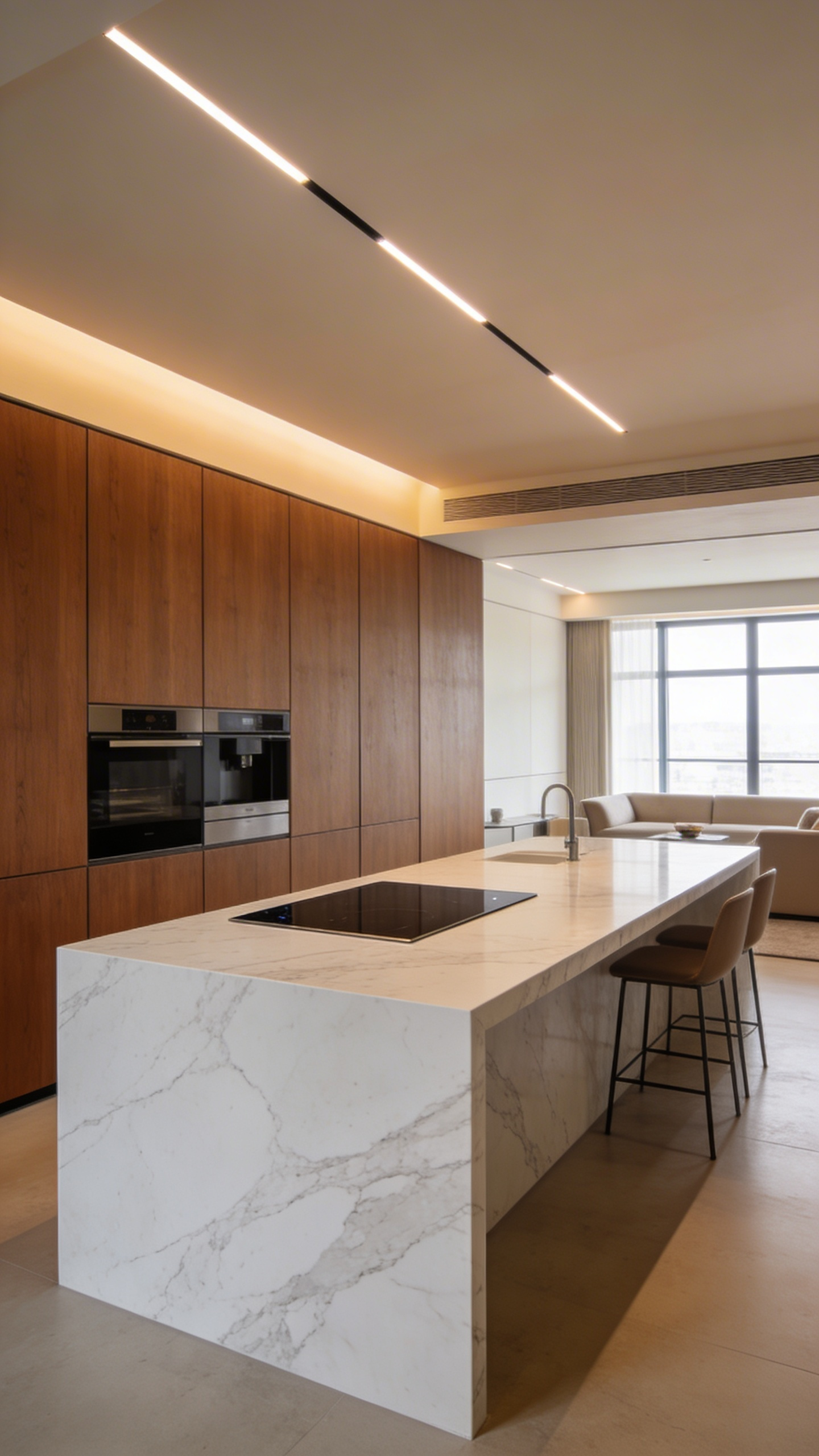
Historically, appliances defined the kitchen’s visual identity. However, current trends favor an architecture-led approach where technical elements vanish completely. For instance, monolithic panels now conceal refrigerators, mimicking high-end library walls or furniture rather than machinery. Technically, panel-ready columns allow for zero-clearance installations, leaving only a hairline seam visible to the eye.
Furthermore, this invisibility extends to horizontal surfaces. Innovations like Invisacook hide induction coils directly beneath porcelain or stone slabs. As a result, the traditional “cooktop” disappears, leaving a surface that remains cool to the touch. This allows the island to function seamlessly as a dining table or workspace when not in use.
Beyond visuals, true camouflage addresses sound and smell. Therefore, bulky overhead hoods are being replaced by sleek downdraft systems integrated directly into counters. Similarly, designers prioritize acoustic comfort by selecting dishwashers with “silent” decibel ratings below 40dB.
Ultimately, this approach solves complex engineering challenges to maintain serenity. For example, “Knock-to-Open” sensors eliminate handles entirely, preserving unbroken lines. Thus, the kitchen becomes a place of restoration rather than just industry, perfectly embodying the principles of Smart kitchen technology.
Architectural Lighting Layers: Moving beyond the grid of recessed cans
Historically, kitchen lighting design relied on a uniform grid of recessed cans. However, experts now reject this approach as the “Swiss cheese” effect. In fact, placing lights in a rigid pattern ignores geometry and casts shadows on your workspace. Therefore, modern layouts prioritize a “Task First” principle. Specifically, designers position fixtures 24 to 26 inches from the wall. Consequently, illumination hits the countertop edge, eliminating glare and preventing body shadows.
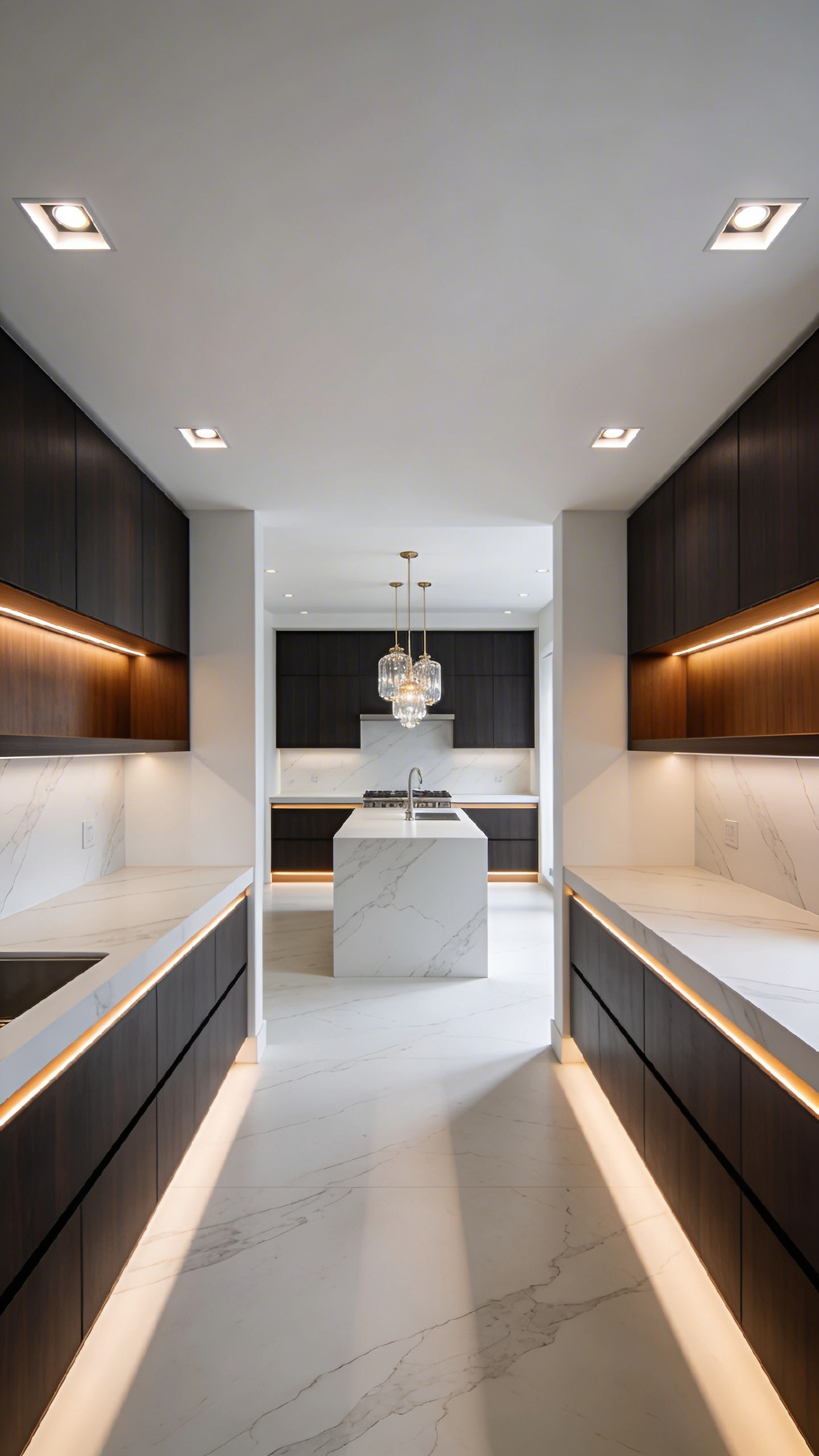
Beyond utility, lighting should narrate your chosen materials. For instance, “wall grazing” places fixtures close to textured surfaces like stacked stone. As a result, shadows emphasize depth and craftsmanship. Conversely, “wall washing” illuminates smooth surfaces from a distance. This technique pushes boundaries back visually, making the room feel more expansive.
Furthermore, lighting affects the room’s perceived weight. Notably, toe-kick lighting installed at the cabinet base creates a sophisticated “floating” effect. To achieve this, builders specify dotless COB LED strips. These advanced strips provide a seamless ribbon of light without reflecting visible hot spots on polished floors.
Finally, the quality of light determines the atmosphere. Ideally, you should select bulbs with a CRI of 90+ to ensure food looks vibrant. Additionally, smart systems allow you to shift from cool, focus-oriented light to warm, social ambiance. Ultimately, these architectural layers transform a kitchen from a simple utility room into a balanced, expressive living space.
The Sensory Sink Station: Undermount workstations and touchless technology
The modern sink has evolved from a utilitarian basin into a sophisticated, high-performance command center. Specifically, this transformation prioritizes acoustics, haptics, and ergonomics through advanced engineering to reduce sensory overwhelm.
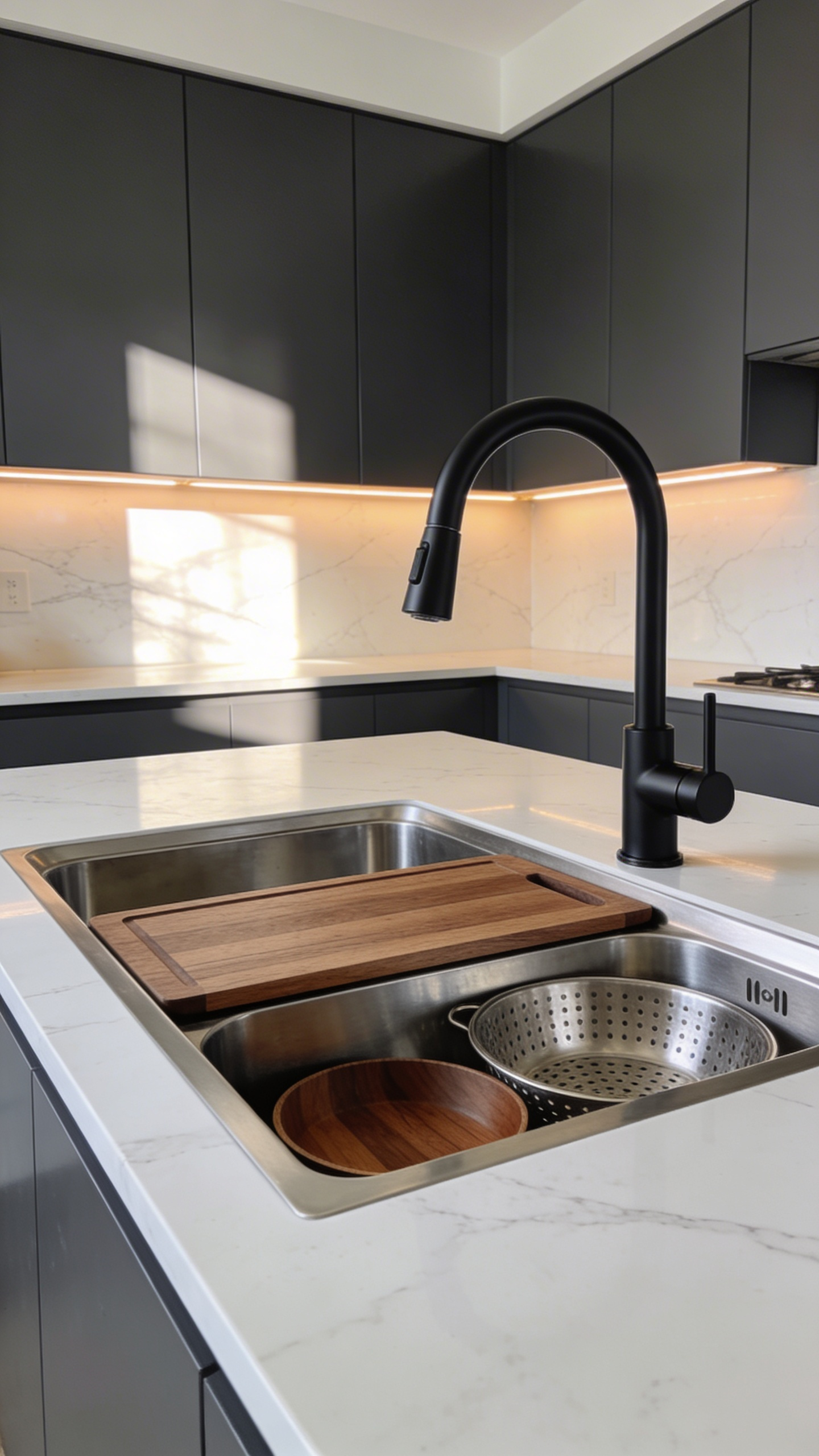
First, acoustic comfort creates a significantly more serene kitchen environment. Consequently, designers increasingly prefer 16-gauge stainless steel over the thinner, industry-standard 18-gauge options. This thicker metal lowers the resonance frequency, producing a solid, muted “thud” instead of a tinny “clatter.” Furthermore, rubber sound-deadening pads turn the sink into a silent partner, allowing conversation to remain the primary focus.
Beyond sound, the physical experience of the sink has shifted toward tactile precision. Modern workstations utilize built-in ledges, effectively turning the basin into a multi-tiered instrument. For example, sliding a warm Sapele mahogany cutting board over cool steel creates a satisfying material contrast. This setup allows for “Zone Prep,” where rinsing and slicing happen simultaneously within the sink’s footprint.
Additionally, touchless technology addresses the cognitive load of a busy kitchen. In fact, advanced sensors now enable a frictionless workflow, reducing cross-contamination significantly. Therefore, a simple wave of a forearm activates the water without interrupting the flow of a task.
Finally, the installation method itself contributes to visual tranquility. Specifically, undermount designs eliminate the rim, allowing the eye to travel across the countertop without interruption. Ultimately, this seamless transition makes the chore of cleaning feel effortless, hygienic, and visually quiet.
Tactile Surfaces: The rise of super-matte and fingerprint-resistant finishes
Previously, high-gloss cabinets dominated modern design, signaling sterility and status. Today, the focus shifts to “haptic design,” prioritizing touch alongside visuals. Specifically, super-matte surfaces offer a velvety warmth that glossy stones lack. Unlike traditional paint, these innovative finishes utilize Electron Beam Curing (EBC). Consequently, the surface creates a microscopic landscape of jagged peaks and valleys. This unique texture scatters light completely, eliminating distracting reflections. Furthermore, the topography prevents natural skin oils from smearing into visible fingerprints.
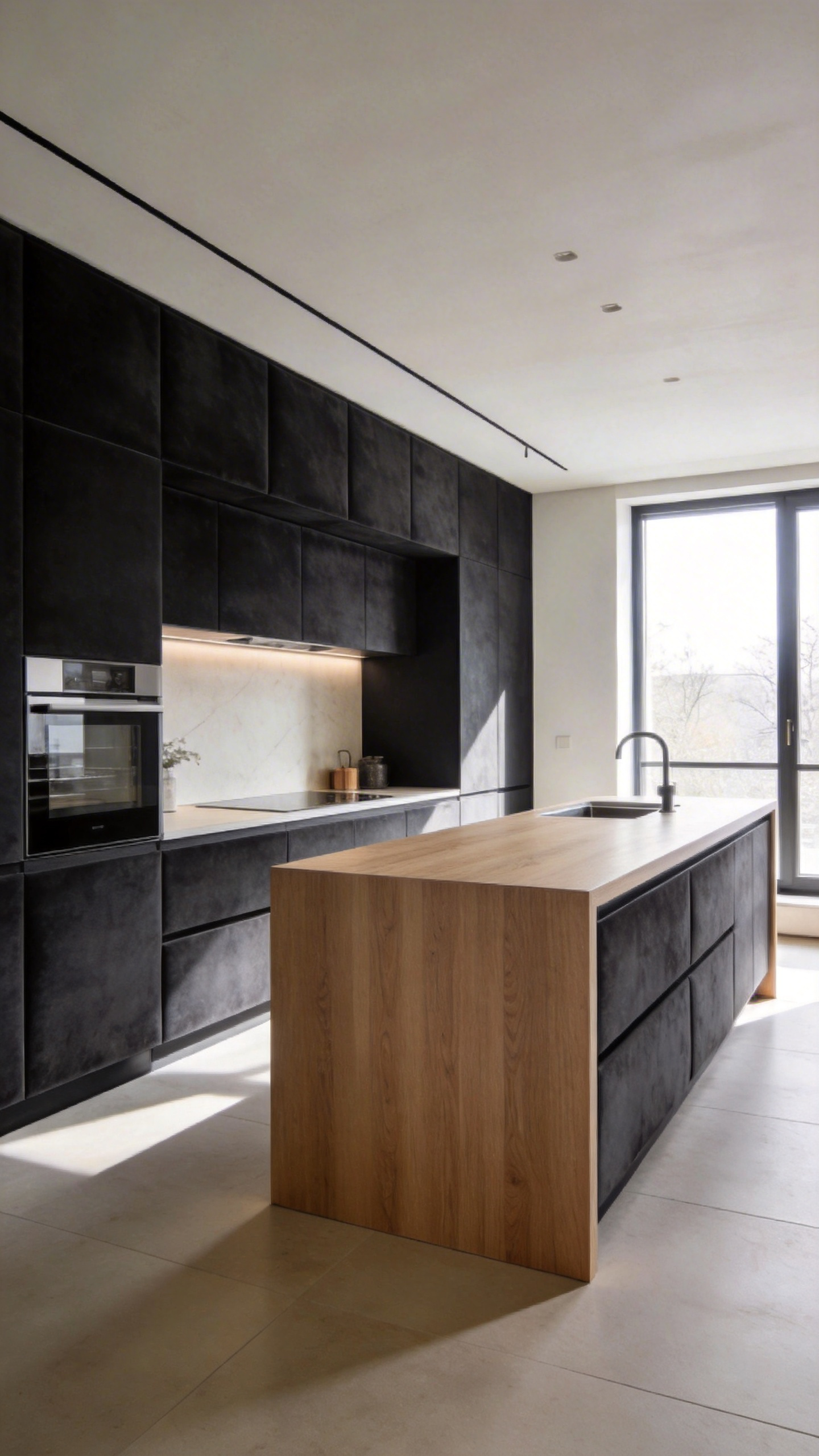
Technologically, materials like Fenix NTM even introduce thermal healing capabilities. Remarkably, applying heat allows the surface polymers to “remember” their shape. Thus, micro-scratches effectively disappear with a simple iron or hair dryer. However, this advanced texture introduces a paradox regarding maintenance. Because the micro-peaks trap cooking grease, cleaning requires care. In fact, using abrasive sponges can accidentally “burnish” the matte finish. This action grinds down the texture, creating permanent shiny spots. Therefore, soft microfiber cloths are mandatory for these delicate surfaces. Ultimately, these finishes allow for deep, moody colors without the visual noise of gloss.
Seamless Transitions: Flooring strategies that blur the line between kitchen and living
Historically, kitchens functioned as isolated utility zones meant to contain heat and noise. However, modern design principles have dismantled these Victorian barriers to create unified social stages. Consequently, flooring serves as the primary narrative thread connecting culinary and living spaces. By using a single material, the eye no longer registers the kitchen as a separate task room.
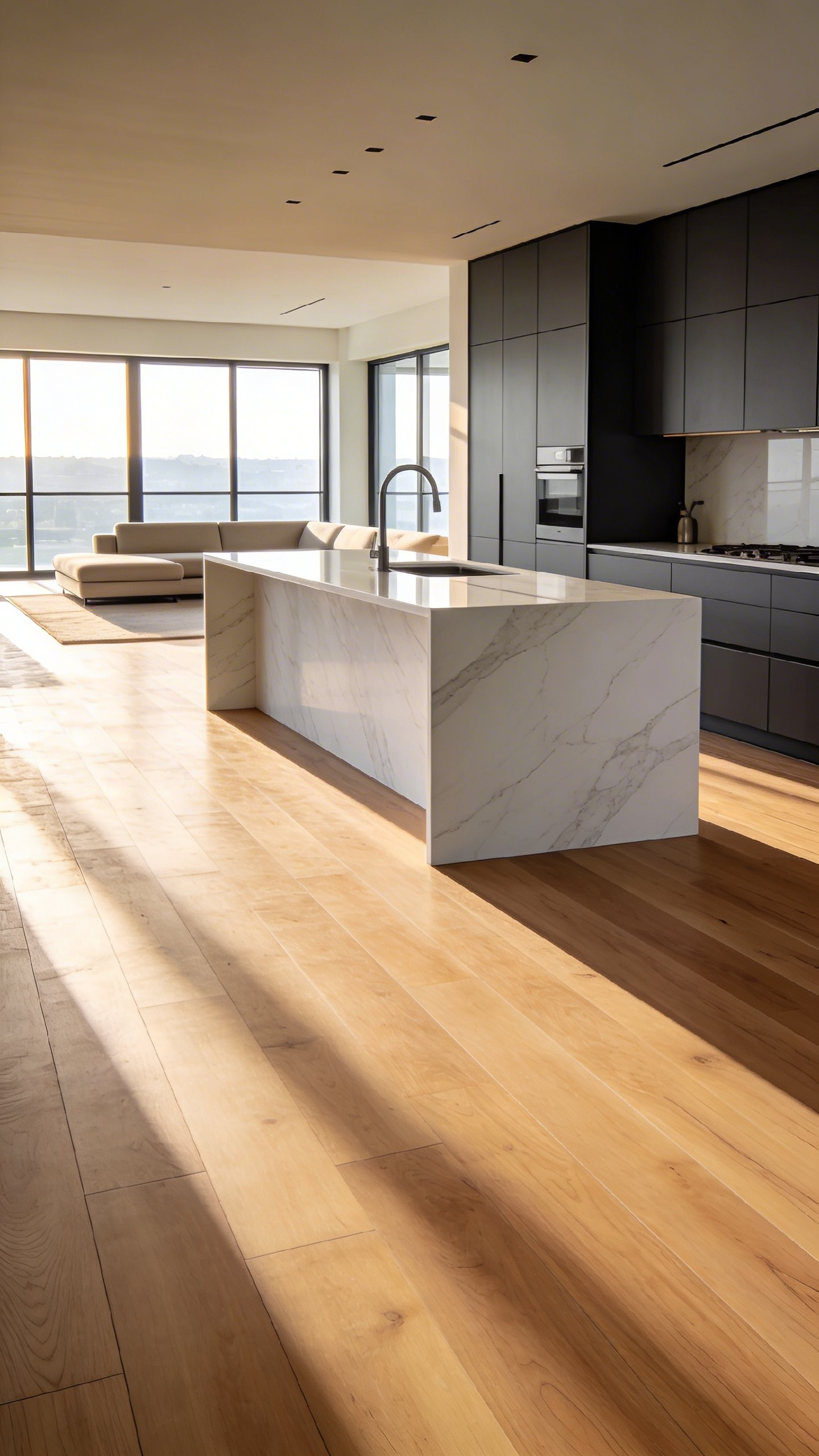
In fact, this continuous visual flow significantly alters spatial perception. Specifically, an unbroken sightline tricks the brain into following the material to the furthest wall. Therefore, the home feels larger and more cohesive. To achieve this sophisticated look, renovators must eliminate bulky transition strips known as T-moldings. Instead, skilled tradespeople use precision “scribing” or recessed shadow gap baseboards.
Thus, the floor appears to float beneath the walls without visual interruption. Previously, the “moisture gap” necessitated cold tile in kitchens and warm wood in living areas. Fortunately, material science has resolved this functional divide. For example, waterproof Stone Plastic Composite (SPC) creates a seamless aesthetic with the haptic warmth of real timber. Alternatively, micro-cement offers a monolithic surface that creates a smooth, industrial-chic transition. Ultimately, these strategies transform the floor from a boundary into an inviting anchor.
Biophilic Modernism: Framing windows and integrating indoor gardens for mental clarity
Biophilic Modernism treats architecture as a restorative tool for mental clarity. Historically, kitchens are high-energy spaces that demand “directed attention.” Consequently, the brain fatigues quickly during complex tasks. However, integrating nature introduces “soft fascination,” allowing the mind to reset. In fact, research shows that viewing nature for just forty seconds improves concentration. Therefore, the design must prioritize the view over the wall.
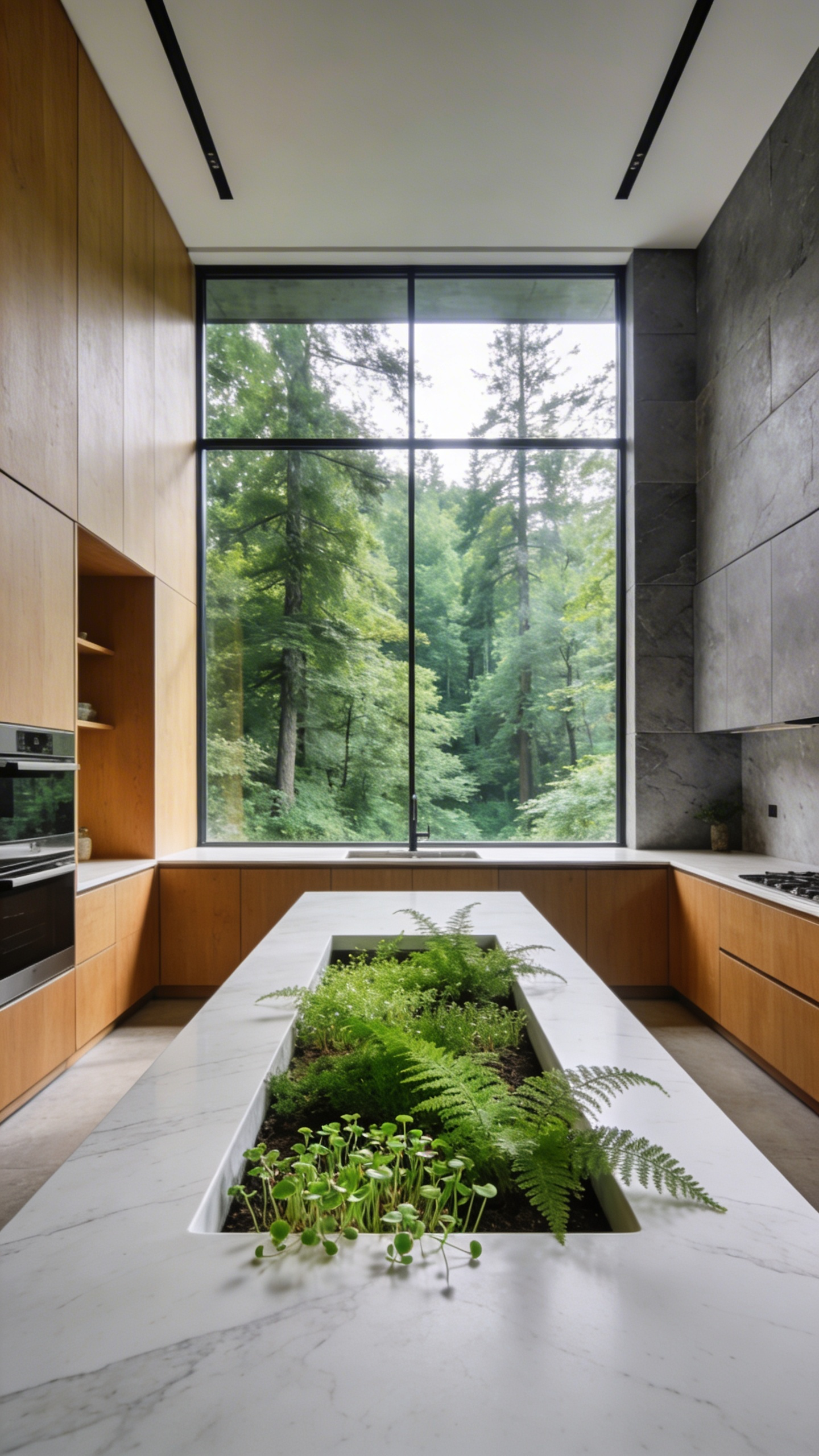
Specifically, windows should act as living art canvases. For example, ultra-thin steel frames minimize visual obstruction better than wood. Thus, the glass-to-frame ratio increases, making the outdoors feel immediate. Furthermore, placing the kitchen island to face these views creates “prospect and refuge.” This arrangement offers the cook a sense of psychological safety and command.
Internally, the goal is reducing visual noise to highlight organic life. Hence, the “Invisible Kitchen” concept conceals appliances behind stone panels. This allows the eye to focus on organic textures. Additionally, built-in hydroponic systems bring greenery directly into the cabinetry. Consequently, the scent of fresh herbs acts as natural aromatherapy. Finally, material honesty remains crucial. We use unpolished stone and living metals that develop a patina over time. Ultimately, these aging materials provide a grounding contrast to sharp modern geometry.
Hardware as Jewelry: Mixing metals with intentionality and restraint
In modern design, hardware serves as the kitchen’s jewelry. Specifically, designers refer to this interaction as “sensory intelligence.” It represents the distinct intersection of visual intent and tactile feedback. After all, we touch these specific elements hundreds of times daily. Therefore, the “hand-feel” must effectively communicate quality. Solid, forged metals are replacing cold, hollow chrome. Moreover, designers categorize these pieces by their visual weight. Large knurled T-bars act as bold statement pieces. Conversely, slim edge pulls offer a restrained, minimalist backdrop.
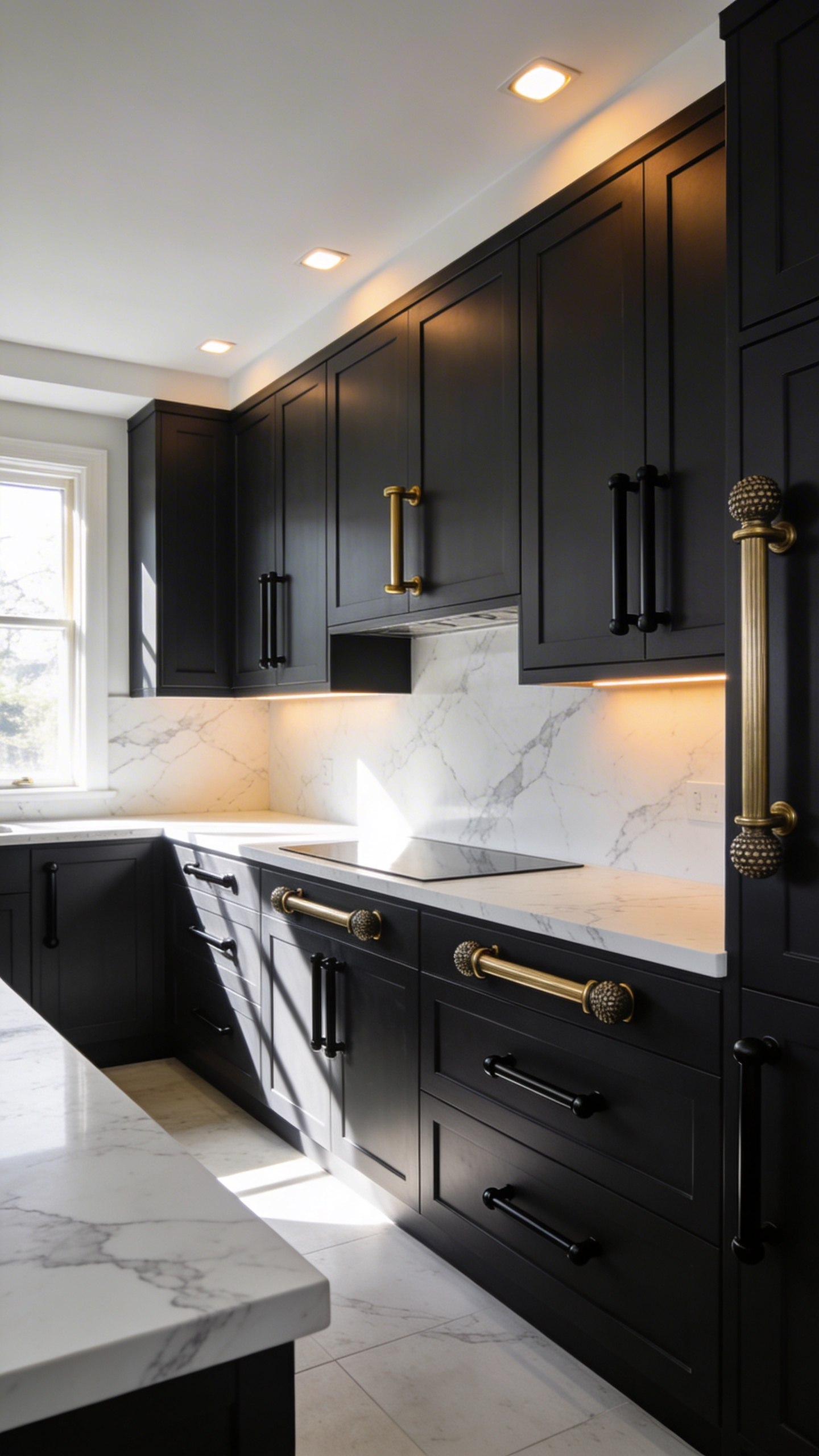
To mix metals effectively, you must follow a strict hierarchy. In fact, a 50/50 split often looks accidental or cluttered. Instead, apply the 60/30/10 rule to maintain balance. Your foundation metal usually dictates the room’s overall temperature. This covers sixty percent of the space, often via stainless steel appliances. Next, introduce a contrasting accent metal for thirty percent. For instance, pair cool stainless steel with warm unlacquered brass faucets. Finally, add a “spark” finish for the remaining ten percent. This might appear on hinge details or a specialized pot filler.
Furthermore, consider the sophisticated narrative of “living finishes.” Materials like unlacquered brass develop a deep patina over time. Consequently, this aging process reveals organic beauty rather than machine perfection. Ideally, maintain consistent sheen levels across different metals. Mixing brushed nickel with brushed brass feels intentional because they share a soft texture. However, mixing high-gloss chrome with rustic copper often creates discord. Ultimately, restraint through texture ensures the room feels curated rather than chaotic.
The ‘Breakfast Station’: Pocket door systems for concealing countertop clutter
Historically, the humble appliance garage has evolved into a sophisticated architectural feature. Today, the modern “Breakfast Station” functions as an “invisible monolith.” Specifically, high-end designs transform these areas into hidden, theatrical spaces. When closed, they appear as seamless, floor-to-ceiling walls. However, this aesthetic relies entirely on precision engineering. Unlike traditional hinges, pocket door systems like Blum’s REVEGO rotate ninety degrees. Subsequently, they slide silently into a narrow cavity within the cabinet carcass. This allows the kitchen to transition instantly from active workspace to calm backdrop.
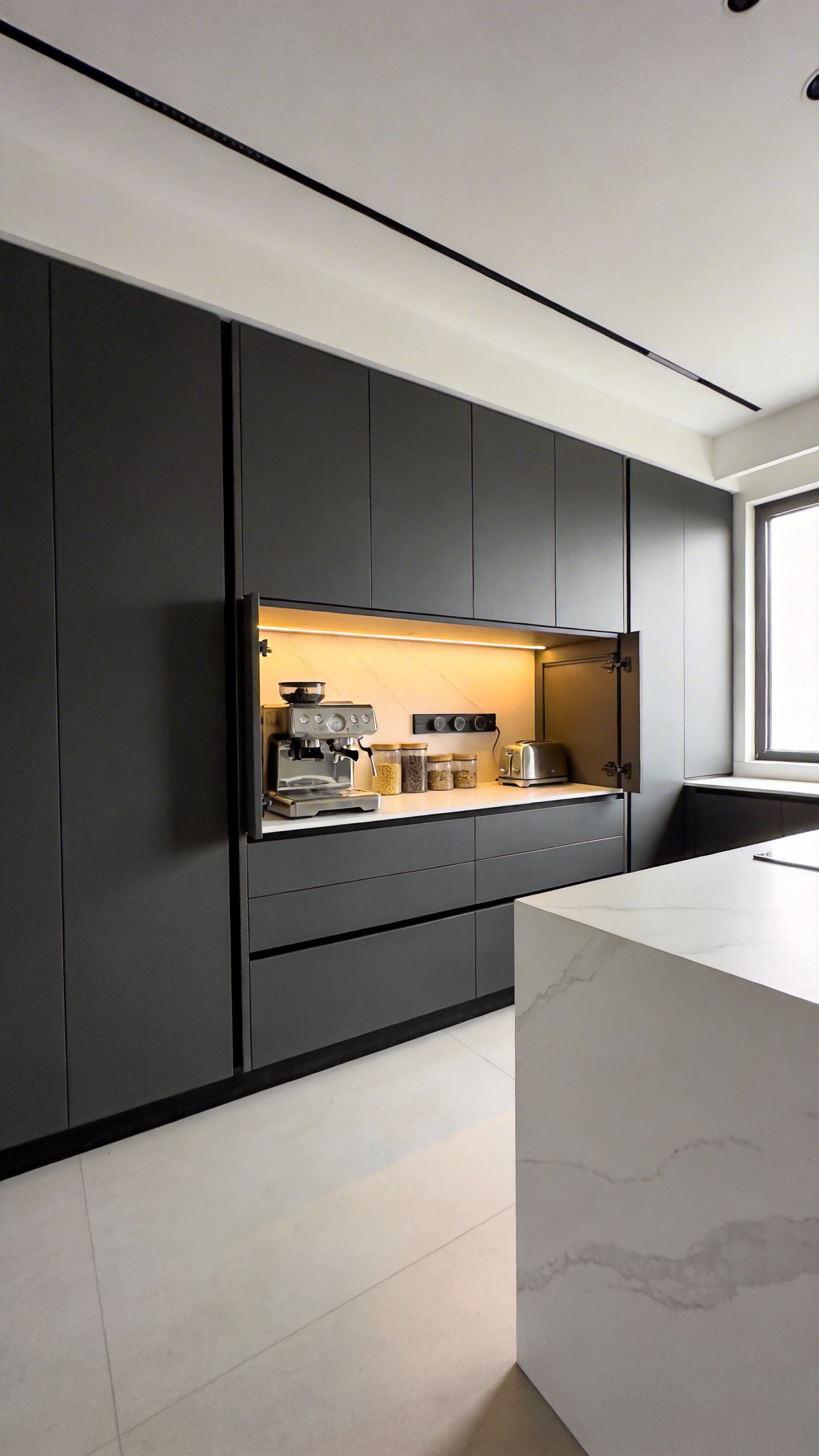
Beyond mechanics, this design serves a psychological purpose known as “visual quiet.” In fact, cluttered surfaces can subconsciously increase cortisol levels. Therefore, concealing crumbs and cords fosters a restorative sanctuary. For open-plan living, this ability to hide the “messy reality” is crucial. It preserves the room’s architectural integrity during evening relaxation.
Implementing these systems requires careful technical planning. Notably, the cabinet must sacrifice internal width to accommodate the pocket mechanism. Moreover, safety protocols are essential for enclosed appliances. Systems often include automated shut-offs to cut power when doors close. This prevents heat buildup within the joinery. Ultimately, this feature balances the luxury of a dedicated coffee bar with strict minimalism and is a favorite among 22 kitchen makeover ideas without a full renovation.
Sustainable Luxury: Sourcing materials that respect both aesthetics and the environment
Sustainable luxury has shifted away from conspicuous consumption toward a concept of “conspicuous responsibility.” Consequently, the true value of a modern kitchen now lies in its ethical narrative and craftsmanship. Homeowners increasingly seek “emotional durability” rather than just material scarcity. For example, reclaimed timber offers a historical soul that mass-produced materials simply cannot replicate. These surfaces feature unique “fingerprints of time,” such as original nail holes or dense grain structures. In contrast to the cold touch of new-growth wood, this material adds warmth and character.
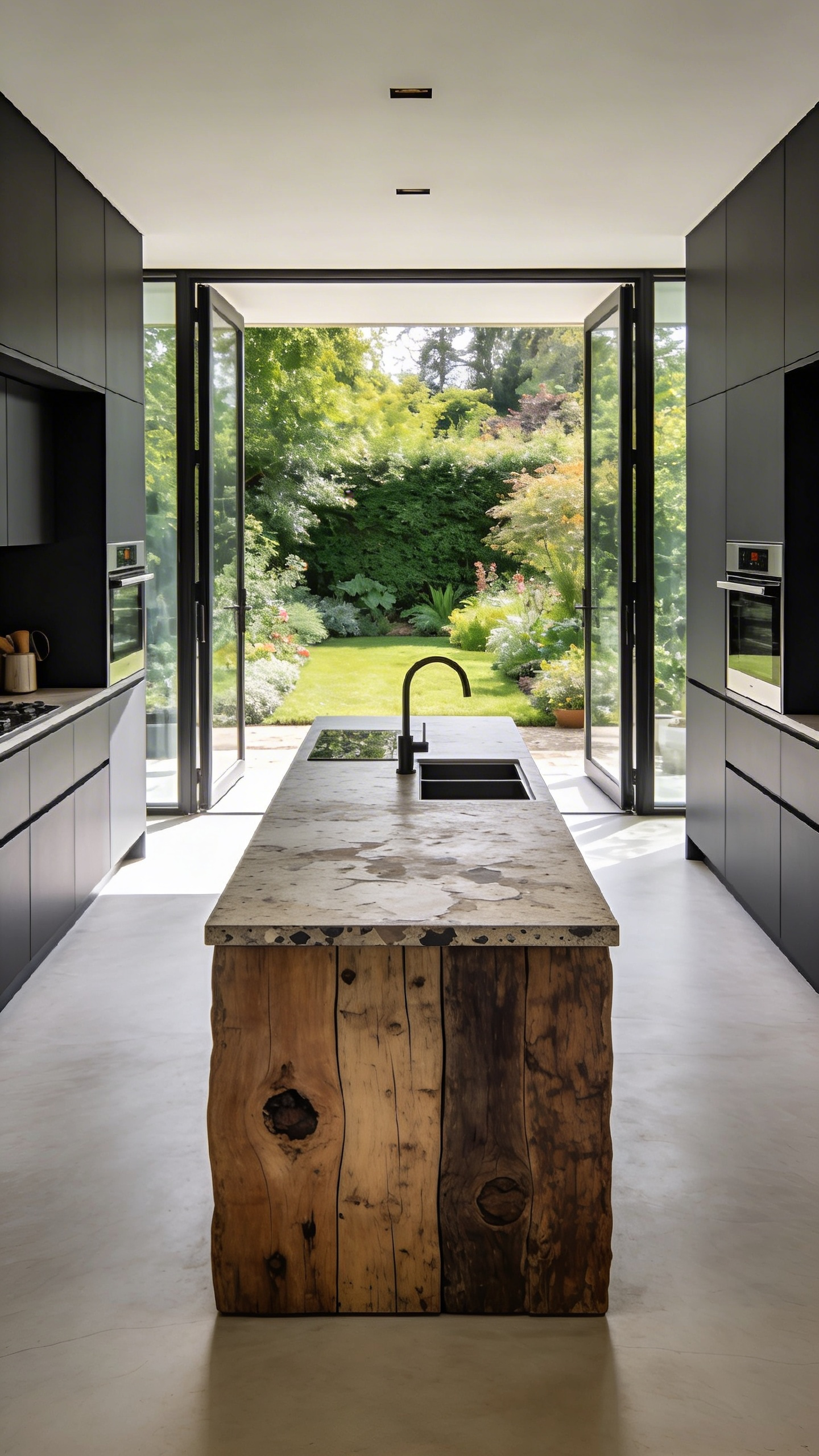
Beyond aesthetics, the industry is reevaluating the environmental cost of traditional surfaces. Traditional marble often carries a staggering carbon footprint due to energy-intensive quarrying and shipping. Therefore, designers are embracing high-performance alternatives like sintered stone and recycled paper composites. These innovations offer the aesthetic of stone without the heavy environmental toll. Moreover, modern composites like Silestone HybriQ utilize renewable energy to create a “closed-loop” luxury product.
Finally, true luxury prioritizes the physical health and wellness of the homeowner. This concept, known as “invisible sustainability,” focuses on clean air and tactile comfort. Specifically, zero-VOC finishes eliminate toxic off-gassing to ensure the indoor environment remains pure. Matte, soft-touch surfaces also replace high-gloss finishes to create a calming, biophilic atmosphere. Ultimately, materials like cork and bamboo provide acoustic serenity, defining a quieter, more sophisticated space.
Curated Open Shelving: The fine line between display and disorder
Open shelving has evolved from simple storage into a sophisticated architectural statement. Consequently, it represents a careful balance between display and domestic reality. In modern renovations, we often decouple the “show kitchen” from the functional “shadow scullery.” Therefore, main shelves display “performance pieces,” like artisanal ceramics, while clutter remains hidden behind pocket doors. This separation is vital for maintaining a sense of “visual rest.”
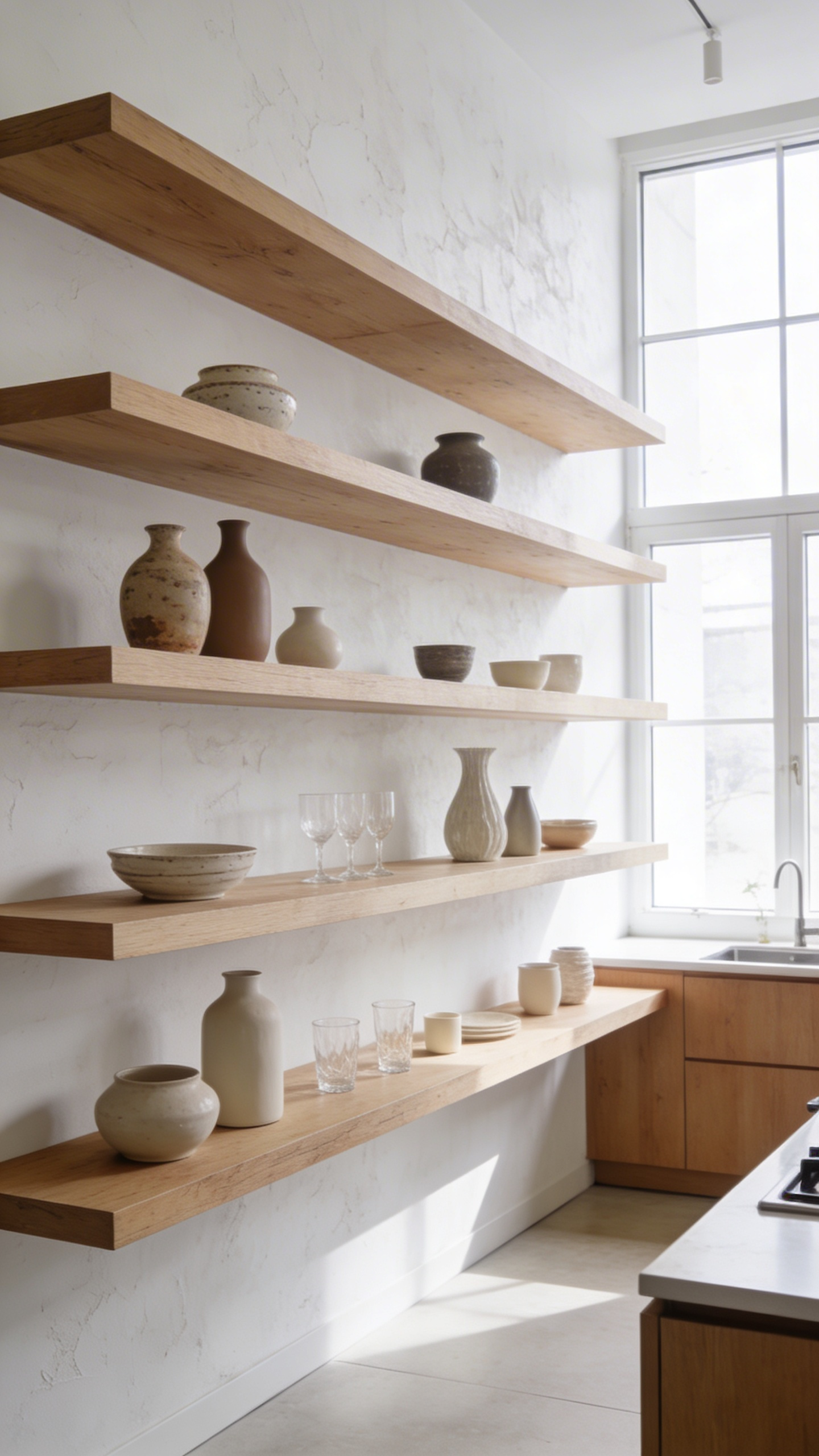
In fact, reducing visual clutter helps lower cortisol levels. To create this organized calm, designers rely on the “Visual Triangle.” Specifically, we group three objects of varying heights to form an invisible geometric shape. Additionally, we balance visual weight carefully. For instance, heavy items anchor the lower shelves, while transparent glass keeps upper areas airy.
However, the difference between curated and cluttered often comes down to lighting. Experts recommend 3000K soft white LED tape for these displays. Unlike warmer tones, this specific temperature ensures objects look crisp rather than dusty. Furthermore, material honesty plays a crucial role. We utilize materials like unlacquered brass or honed marble to introduce texture. Ultimately, these “living finishes” ground the space, preventing the display from feeling sterile or accidental.
Frequently Asked Questions
What is the average timeline for a high-end modern kitchen renovation?
A comprehensive luxury kitchen renovation typically spans 12 to 24 weeks. This timeline includes the structural design phase, the sourcing of bespoke materials, custom cabinetry fabrication, and precision installation. Delays often occur during the fabrication of monolithic stone islands or the integration of complex smart home systems.
How do I choose between marble and quartz for a modern kitchen?
For a discerning homeowner, marble offers unmatched “living” beauty and a unique patina, though it requires meticulous maintenance. Quartz, or increasingly sintered stone, provides a non-porous, highly durable alternative that mimics natural stone while resisting stains and scratches—ideal for high-traffic culinary zones.
What are the biggest kitchen trends for 2026?
The 2026 trends emphasize “Quiet Luxury” and “Invisible Technology.” Expect to see appliance camouflage, textured “haptic” surfaces like super-matte finishes, and biophilic integrations where indoor herb gardens and expansive views become the primary decor.
Conclusion: Creating a kitchen that serves both culinary precision and spiritual balance
Designing a modern kitchen renovation requires bridging two distinct worlds. We must merge the clinical precision of European technology with the spiritual grounding of Asian spatial wisdom. Consequently, the renovation is no longer just about cooking. Instead, it becomes a sanctuary for mindfulness. By concealing high-tech tools behind tactile, organic materials, we protect the room’s atmosphere. Thus, the space supports both the culinary workflow and the human spirit. Ultimately, true luxury lies in this intentional balance of efficiency and serenity.
Looking forward, your kitchen must serve your biological rhythm as much as your culinary ambition. Therefore, the architecture should breathe with you, shifting from morning energy to evening calm. In fact, a thoughtfully engineered space reduces mental fatigue significantly. Begin your journey by auditing your current lighting and sensory inputs for harshness. Then, consider how honest, natural materials might soften the necessary technology. Finally, curate a space that nourishes your soul as effectively as it feeds your body.