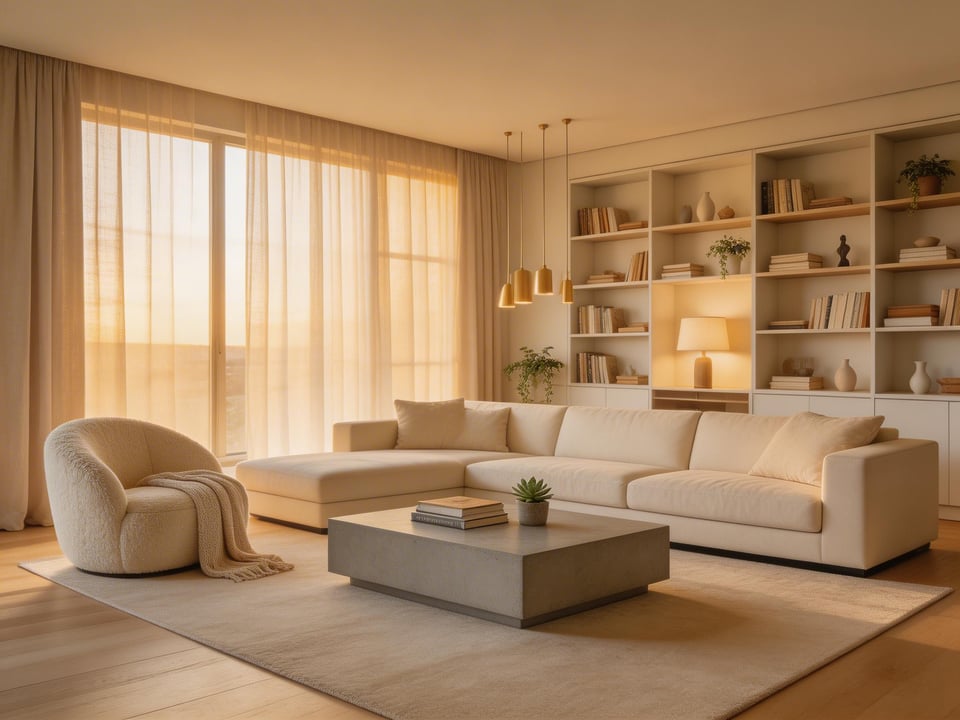
Most modern living room guides are photographed in spaces no one actually lives in. The plants are fake. The books are unread. The coffee table holds a single sculptural object that would be knocked off within twenty minutes of real life. So here is a different kind of list. These modern living room ideas have been chosen for rooms where people sit, watch things, have arguments, and occasionally lose the remote. They work in apartments and houses, at different budgets, and they still look current once the photographer has left. Start with one and build from there — that is the honest approach.
1. Floating Media Console Over Built-In Storage
The TV wall is the focal point of almost every modern living room. Yet it is the one area most people handle worst. A television mounted at eye level with visible cables trailing to a cluttered floor console makes an otherwise considered room feel unfinished fast.
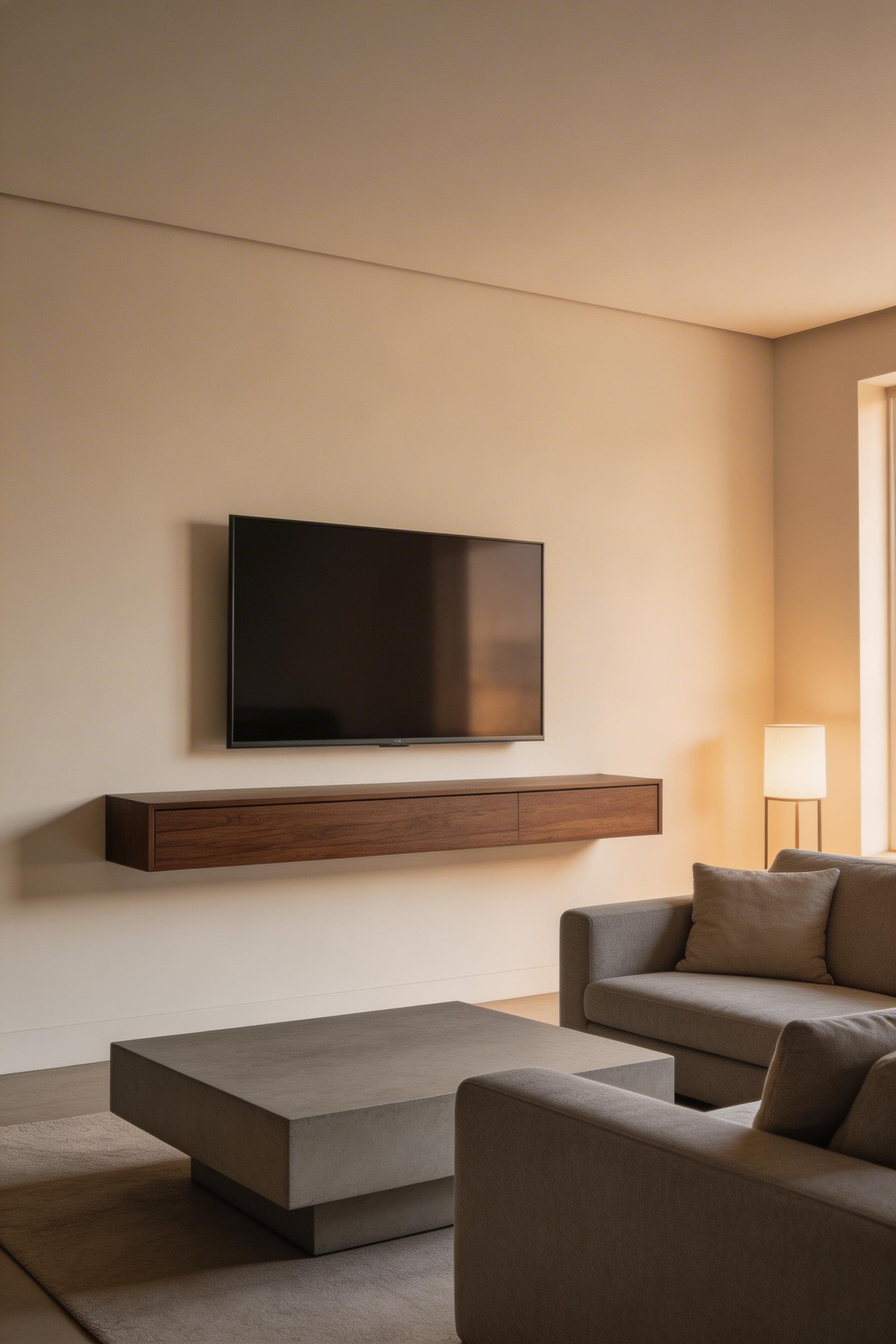
The solution is to mount the TV and the media unit as a single architectural statement. Among modern living room ideas, this is the one that most directly addresses how a room is perceived from the doorway. A floating console at 26–28 inches from the floor puts remote controls and cable boxes within reach from a seated position. Everything beneath stays concealed behind closed doors. That cleared floor plane makes a significant visual difference. Even 12 inches of visible wall between console bottom and floor is enough to make a modern living room feel larger than its actual dimensions suggest.
Mounting Notes for This Modern Living Room Idea
The IKEA Besta system runs $350–$650 depending on configuration. It is the most commonly used approach at this price point. Custom millwork starts around $2,000 for a full media wall. Semi-custom options using IKEA carcasses with aftermarket door fronts land in the $800–$1,500 range. Whatever unit you choose, run conduit inside the wall before mounting. It is a $30 job during installation that saves a costly electrician visit when you upgrade equipment later.
Cable management channels such as D-Line or Wiremold raceways ($15–$40) handle the wires that cannot go inside the wall. Install them vertically and paint them to match the wall color. They become nearly invisible. According to Real Estate Staging Association data from 2023, homes with floating storage units photograph approximately 25% more spacious than equivalent rooms with floor-standing consoles.
2. Low-Profile Sectional in a Neutral Fabric
The second decision that defines a modern living room — after the TV wall — is the sofa. Specifically, its height. Standard sofas sit at 18–20 inches off the floor with backs reaching 36–40 inches. Low-profile alternatives drop to 14–16 inches at the seat and 28–32 inches at the back. That difference is significant. Lower furniture makes the ceiling appear taller and the room feel more open. There is simply more vertical space visible above the furniture.
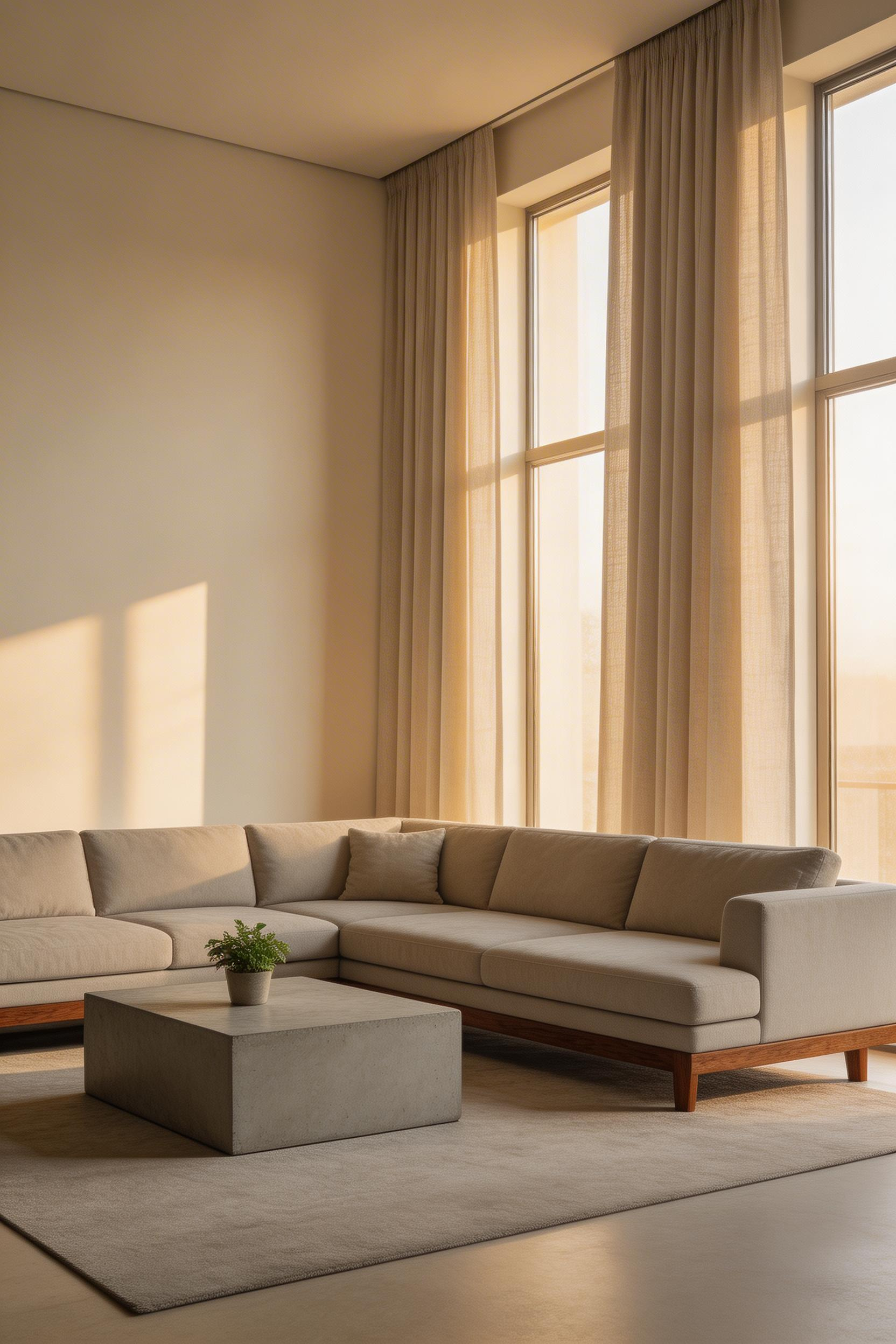
This is the design principle that separates modern interiors from traditional ones: furniture stays low, allowing the room itself to read as the statement. It is also the easiest of these modern living room ideas to implement immediately without buying anything new — if you already have a low-profile sofa, you already have a head start.
Fabric Guide for Modern Living Room Sofas
For neutral upholstery, the choice is between warm and cool. Pure grays — popular during the 2010s — can shift lavender under certain artificial light conditions. This happens particularly with the cool white LEDs common in modern fittings. Warm greige tones, which sit between beige and gray, stay consistent across lighting conditions. They also pair well with wood, concrete, and natural fiber elements.
Performance fabrics are worth the small cost premium in any household with regular use. Options like Crypton, Sunbrella’s indoor line, and Revolution Fabrics are rated at 50,000+ double rubs, vs. 15,000 for standard upholstery. That is a meaningful difference in longevity. The IKEA SODERHAMN sectional ($1,500–$2,200) is the lowest price point for a genuinely low-profile design. The Article Timber Sectional ($2,799–$4,200) offers walnut legs and performance fabric as a step up. Order fabric swatches and live with them under your room’s actual lighting for at least two days before committing.
3. Layered Lighting With Three Distinct Sources
Single-source overhead lighting is the most consistent reason otherwise good modern living rooms look flat in photographs and feel wrong in person. One ceiling fixture lights a room the way a single floodlight lights a stage. Every surface at the same intensity, no depth, no mood. For any of these modern living room ideas to read correctly, the lighting has to work.
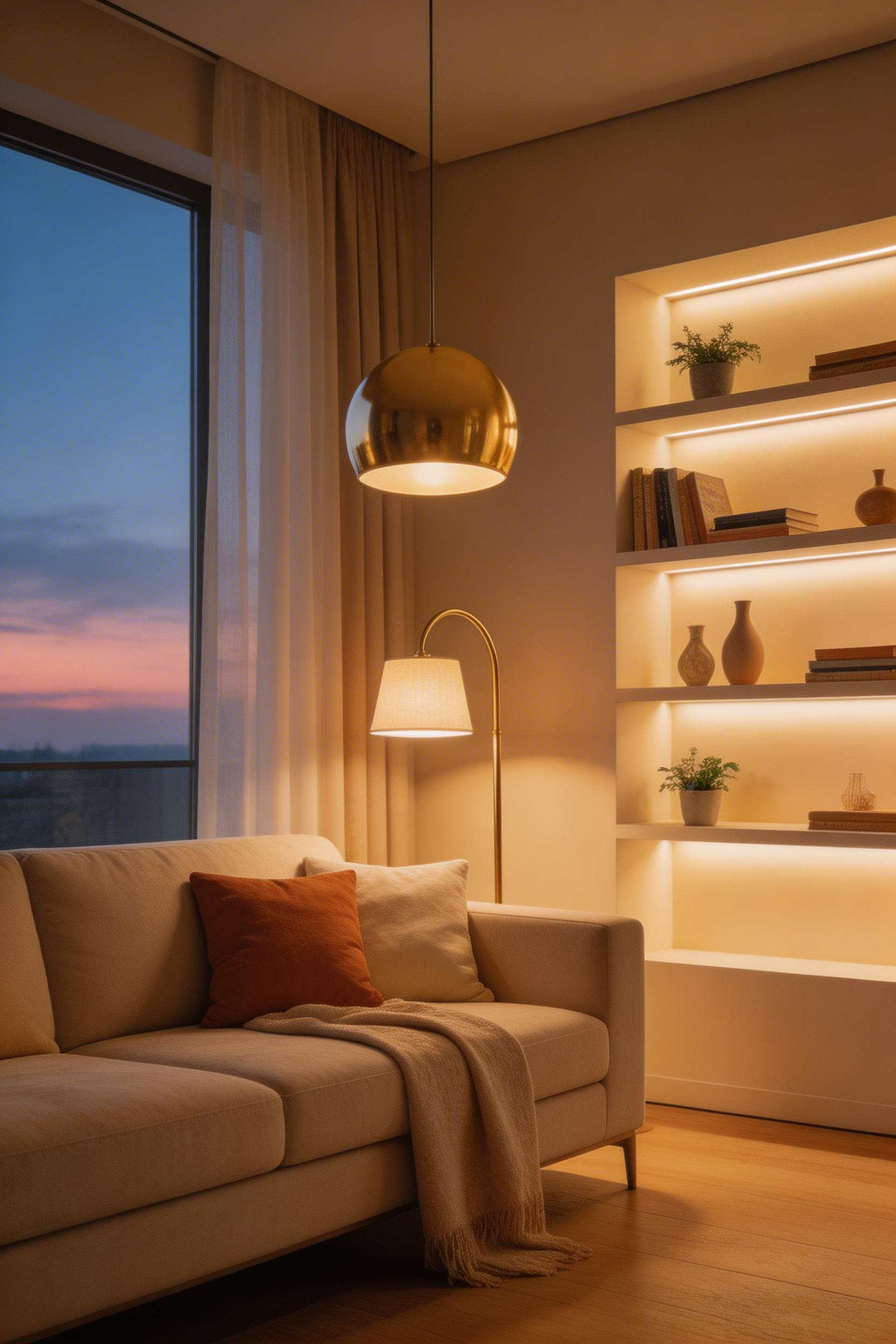
The layered approach uses three distinct types: ambient, task, and accent. Ambient is the general illumination, usually dimmable overhead. Task is functional light for reading or work — typically from floor or table lamps. Accent is light that hits a specific object or surface, like a picture light over art or LED strips inside shelving. You do not need all three at maximum simultaneously. The ability to dial each up and down independently is the point.
The Dimmer: A Simple Modern Living Room Upgrade
Installing dimmer switches on the overhead circuits ($15–$40 each) is among the cheapest and most transformative single upgrades on this list. A bright overhead at 100% is functional. That same overhead at 40% with a floor lamp beside the sofa is atmospheric. The Lutron Caseta system ($59 per switch) works with most LED bulbs and allows app control if that appeals to you.
For task lighting, a well-placed arched floor lamp that clears the sofa back is the most useful piece in the room. The CB2 Arched Floor Lamp ($399) is a budget-accessible option in the same visual language as the classic Flos Arco ($1,650). According to the International Association of Home Staging Professionals (2022), lighting accounts for up to 40% of a room’s perceived quality in professional assessments. That is the kind of statistic worth acting on.
4. Statement Rug That Anchors the Whole Seating Area
The most common error in modern living rooms is a rug that is too small. When a rug sits only beneath the coffee table with all four sofa legs floating on bare floor, the furniture looks unmoored. It looks as though it arrived recently and has not yet found its home. The rug’s job in a modern living room is to define the seating zone as a single composed area.
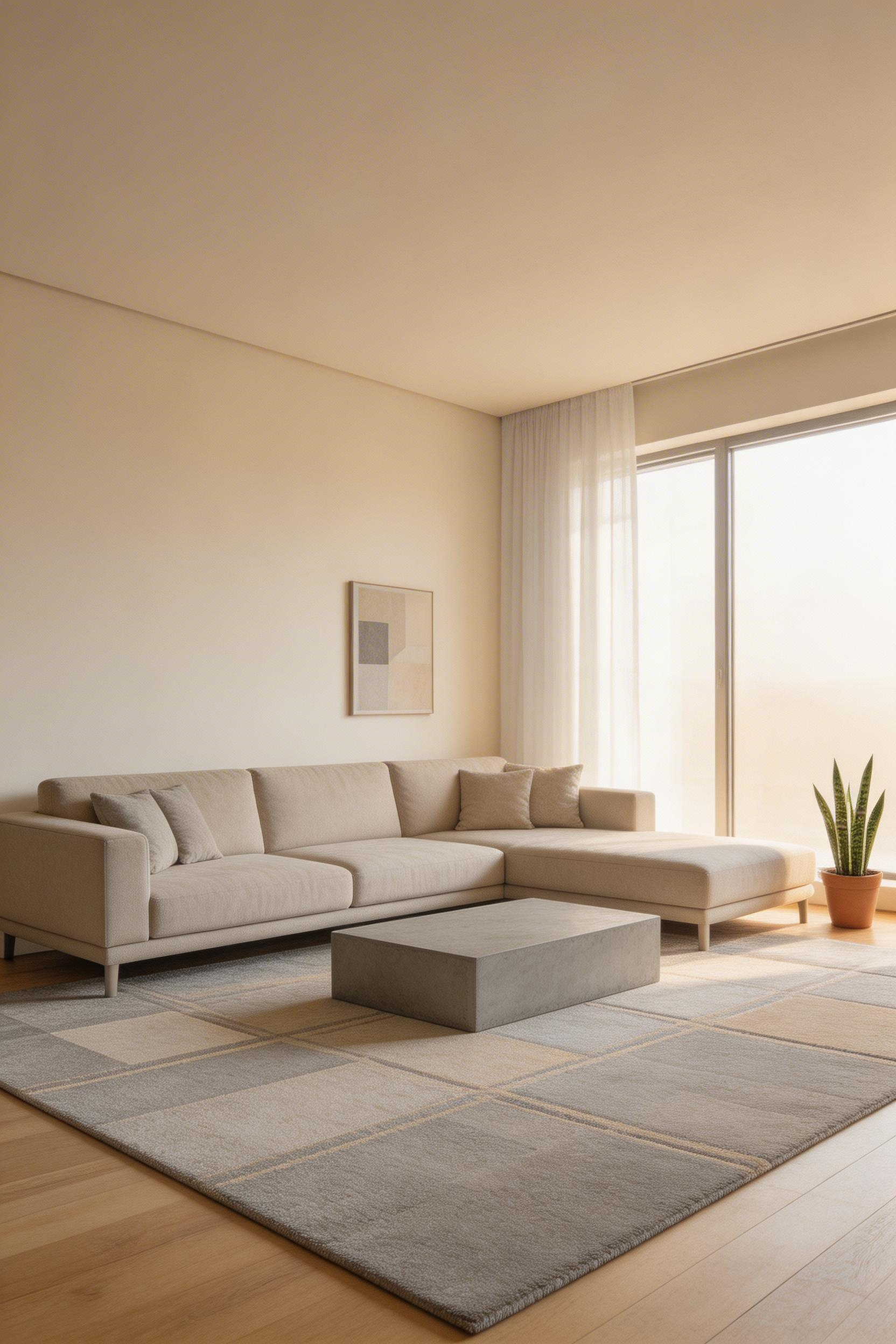
The rule is simple. The rug should sit under at least the front two legs of every sofa and chair in the seating group. In a standard living room, that means 8×10 feet as a minimum. A 9×12 or 10×14 is appropriate for most open-plan or larger spaces. Houzz’s 2023 Living Spaces Survey (n=3,200 homeowners) found that interior designers rate incorrect rug sizing as the single most common error in otherwise well-executed living rooms.
Rug Materials for Modern Living Room Ideas
For modern living room ideas around rugs, geometric and abstract patterns sit more comfortably in contemporary spaces than traditional medallions or florals. A good flatweave wool rug (under 0.5-inch pile) holds up better under furniture legs without compressing. It also stays easier to vacuum. The Loloi Vaughn hand-knotted wool rug ($600–$1,800 for 8×10) is a strong choice for durability. The Ruggable machine-washable flatweave ($300–$550 for 8×10) is the most practical option for households with children or pets.
If the rug you want only comes in 8×10 and you need 9×12, layer it over a solid jute or sisal base rug. The layered-rug look is genuinely current and solves the sizing problem without compromise. Leave 18–24 inches of bare floor between the rug edge and the walls to give the room visual breathing room.
5. Architectural Shelving as a Design Focal Point
A blank wall in a modern living room is not neutral — it reads as incomplete. But filling it with the wrong thing (too much, too little, too random) makes it worse. Architectural shelving works because it gives the wall structure and purpose while allowing the styling within it to reflect the people who live there.
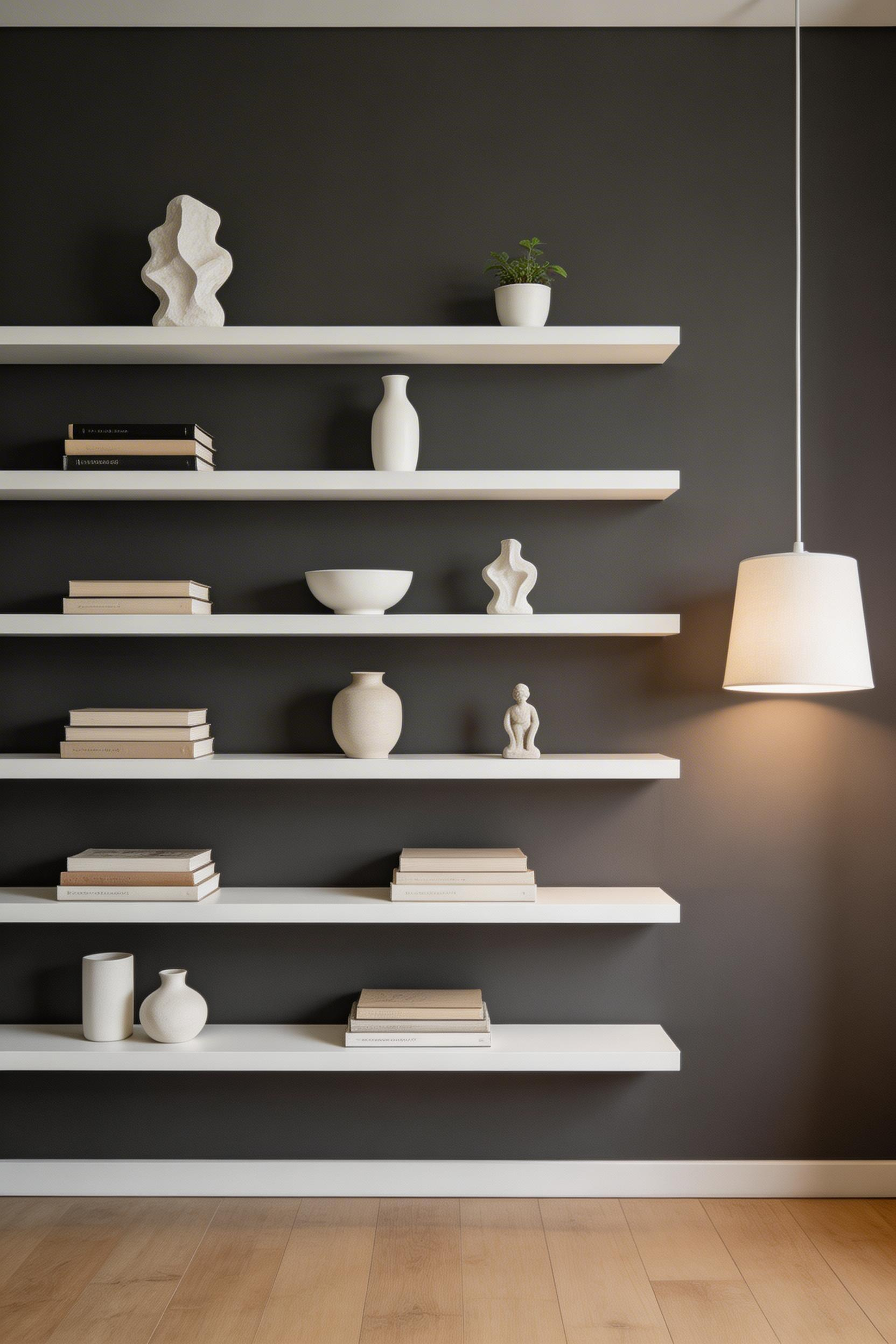
The rule of thirds applies here: one-third books and functional objects, one-third art and framed pieces, one-third negative space. The negative space is the part most people struggle with. It feels wasteful when you are filling shelves. But it is precisely what makes the arrangement look edited rather than cluttered.
Shelving Options in Modern Living Room Design
Floating shelves are more adaptable and usually the right starting point. They require stud or French cleat mounting — standard drywall anchors are not sufficient for loads over 10–15 lbs. They also should not span more than 36 inches without a center bracket for anything heavier than books. Standard depths of 10–12 inches handle most objects well.
The IKEA BILLY bookcase can be converted into a convincing built-in by adding crown molding and baseboard to the top and sides. This well-documented approach costs $120–$240 per unit plus trim materials. Paint the back panel one or two shades darker than the surrounding wall. Even a subtle difference makes objects pop and gives the shelf apparent depth. According to Apartment Therapy’s Most Saved Rooms data (2023), a well-styled bookcase wall is the most-photographed feature in living room home tours.
6. Textured Accent Wall Without Wallpaper
An accent wall with physical texture does something flat paint cannot: it changes as the light changes throughout the day. The same wall reads differently at 9am and 7pm. This gives the room a quality of variation that a single-tone surface never achieves. It is one of the modern living room ideas that costs the least and adds the most atmosphere.
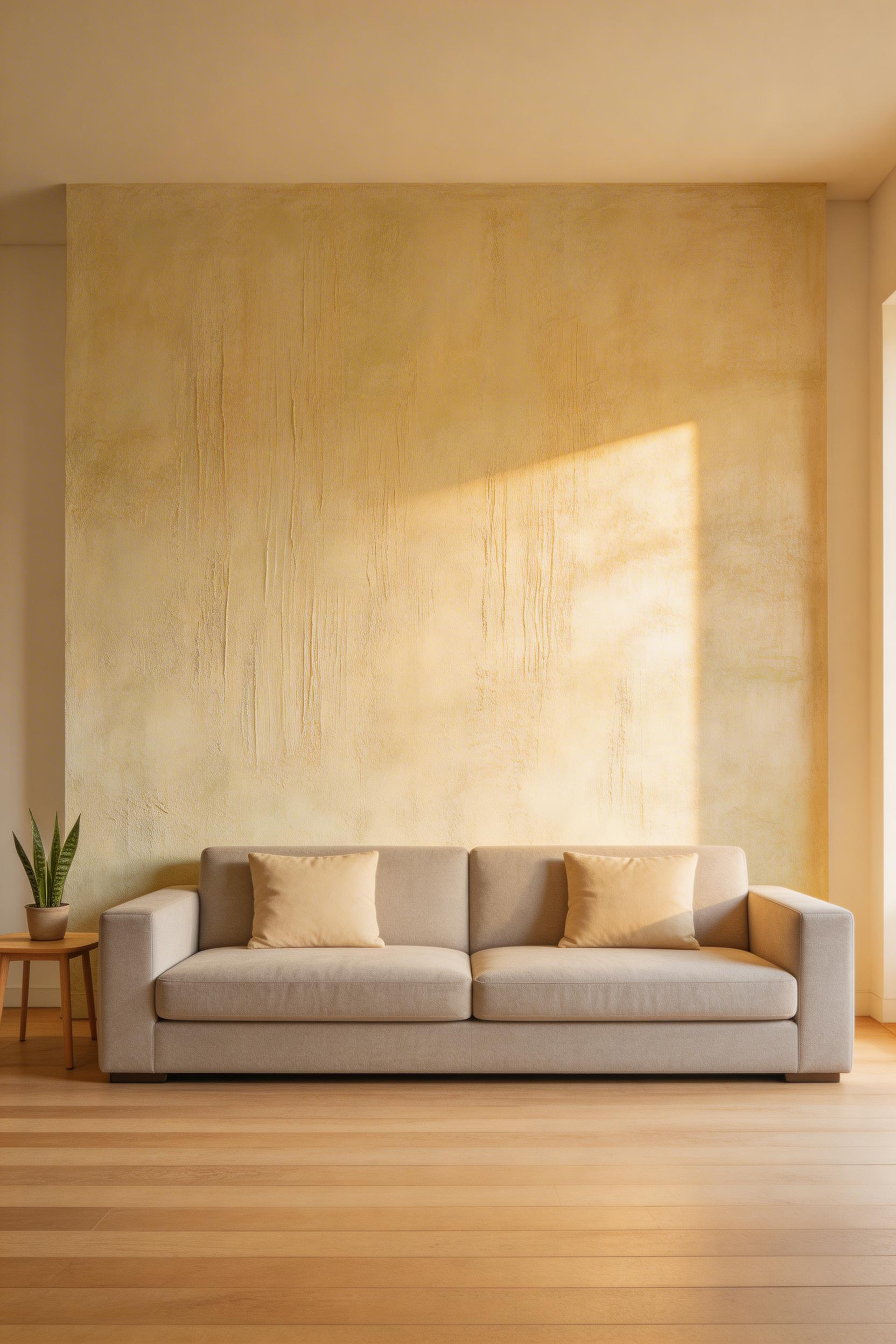
Four techniques are worth comparing: limewash paint ($45–$80/gallon, fully DIY, reversible), Venetian plaster ($80–$150/gallon, higher skill requirement), slat wood paneling ($60–$150 per 4×8 sheet), and shiplap ($1.50–$3.50/linear foot). Of these, limewash delivers the best combination of visual impact, DIY accessibility, and reversibility.
Limewash: Best for Most Modern Living Rooms
Portola Paints’ Roman Clay ($65/gallon) is the most widely praised DIY option. It is thick, forgiving to apply, and creates the organic color variation that defines the look. For a standard 10×9-foot accent wall, two gallons cover two coats. Google Trends data shows ‘limewash wall’ searches grew 312% between 2020 and 2024, so this is not a passing trend.
Slat wood paneling is the right answer if the room needs warmth rather than just texture. The vertical lines add height. Also, the panels install with construction adhesive directly over drywall, making it a 1–2 day DIY project. Stikwood’s peel-and-stick reclaimed wood panels ($8–$12/sq ft) work well for renters or anyone unwilling to commit. Venetian plaster produces the most sophisticated result but is the least forgiving to apply incorrectly. Budget for a professional unless you have practiced the technique.
7. Concrete or Stone Coffee Table as an Anchor Piece
The coffee table is a hard-working surface in a modern living room. It holds drinks, remote controls, books, the occasional foot, and has to survive all of that while still looking considered. Upholstered coffee tables and delicate wood alternatives tend to show every mark. Concrete and stone do not.
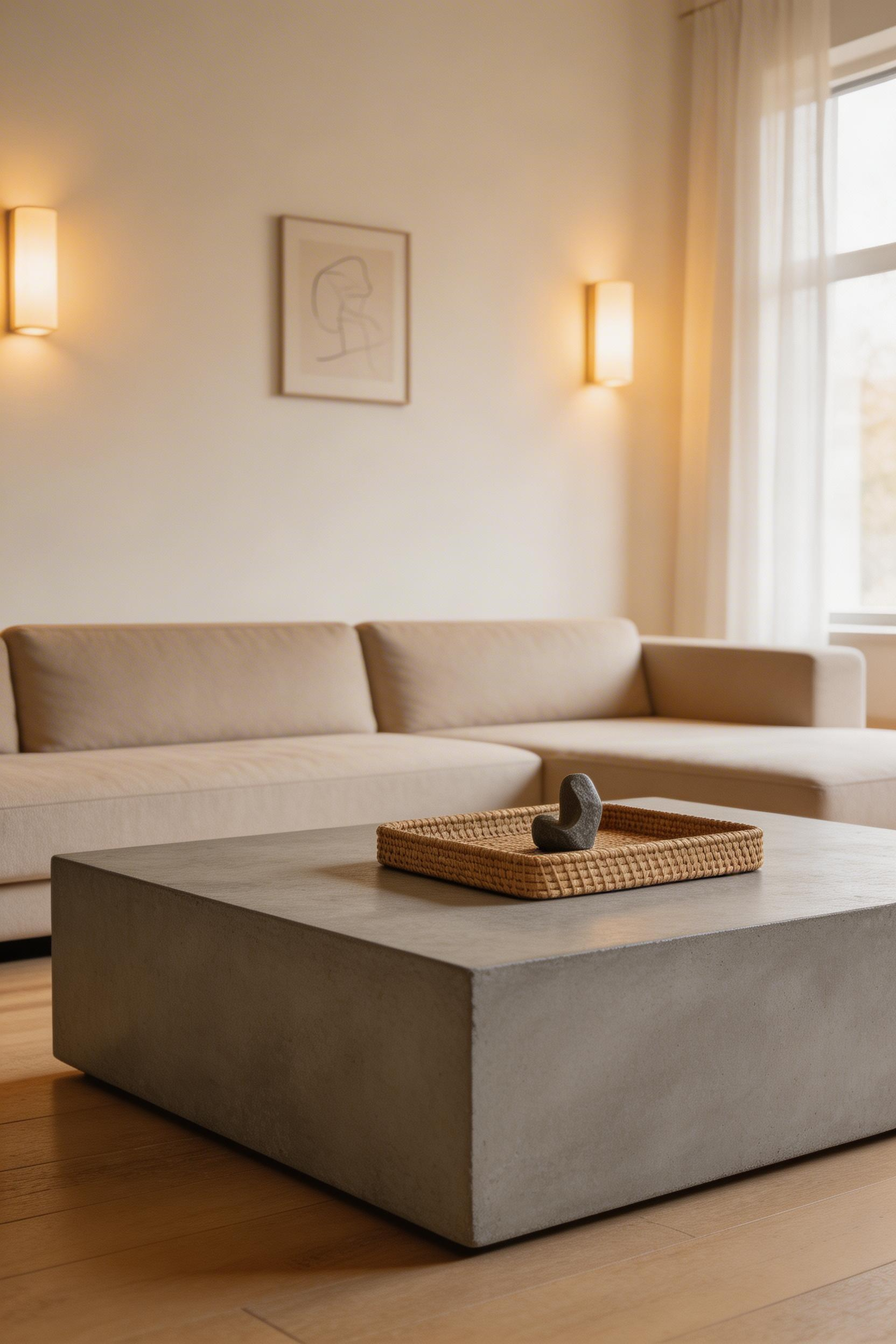
Concrete tables weigh 80–200 lbs, depending on size. GFRC (glass fiber reinforced concrete) alternatives come in at 40–80 lbs. They are less prone to cracking while maintaining the same visual quality. For natural stone, honed marble and travertine are the current preferences over polished finishes. Travertine requires sealing every 1–2 years. Marble stains with acids if left unsealed.
Pairing Stone Tables in Your Modern Living Room
The common concern with hard-material coffee tables is that they make a room feel cold. The solution is pairing: a concrete or stone top on warm-toned legs (walnut, brass, or rattan) bridges the material contrast. The West Elm Faceted Marble table ($699–$899) on its angled wood base is the most widely seen version of this approach. The CB2 Slab Concrete table ($599) on steel legs is sharper and works well in rooms that already have warm textiles.
Add a small tray on the surface — woven, lacquered, or ceramic. It creates a defined zone for everyday objects (remotes, candles, a book). So the stone stays intentional rather than becoming a dump zone. This is a small move that genuinely changes how the table feels to live with. According to OfferUp marketplace data from 2023, stone and concrete coffee tables hold resale value roughly 30% better than wood alternatives.
8. Curtains Hung at Ceiling Height
This is the one change on this list that costs the least and delivers the most visible result. Hanging curtain rods at ceiling height — rather than just above the window frame — makes the window appear taller and the ceiling higher. This works even in rooms with standard 8-foot ceilings. It is also one of those modern living room ideas that costs under $100 and is immediately noticeable.
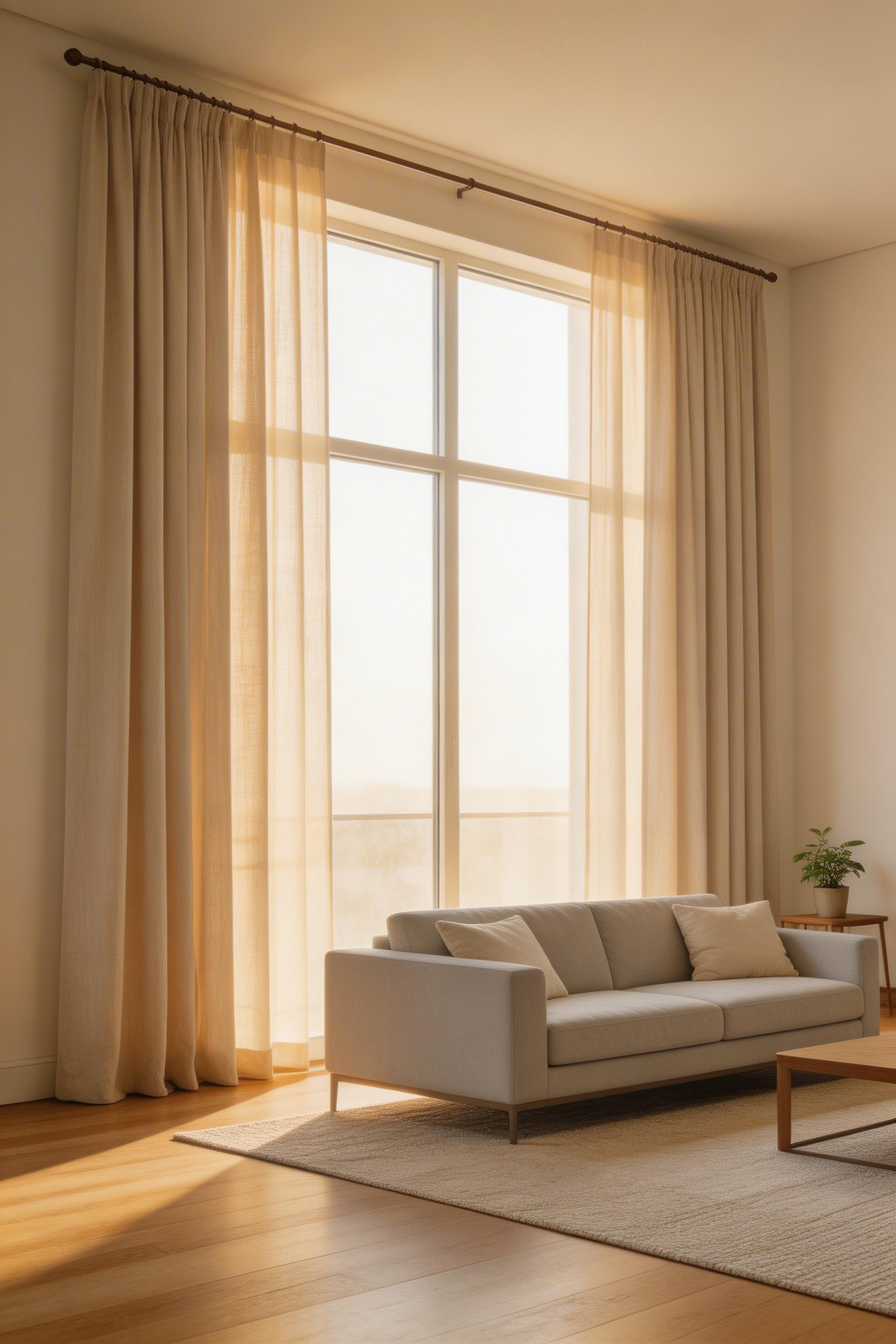
The visual mechanism is straightforward. The uninterrupted vertical line from ceiling to floor pulls the eye upward and suggests height. It also makes windows appear architecturally more significant than they are. That helps in rooms where the windows are standard-issue rather than generous.
Curtain Details for Modern Living Room Windows
For an 8-foot ceiling, use 96-inch panels and hang the rod bracket 4 inches from the ceiling. The rod itself should extend 6–10 inches past the window frame on each side. This allows the panels to clear the glass completely when open. Panel width should be 1.5–2.5 times the window width for a full gathered look — flat panels at 1.5×, pinch-pleat at 2.5×.
Fabric weight matters significantly. Lightweight panels billow and lose their line. Linen and cotton-linen blends with some body hold their drape well. IKEA’s linen-blend panels ($20–$40 per panel) are the budget standard. Pottery Barn’s Belgian Linen panels ($139–$219 each) are the upgrade. The break — the amount of fabric that touches the floor — should be either a deliberate 1–2 inch puddle or a clean brush contact. Floating 2 inches above the floor looks like a measuring error. House Beautiful’s 2023 Designer Survey (n=150 designers) found ceiling-height curtains are the most-cited high-impact, low-cost window treatment recommendation in the profession.
9. Mix of Metals Done Deliberately
The old rule was one metal per room. That rule produced rooms that felt coordinated in a hotel-lobby way — unified but impersonal. Modern interiors use two or three metal finishes intentionally, with one dominant and one (or occasionally two) as accent. The result is a room that feels assembled over time rather than purchased as a set.
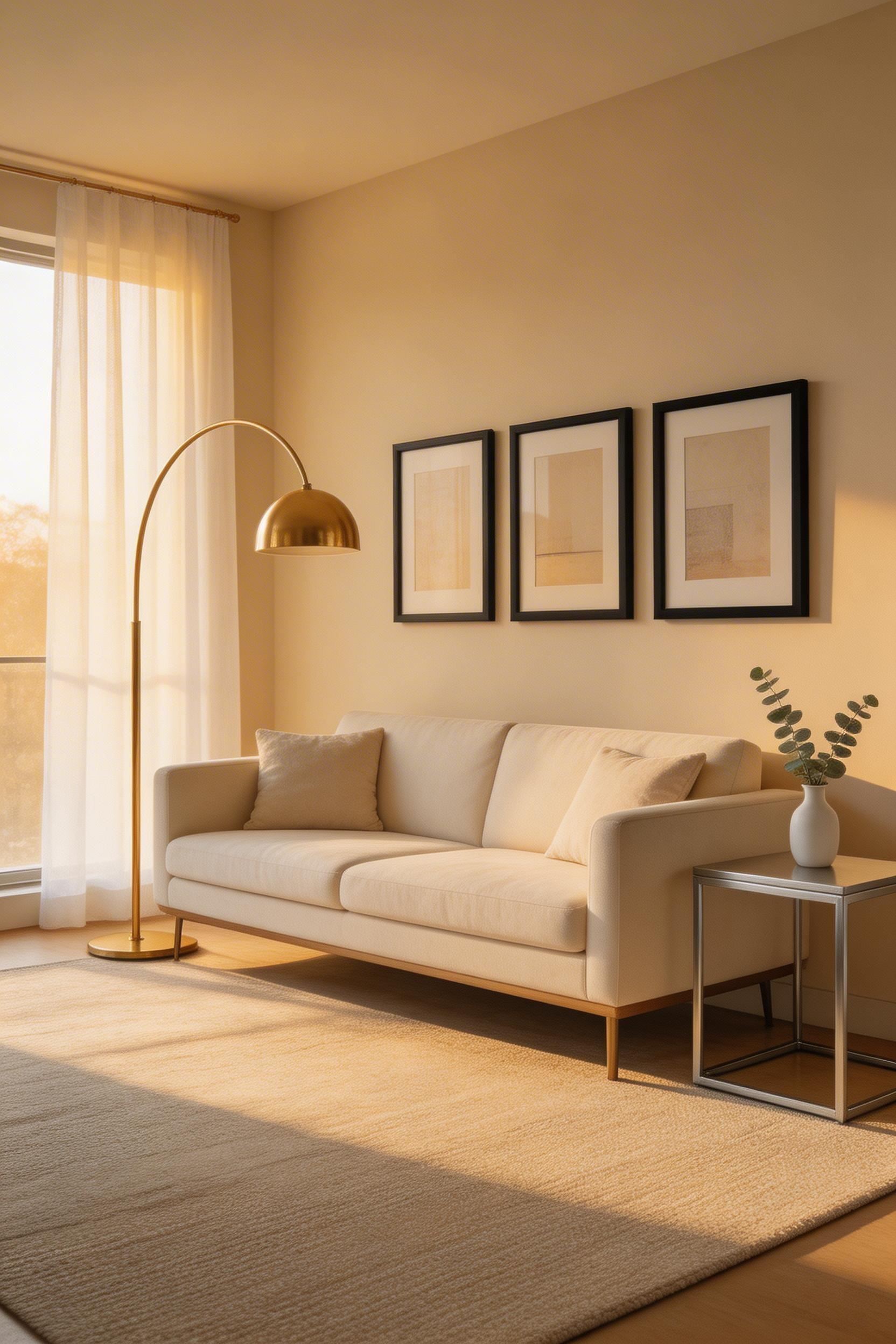
The pairing principle: anchor with one dominant metal across 60–70% of the room’s fixtures and hardware, then add one complementary accent at 30–40%. The best modern pairings are matte black with warm brass, brushed nickel with warm bronze, and polished chrome with antique gold. What to avoid: mixing polished and matte versions of the same metal. That reads as an oversight rather than a choice. Also avoid having more than two finishes visible in the same eyeline.
Where Metals Appear in Modern Living Room Decor
Metals appear across light fixtures, furniture legs, picture frames, cabinet hardware, and decorative objects. Because they accumulate gradually over time, most rooms that look visually busy with metals have simply acquired too many finishes without noticing. Walk the room and list every metal element. If you find four or five distinct finishes, remove or replace the weakest contributor.
The CB2 Arched Brass Floor Lamp ($349) works as the warm anchor piece in rooms building toward a brass-and-black pairing. For the accent hardware, Rejuvenation’s unlacquered brass bin pulls ($18–$28 each) are solid and age well. According to Pinterest Predicts data from 2024, searches for ‘mixed metals home decor’ increased 180% between 2019 and 2024, confirming this is now mainstream rather than niche. The easiest way to make the mix read intentional: find one lamp or object that physically contains both metals — a brass body with a black shade, for instance. That single bridging piece makes the whole palette coherent.
10. Indoor Plants That Actually Survive Low Light
Modern living rooms get less natural light than they appear to. North-facing rooms, rooms with deep window recesses, and open-plan spaces where the light from windows dissipates across a large floor area often measure at 30–50 foot-candles at the center. Most plant guides are written for conservatories. For these modern living room ideas to work with greenery, you need plants that genuinely tolerate the actual conditions.
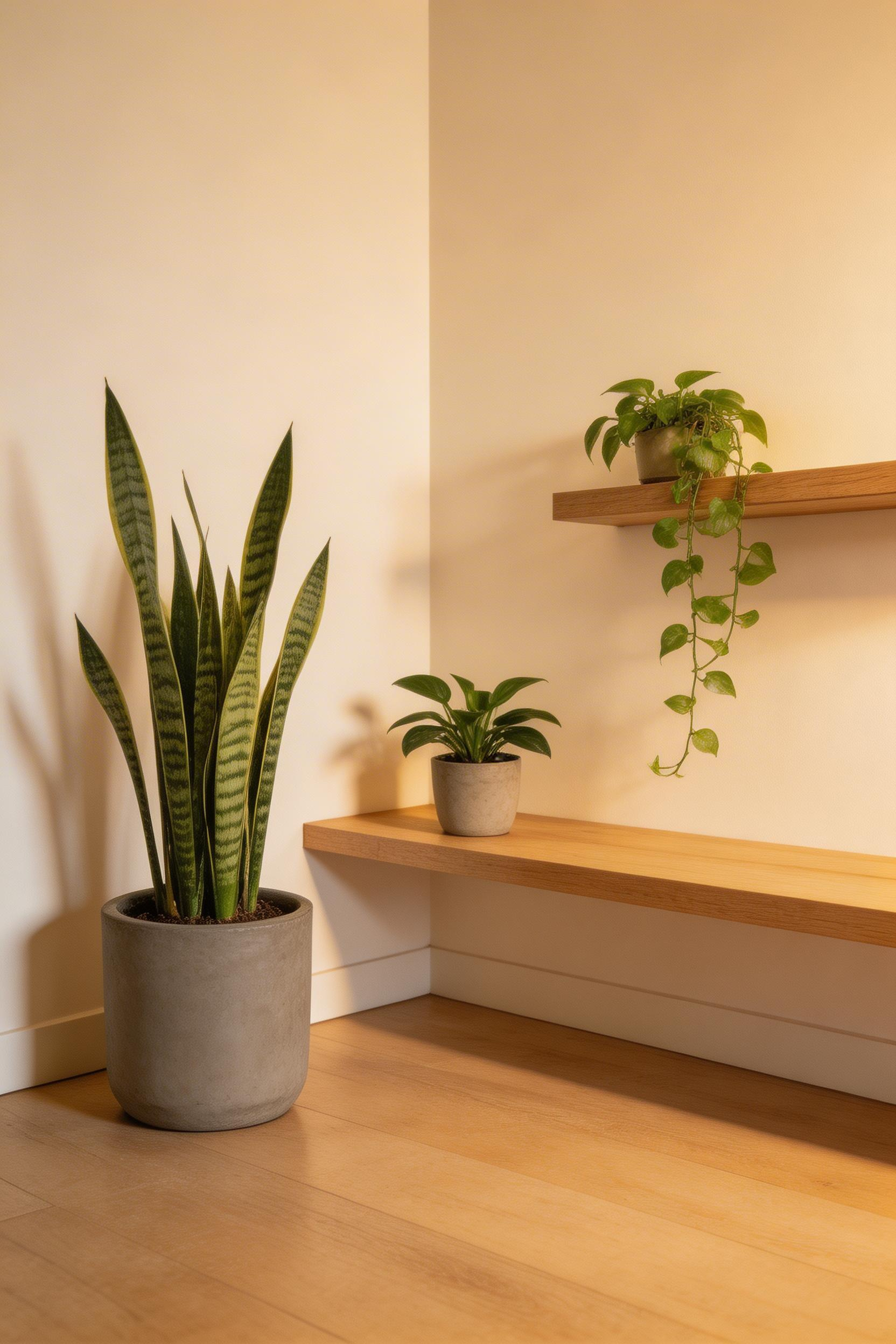
The genuinely low-light tolerant list: ZZ plant (Zamioculcas zamiifolia), snake plant (Sansevieria), pothos (Epipremnum aureum), cast iron plant (Aspidistra), and peace lily (Spathiphyllum). These are not just tolerant — they actively prefer lower light and decline when placed in direct sun. The Royal Horticultural Society reported in 2023 that ZZ plants and snake plants are the two most-searched indoor plants in the UK and USA. They have overtaken fiddle-leaf figs as the defining modern interior plant.
Plant Scale in Modern Living Room Corners
A tall snake plant — 3 to 4 feet in a matte concrete or dark ceramic pot — placed in a corner delivers more visual impact than five small plants scattered across a room. Scale matters as much as variety in a modern space. For shelving, trailing pothos in white or terracotta wall-mount pots adds movement and warmth. Water ZZ and snake plants once every 2–4 weeks. Root rot from overwatering kills far more indoor plants than underwatering does. Use pots with drainage holes regardless of how they look on the outside.
For apartment living room ideas that include greenery, this practical approach to plant selection is even more relevant — read more in our guide to apartment living room ideas for small-scale plant placement in tighter spaces.
11. Curated Gallery Wall With Consistent Framing
The difference between a modern gallery wall and an eclectic one is not the art — it is the frames. A collection of prints in mismatched frames of four or five different finishes reads as accumulated over time (which may be true) but looks unresolved. The same collection in a single consistent frame finish reads as curated. This is one of the simplest modern living room ideas to execute if you start with the frame decision and work backwards.
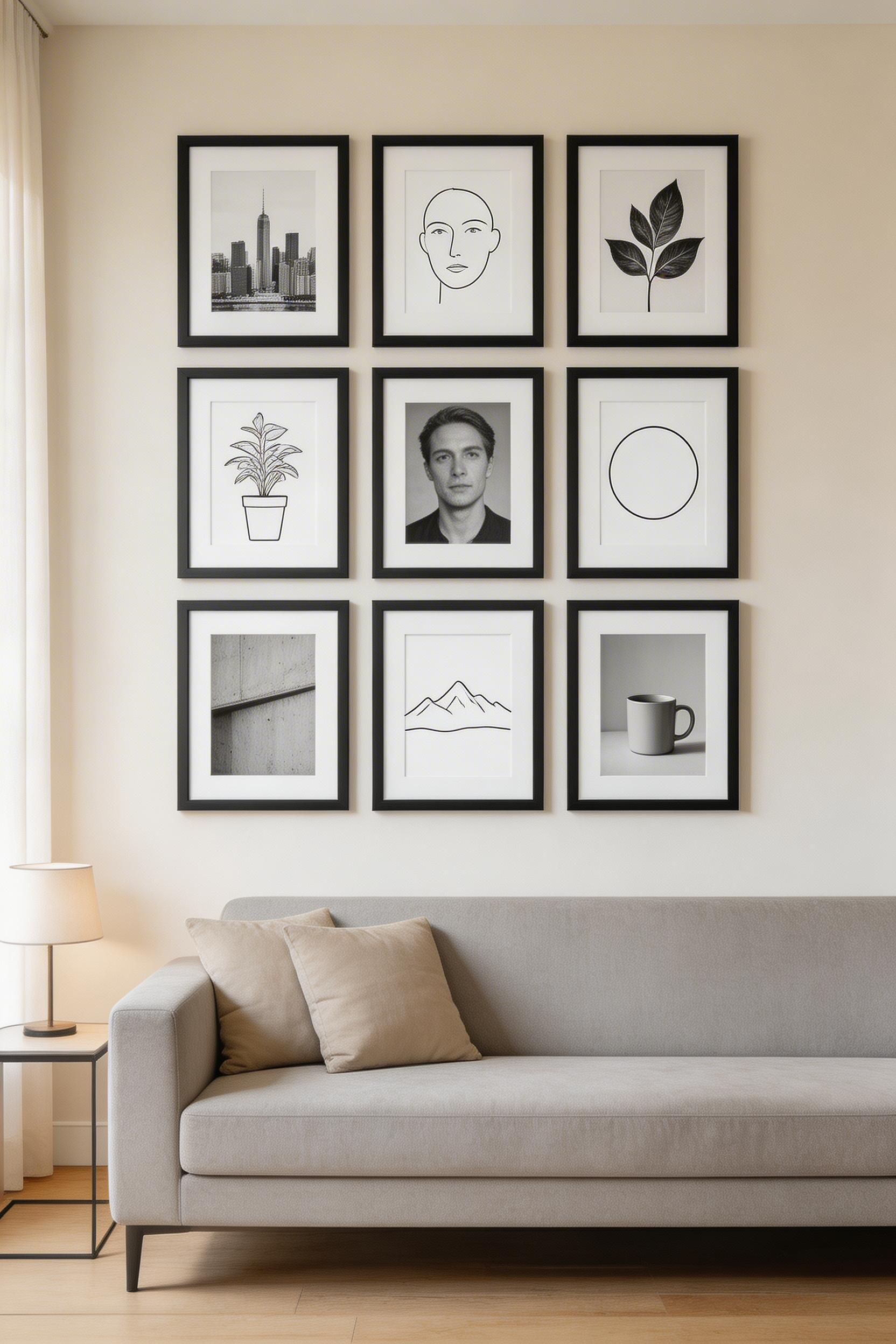
Choose one frame finish and apply it across every piece, regardless of size. Matte black is the most widely used in contemporary interiors. Natural oak is the warmer alternative. White works in rooms with very light walls where black would be too heavy. The grid format — organized in even rows and columns — is the most modern approach. It removes the salon-style randomness that can read as traditional or chaotic.
Gallery Wall Spacing for Modern Living Rooms
Space frames 2–3 inches apart. Larger gaps fragment the composition into individual objects rather than a unified statement. The center of the gallery wall should hang at 57–60 inches from the floor (standard eye level). Above a sofa, leave 6–8 inches of clearance between the sofa back and the lowest frame. Less than this feels cramped; more than this makes the art appear unrelated to the sofa below.
IKEA’s YLLEVAD frames ($5–$18 each) offer a consistent matte black finish at a practical price point. For the art itself, Desenio’s digital downloads ($5–$20 per print) are the current standard for minimalist modern prints. Download, print at a local print shop to exact dimensions, and frame. Pinterest has ranked gallery walls as the most searched interior styling topic for five consecutive years as of 2024.
Lay the full composition on the floor, photograph it, and live with the photo for at least a day. It is significantly easier to adjust on the floor than after making fifteen holes in the wall.
12. Boucle Accent Chair as a Texture Play
There is one piece that makes the difference between a modern room that looks finished and one that looks almost finished. For most rooms, it is the accent chair. Specifically, a boucle accent chair — the looped, textured upholstery that has been the defining fabric of contemporary interiors since around 2020.
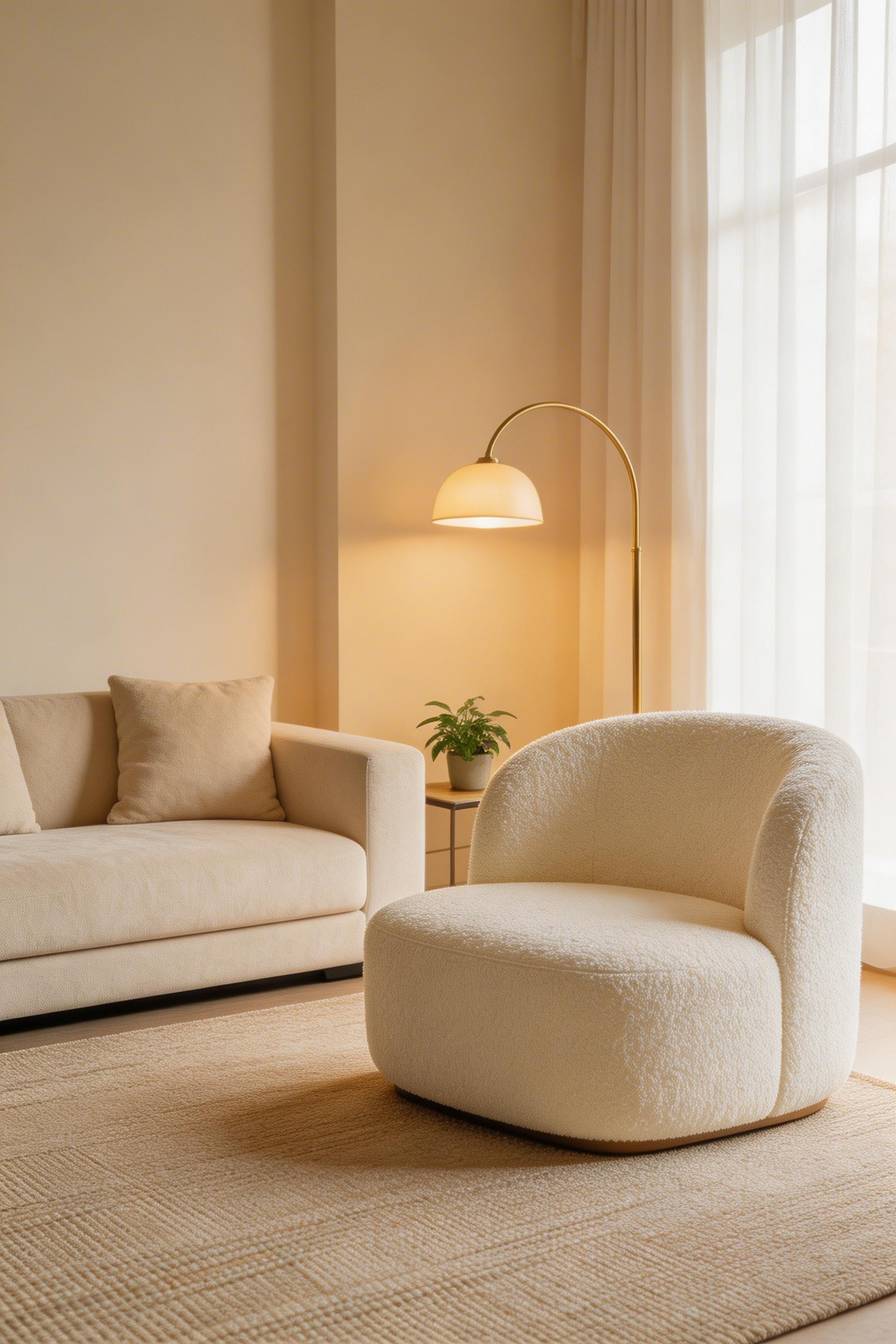
Boucle adds warmth without adding color, which is its most useful quality. Off-white and oatmeal boucle reads neutral in almost any context. But it brings tactile richness that flat-woven or smooth upholstery cannot match. The key is keeping the boucle at accent scale — one chair. A sofa in boucle tends to tip the room from modern-minimal into cozy-cottage territory. For modern living room decor, that distinction matters.
Chair Placement in Modern Living Room Layouts
For modern rooms, a seat width of 25–30 inches works best. Barrel chairs and rounded-back forms in boucle are the most current silhouettes. Avoid overstuffed or tufted versions, which read as traditional. The CB2 Gwyneth Boucle Chair ($1,099) is the benchmark piece. The Article Ola Boucle Chair ($799) is a strong alternative with slightly warmer legs. The IKEA SVENSTA ($399) is the budget entry point with a similar visual effect.
Position the chair at 90 degrees to the main sofa with a side table or floor lamp alongside it. Leave at least 30 inches between the chair and adjacent furniture for comfortable passage. A chair pushed too close to a sofa looks like an overflow seat rather than an intentional placement. Boucle upholstery searches on Etsy and 1stDibs grew 400% between 2019 and 2023, confirming this as the decade’s defining upholstery texture (AD Design Minds Survey, 2023).
13. Clean-Lined Fireplace Surround Update
An existing fireplace in an awkward finish — exposed red brick, dated tile, a dark wood surround from the 1990s — is not an obstacle to a modern living room. It is, however, a project that needs addressing. The good news is that updating a fireplace to read modern rarely requires structural work.
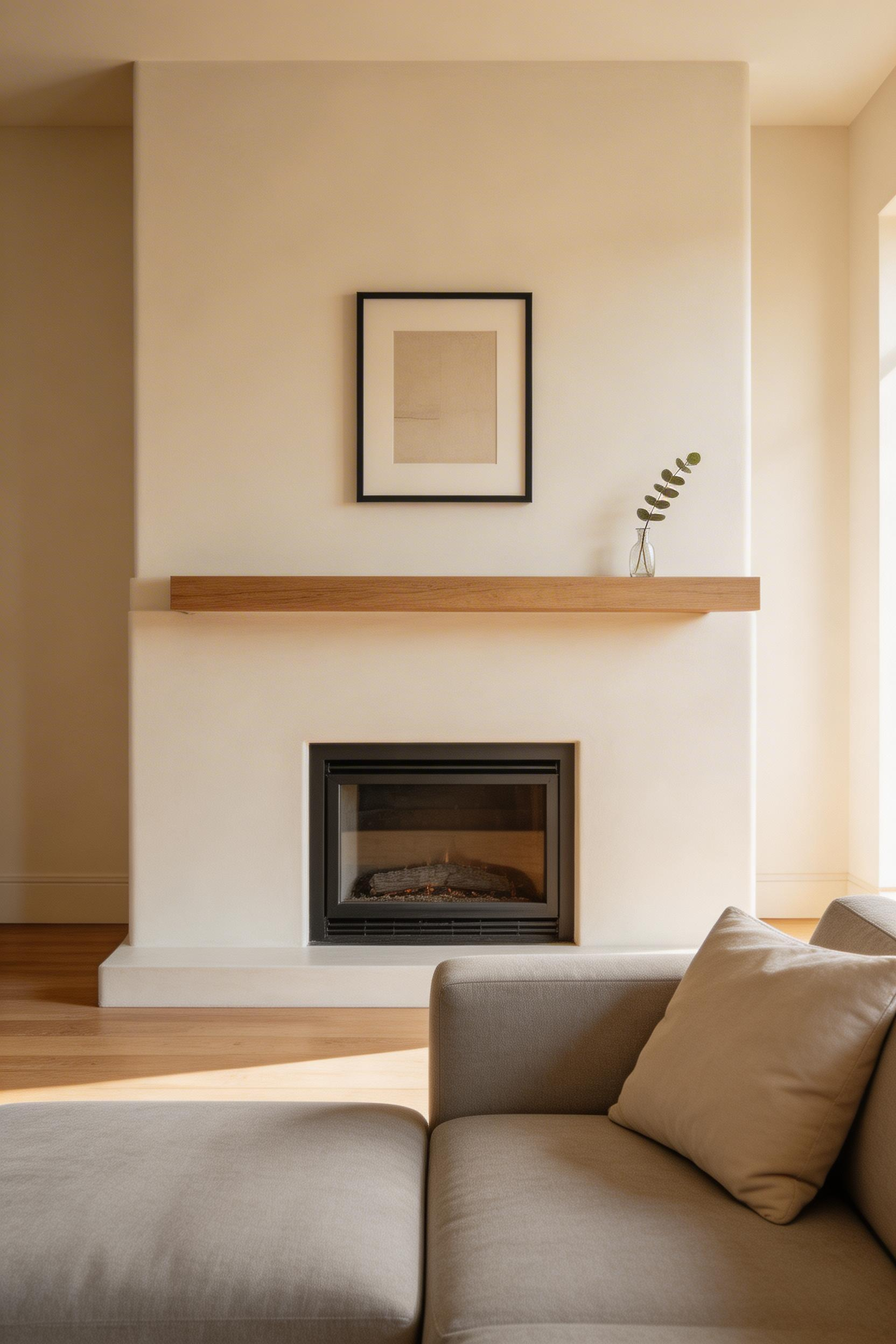
The lowest-cost approach is painting existing brick or tile. A masonry primer (Zinsser BIN is the standard recommendation) followed by limewash or chalk paint transforms exposed red brick into a clean, textural surface for $40–$80 in materials. Skip the primer and the paint will peel within a year — that is not a step to cut. Adding a floating timber shelf above the existing mantel ($149–$299 from Dogberry Mantels) changes the proportional character of the fireplace more than almost any other single move.
Tile Surround Updates for Modern Living Rooms
For tile surrounds that cannot be painted effectively, new large-format tile over the existing surface is the next option. Materials run $5–$25 per square foot. Professional installation on a typical surround costs $500–$1,200. MSI’s Thassos White 12×24 marble tile ($8–$12/sq ft) is the most-used option for a clean modern look. Before any renovation, photograph the fireplace and digitally test options. Fireplace proportions are genuinely difficult to assess without seeing them. A too-wide mantel makes the room feel heavy; a too-narrow one looks incomplete. National Association of Realtors data from 2023 shows fireplace improvements return 75–100% of cost at resale.
Also, for those doing broader living room decorating alongside this update, our guide on living room decorating ideas covers how to build the room around a refreshed fireplace as the focal point.
14. Tonal Color Palette Using Three Shades of One Hue
Tonal decorating is the technique most modern designers use and least often name. Instead of mixing multiple hues, the room is built using three values of the same base color — light, mid, and dark. The result is a room that feels cohesive and considered without looking designed by a computer.
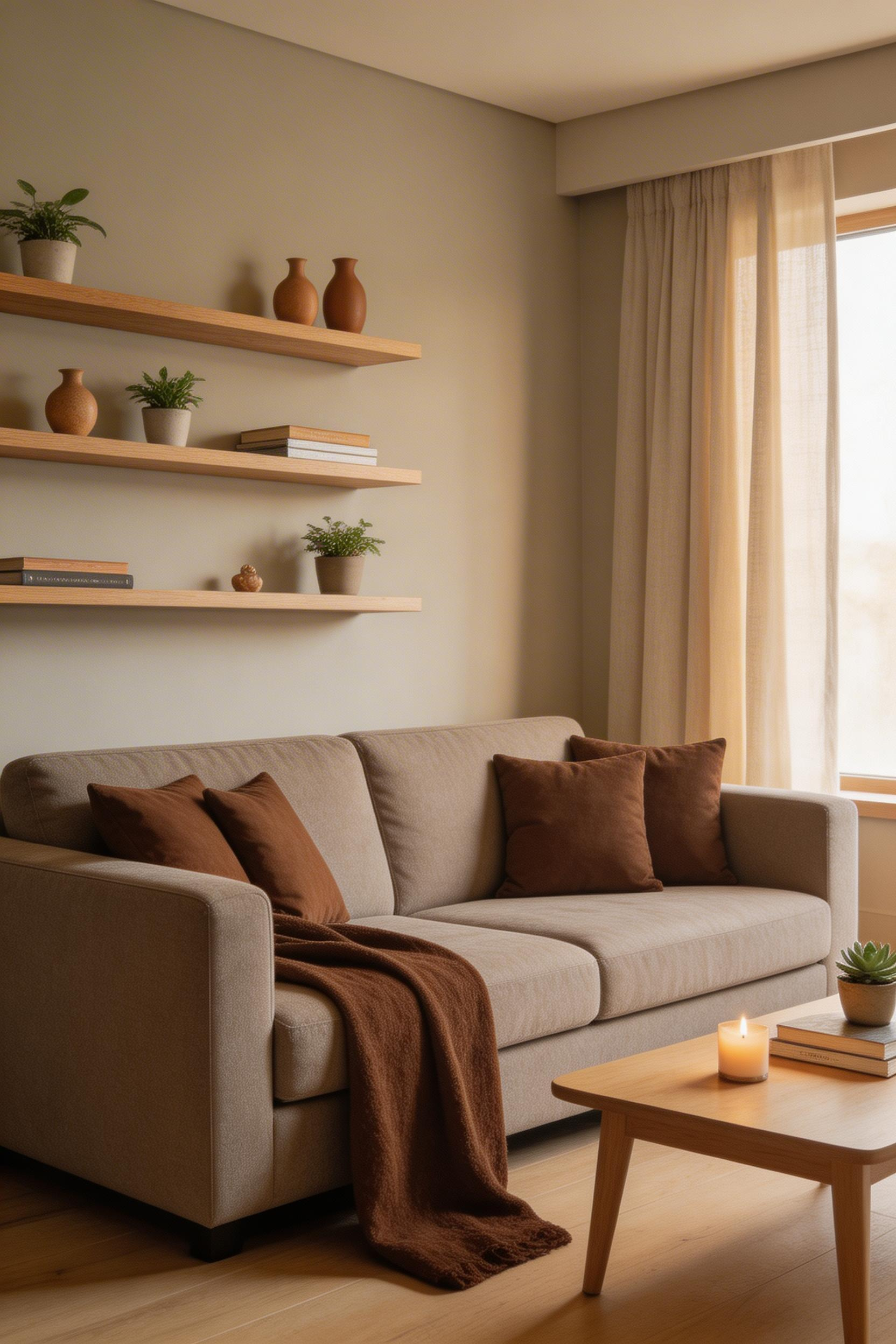
The structure is consistent: lightest tone on walls and ceiling; mid-tone on the large upholstered pieces (sofa, sectional, curtains); darkest tone as accent (cushions, throws, a painted piece of furniture, lamp shade). The tonal range should be wide enough to see the difference. Too compressed and the room reads as flat. Too wide and it starts to feel like separate color decisions rather than a unified palette.
Tonal Palettes That Work in Modern Living Rooms
For warm neutrals: Benjamin Moore’s White Dove ($70–$85/gallon) as the light, Revere Pewter as the mid, and Kendall Charcoal as the dark is the most consistently successful warm tonal trio. For cool grays: Farrow & Ball’s Elephant’s Breath, Mole’s Breath, and Down Pipe work well but at a premium ($120/gallon). Clare Paint offers an accessible blue tonal palette in Fog, Anchor, and Navy ($67/gallon) with peel-and-stick swatches available for testing.
The critical rule: introduce warmth through natural materials — wood, rattan, linen, leather — rather than by adding a contrasting hue. One orange cushion in a blue-tonal room destroys the effect entirely. Tonal palettes appear in 62% of editorial living room features in AD and Elle Decor in 2023–2024, up from 34% in 2018. That growth reflects a real shift in what contemporary living room design looks like. Of all the modern living room ideas on this list, this one has the longest visual payoff — a tonal room looks more considered the more you add to it.
For broader context on how this approach translates to simple, pared-back spaces, see our piece on simple living room decoration for tonal ideas applied in minimal settings.
15. Minimalist Side Tables at Different Heights
The matched side table set is one of the most common features of a living room that looks like a showroom floor set. Two identical tables at the same height, in the same material, one at each end of a sofa. It is tidy. It is also impersonal. The modern alternative uses two different tables — different heights, different materials — which creates asymmetric visual interest. It is one of the most underrated modern living room ideas on this list for the cost.
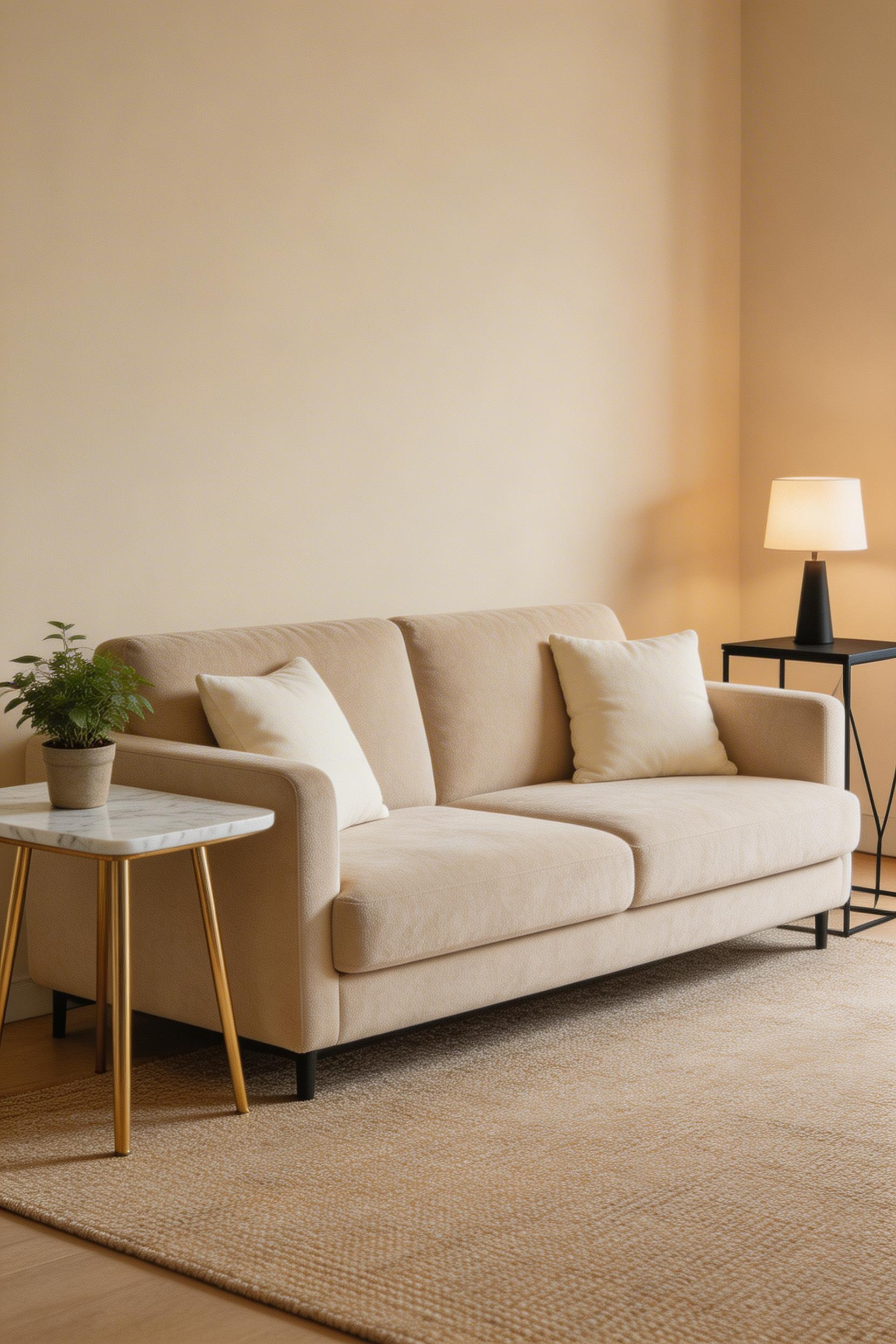
The pairing principle: one table should sit within 2 inches of the sofa arm height (typically 22–26 inches) for functional access. The second can be taller (28–32 inches) or lower (16–18 inches) for visual contrast. Material mixing — marble top with brass legs on one side, matte black metal on the other — reinforces the intentional asymmetry. Stone + rattan, concrete + bamboo, and metal + wood are all combinations that work in modern living room furniture contexts.
Side Table Placement in Modern Living Room Setups
In a standard 3-seat sofa configuration, the primary side table sits at the far end. The secondary goes at the bend of an L-section, or positioned at an angle to the sofa arm on the opposite side. Leave at least 12 inches between the table edge and the sofa arm for practical access. For smaller rooms, nesting tables are a good alternative — three tables that spread when needed and compact when not. The CB2 Terrace Marble Side Table ($299) works well as the primary in a brass-and-stone pairing. The IKEA KNARREVIK ($45) in matte black is the best minimal budget option for the secondary position.
Asymmetric side table pairings appear in 78% of professionally styled modern living room shoots published in AD, Dezeen, and Architectural Digest since 2021. That is nearly unanimous professional consensus, which is worth more than trend data.
Making These Modern Living Room Ideas Work Together
Modern living rooms do not have to be designed all at once. In fact, the ones that look most considered usually were not — they accumulated the right pieces gradually. Start with the two changes that cost the least and deliver the most: ceiling-height curtains (item 8) and correct rug sizing (item 4). Neither requires a contractor. Both take a single afternoon. Together they address the two most common reasons living rooms look unresolved.
From there, lighting (item 3) is the next highest priority. Add dimmer switches to whatever you already have before buying any new fixtures. The cost is $15–$40 per switch and the effect is immediate. A textured accent wall (item 6) or architectural shelving (item 5) can follow as a weekend project. The larger furniture decisions — sectional, coffee table, fireplace surround — are the ones worth taking more time on. Order swatches. Measure twice. Sit with the decision for a week.
Also worth reading: our coastal living room guide applies many of these modern living room ideas in a more specific palette context, if natural tones and textured surfaces are the direction you are taking.
The goal is not a room that looks like a page in a magazine. It is a room that looks like it belongs to someone — and also happens to be well designed. That combination is harder to achieve than either element alone, but these are the modern living room ideas that get you there.